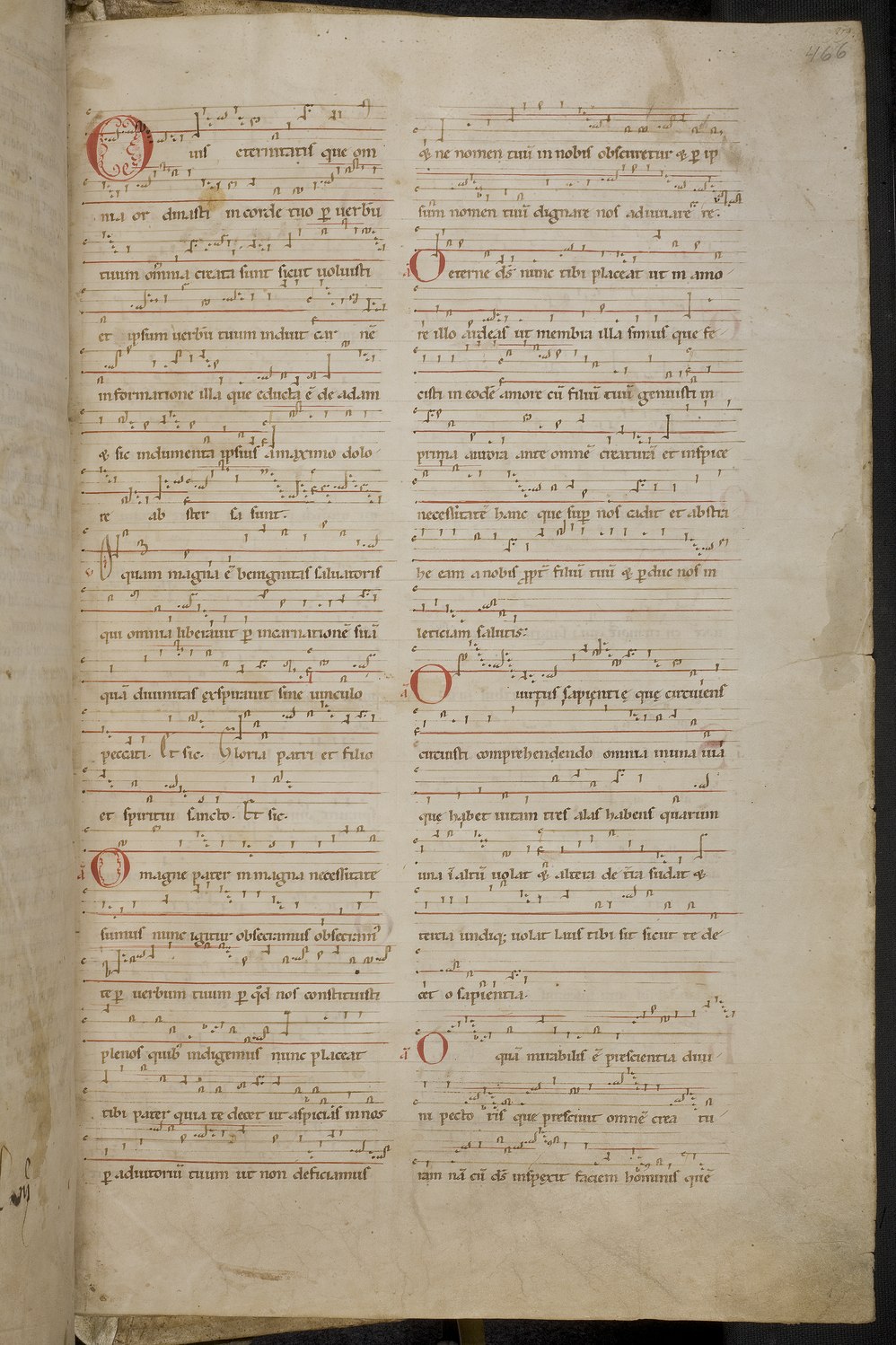
Hildegard of Bingen Composes Her Songs
An abbess wrote visionary theology and soaring music.
In 1150, the Benedictine magistra Hildegard of Bingen relocated approximately twenty nuns from their established stone quarters at Disibodenberg to found a new convent at Rupertsberg. Her superior, Abbot Kuno, had initially rejected the departure, as it surrendered stable monastic security for an unbuilt site. Hildegard overcame his opposition only after securing authorization directly from Archbishop Henry of Mainz, followed by a severe illness that incapacitated her until the abbot yielded. Once established at Rupertsberg, the independent community provided Hildegard with an autonomous base to produce and assemble her extensive theological, visionary, and musical works.
Central to Hildegard's enterprise was the formal recording of visions she reported having experienced since early childhood. In 1141, believing herself divinely instructed to write down what she perceived, she began drafting her first major theological treatise, Scivias. Portions of this uncompleted manuscript were examined by a papal delegation and subsequently read aloud to Pope Eugenius III at the Synod of Trier, which met in 1147 and 1148. The pope's resulting written blessing conferred institutional legitimacy on her claims of mystical revelation. Guided by these experiences, she concluded Scivias in 1151 with a concluding sequence titled the Symphony of Heaven, marking an early integration of her visionary writing with musical composition.

Keep reading in Yester
Coming soon to the App Store
Keep following the story

Sources
- Apostolic Letter proclaiming Saint Hildegard of Bingen a Doctor of the Universal Church, 7 October 2012 (Holy See)
- General Audience on Saint Hildegard of Bingen, 1 September 2010 (Holy See)
- A History of Western Music, chapter 3: Hildegard of Bingen (W. W. Norton)
- Hildegard of Bingen: Selected Writings, political letters (Penguin Classics excerpt, UC Davis)
- Hildegard of Bingen
Image: Unknown author Unknown author