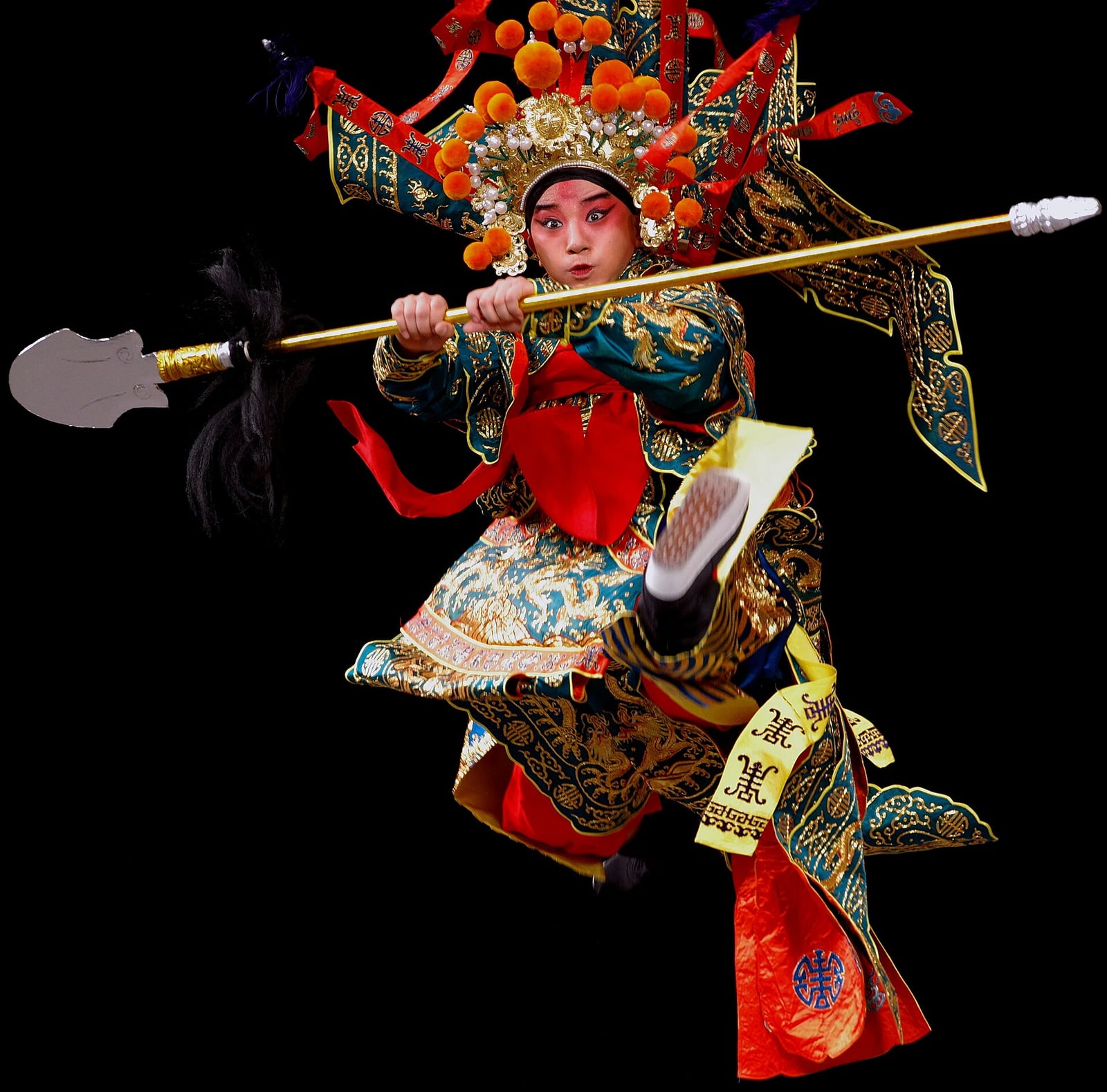
Anhui Troupes Bring a New Opera to Beijing
Touring companies laid the foundations of Peking opera.
In 1790, performers from Anhui province traveled to Beijing to celebrate the eightieth birthday of the Qianlong Emperor. Their presentations introduced court audiences to Hui opera, also known as Huiju. Originally confined to imperial viewings, these regional performances quickly spread to commercial public spaces. The arrival marked the beginning of a musical convergence that fundamentally reshaped traditional Chinese theater across the nineteenth century.
The emerging genre drew from a wide range of regional styles rather than a single tradition. In 1828, troupes from Hubei arrived in the capital and began staging joint performances alongside the Anhui groups. This collaboration blended two primary musical systems: the buoyant xipi melodies, thought to derive from puppet theatre and northwestern Qinqiang traditions, and the softer, more lyrical erhuang tunes from central China. Staging conventions, aesthetic rules, and structural forms were adapted from Kunqu, the established court drama of the period. By the middle of the nineteenth century, these combined elements had consolidated into a distinct theatrical style.

Keep reading in Yester
Coming soon to the App Store
Keep following the story
Sources
- Peking opera (UNESCO Intangible Cultural Heritage)
- 中国入选联合国教科文组织非物质文化遗产名录项目之京剧 (China Intangible Cultural Heritage Network)
- Peking Opera (State Council Information Office of the PRC)
- Peking opera (China Daily, government portal)
- The origins of Peking Opera (The China Project)
- A New Era for Female Actors: Their Journey to the Beijing Stage (Springer, open access chapter)
- Mei Lanfang Was Famous for His Masterful Performances as Female Leads (Smithsonian Magazine)
- Peking opera
Image: 陈文 from 上海