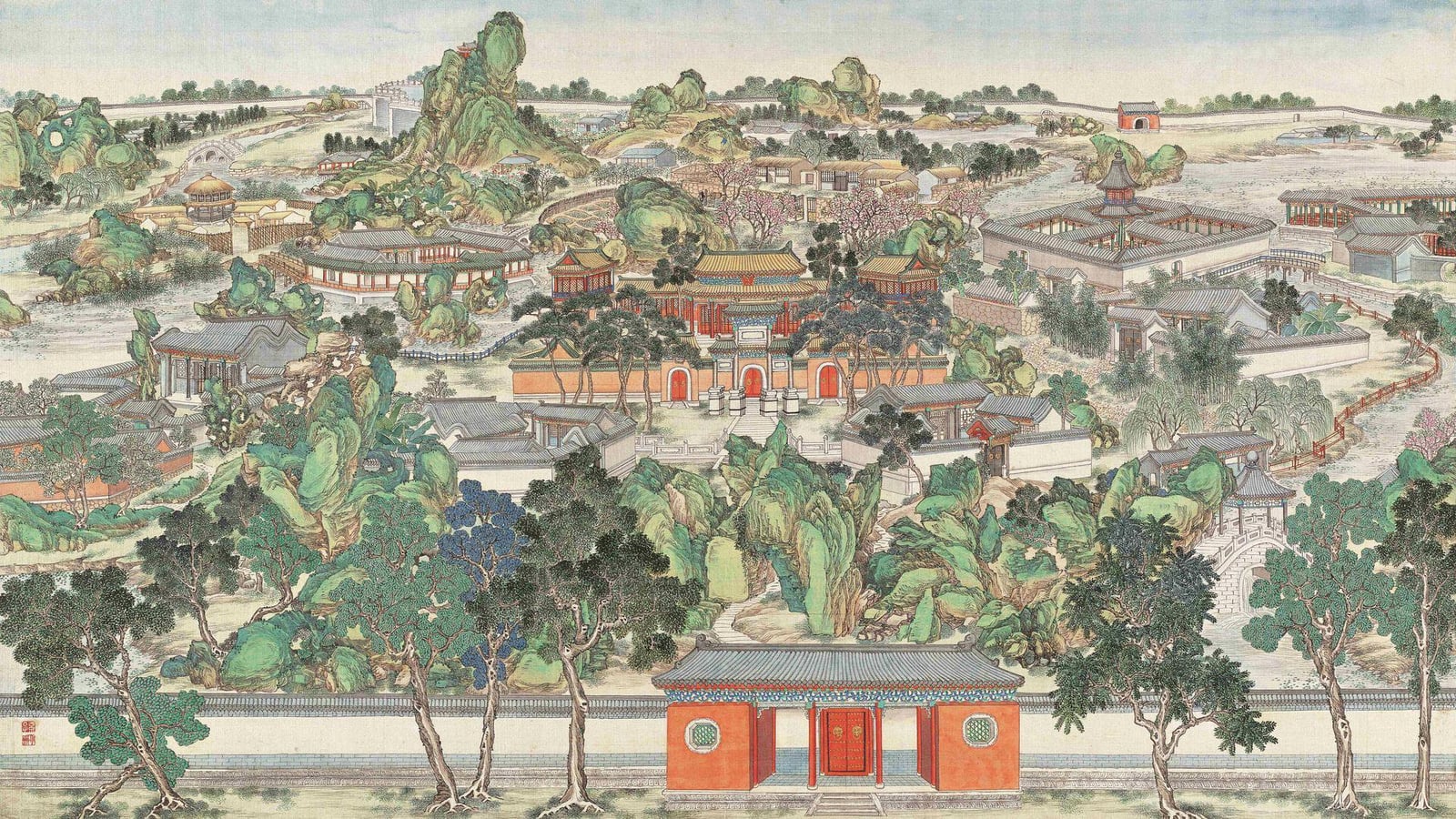
Dream of the Red Chamber Appears in Print
A novel of a declining family became one of China’s great literary works.
In 1791, the first printed edition of Dream of the Red Chamber appeared in Beijing, arranged and published by Gao E and Cheng Weiyuan under the title Illustrated Dream of the Red Chamber. For nearly three decades following the death of its author, Cao Xueqin, in 1763 or 1764, the work had circulated only as hand-copied manuscripts under the title The Story of the Stone. These early handwritten copies, later known as rouge versions and often annotated in red or black ink by unknown commentators, were prized by collectors, copied privately, and, according to Cheng Weiyuan's preface, sold at temple markets for high prices.
The 1791 printing transformed an incomplete manuscript tradition into a finished reading text. Early surviving copies ended abruptly after eighty chapters, leaving the ultimate fates of the characters unresolved outside of cryptic commentary and internal foreshadowing. Cheng and Gao presented a complete hundred-and-twenty-chapter edition, taking Cao Xueqin's initial eighty chapters and appending forty concluding chapters. In his prefaces, Cheng claimed to have assembled these final sections from working manuscripts left by the author, but modern scholars continue to debate whether Gao E and Cheng merely edited existing drafts, compiled an earlier manuscript, or composed the ending themselves.

Keep reading in Yester
Coming soon to the App Store
Keep following the story
Sources
Image: 孙温