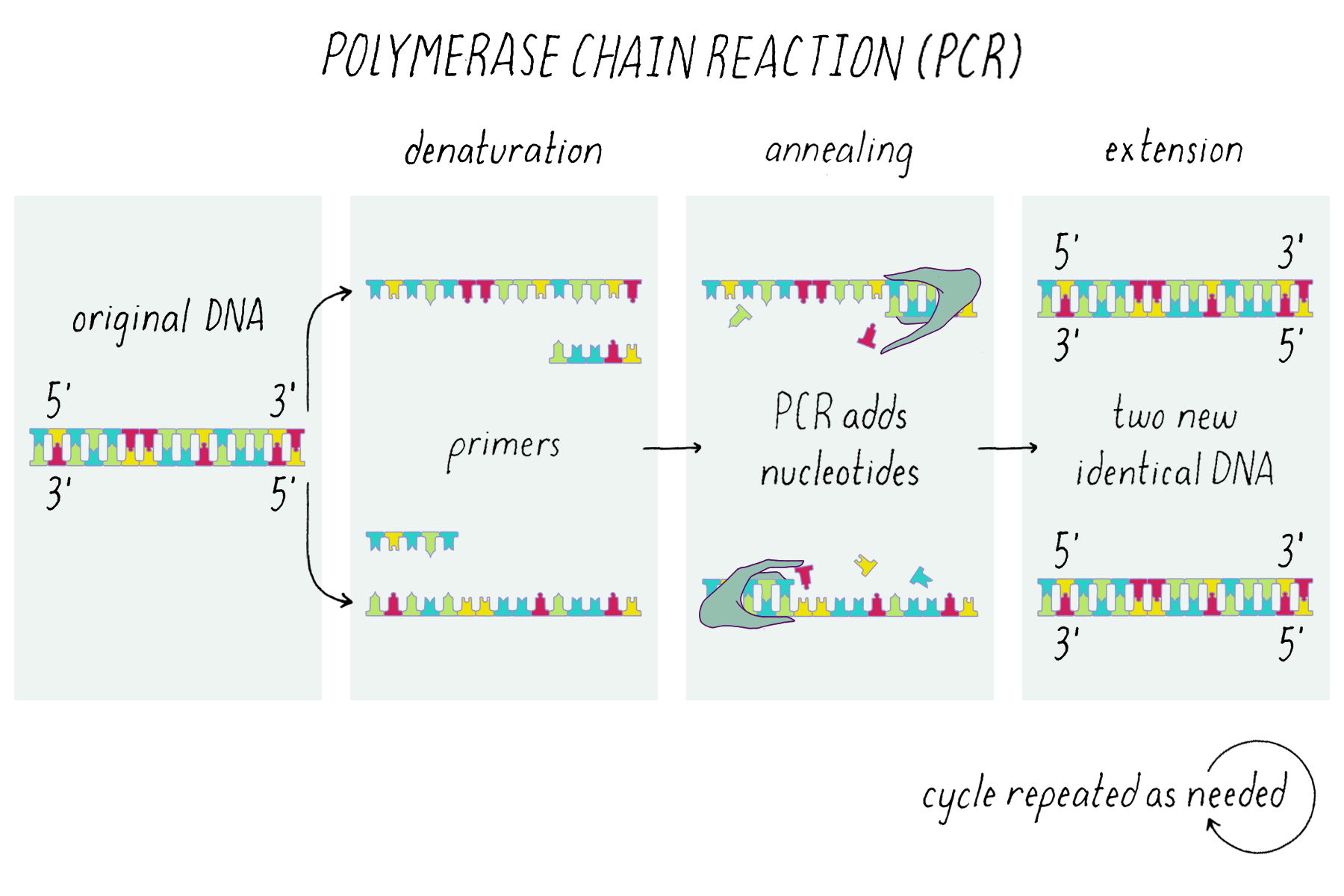
Polymerase Chain Reaction Makes DNA Easy to Copy
A laboratory method for copying DNA quickly changed biology and medicine.
In 1983, American biochemist Kary Mullis devised a laboratory method that transformed molecular genetics while working for Cetus Corporation in Emeryville, California. His task involved synthesizing short chains of DNA, but during a night drive on Highway 128 toward his cabin in Mendocino County, he conceived an alternate procedure: using enzymatic reactions to copy a specific genetic segment repeatedly. A decade later, Mullis shared the 1993 Nobel Prize in Chemistry with Canadian biochemist Michael Smith, honored for turning a cumbersome theoretical challenge into a reliable, cycle-driven procedure known as the polymerase chain reaction.
Earlier in 1971, researchers working in the laboratory of H. Gobind Khorana had demonstrated in the Journal of Molecular Biology that an enzymatic assay could replicate a short DNA sequence using primers in vitro. That earlier demonstration attracted limited notice at the time, leaving laboratory investigations constrained by tedious and labor-intensive approaches. When Mullis conceptualized PCR, he recognized that repeating a basic sequence of temperature shifts could drive exponential duplication, yielding vast quantities of a chosen target sequence from minute initial material.

Keep reading in Yester
Coming soon to the App Store
Keep following the story
Sources
- The Nobel Prize in Chemistry 1993 (NobelPrize.org)
- Kary B. Mullis Facts (NobelPrize.org)
- Kary B. Mullis Nobel Lecture: The Polymerase Chain Reaction (NobelPrize.org)
- Kary B. Mullis Biographical (NobelPrize.org)
- Polymerase Chain Reaction (PCR) Fact Sheet (National Human Genome Research Institute)
- Polymerase chain reaction
Image: explorebiology