Alec Jeffreys Discovers DNA Fingerprinting
A discovery in a genetics laboratory gave courts and families a new kind of evidence.
In 1984, British geneticist Alec Jeffreys discovered DNA profiling while working in the Department of Genetics at the University of Leicester. Jeffreys recognized that although the overwhelming majority of human genetic sequences are shared, specific regions of deoxyribonucleic acid contain repetitive patterns that vary markedly between individuals. These variable sequences, initially identified as minisatellites and tandem repeats, are inherited within families yet differ widely across the general population. By visualizing these variations, Jeffreys established that genetic material could create an individualized profile, effectively introducing a scientific method to verify biological relationships and distinguish between people.
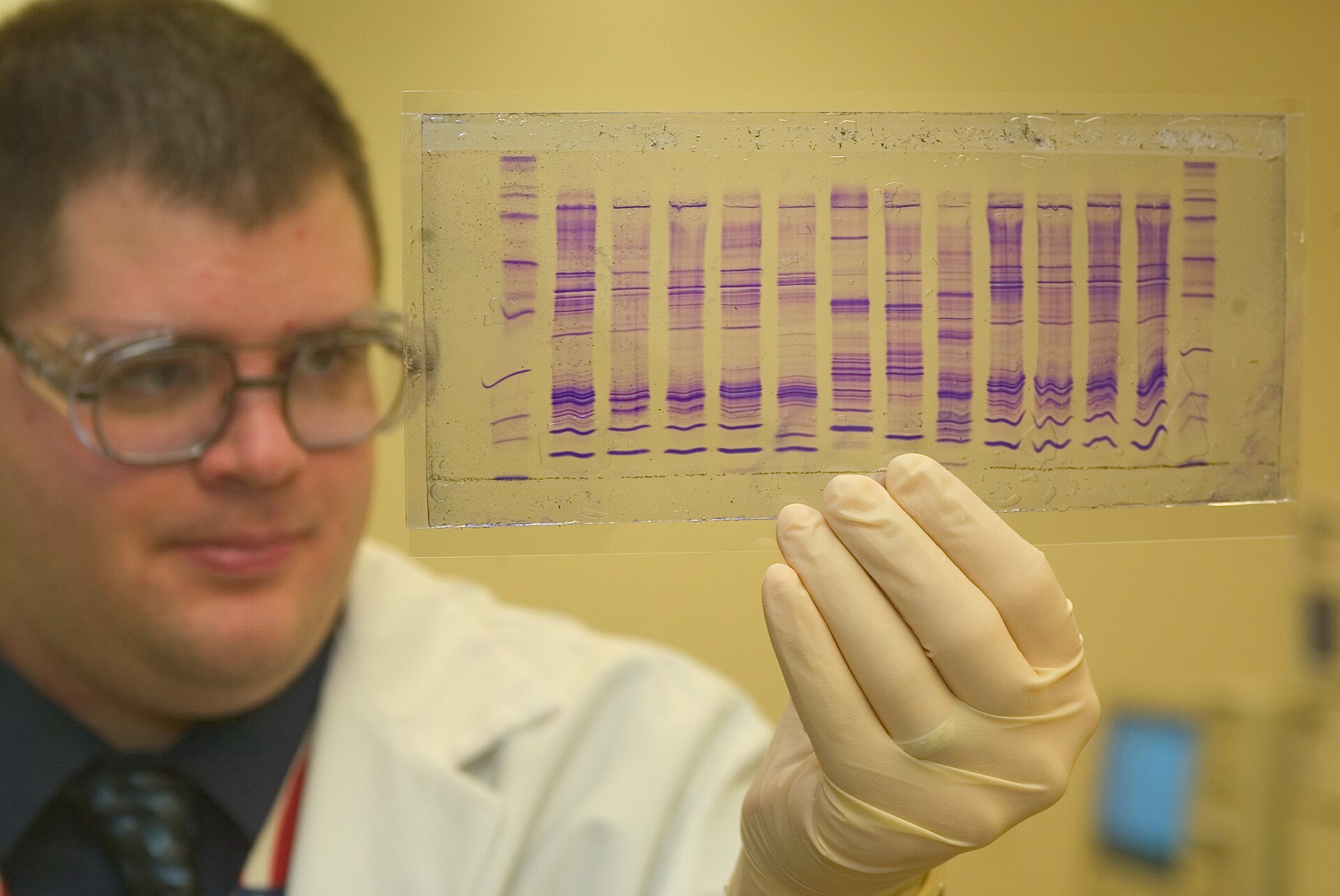
The analytical technique Jeffreys developed relied on restriction fragment length polymorphism, known as RFLP. In this laboratory procedure, technicians extracted DNA from biological samples such as blood or saliva and separated the purified genetic material from other cellular matter. Restriction enzymes then severed the DNA strands at designated sequences. Using gel electrophoresis, an electric field moved the fragments across a matrix, separating them by molecular size. The separated fragments were transferred onto a membrane, permanently attached, and exposed to radioactive or chemiluminescent hybridization probes. The probes bound to matching sequences, revealing patterns of distinct visual bands that could be matched across different specimens.

Keep reading in Yester
Coming soon to the App Store
Keep following the story
Sources
Image: James Tourtellotte, photo editor of CBP Today [1]