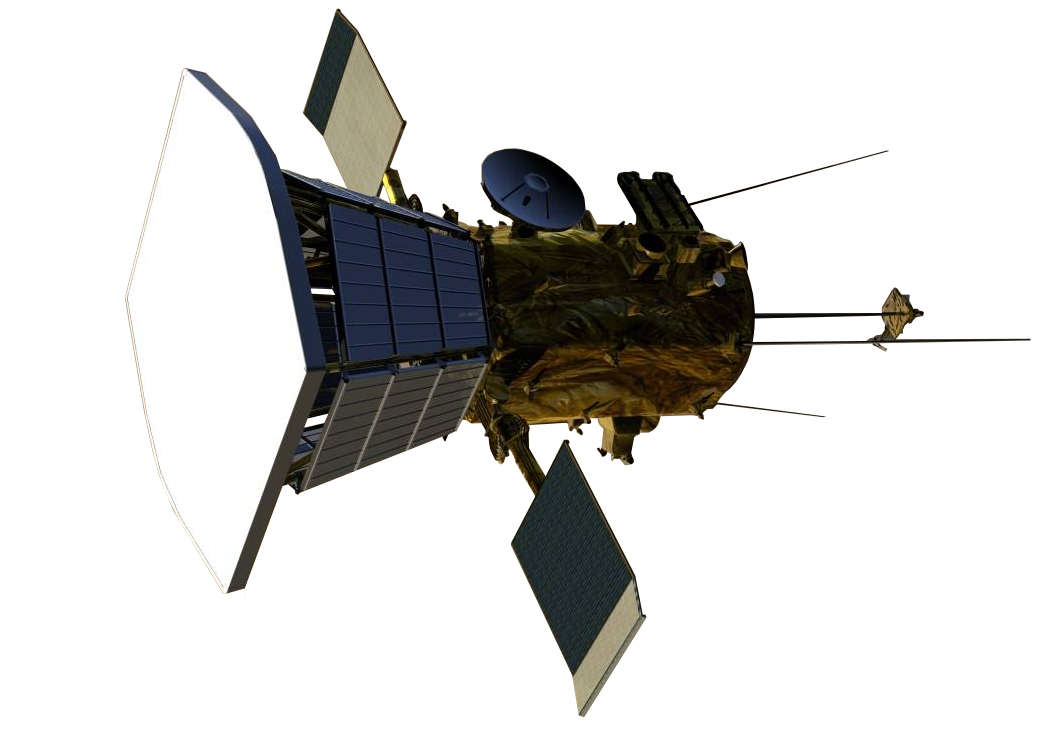
Parker Solar Probe Makes Its Closest Pass to the Sun
A spacecraft flew through the Sun’s outer atmosphere faster than any object built before.
On December 24, 2024, the Parker Solar Probe reached its closest approach to the Sun, traveling through the low solar corona at a distance of about 6.1 million kilometers (3.8 million miles) from the solar surface. Driven along a steep elliptical trajectory shaped by seven gravitational flybys of Venus, the robotic probe reached a speed of about 690,000 kilometers (430,000 miles) per hour, faster than any human-made object had ever moved. The probe had first begun breaking the records set in 1976 by the Helios 2 spacecraft shortly after its launch in 2018.
Flying a spacecraft through the Sun's outer atmosphere had been a goal of the space science community since 1958, but it took decades of technology development to make such a mission possible. The design that eventually flew relied on repeated gravity assists from Venus to shrink its orbit step by step, bringing the spacecraft closer to the Sun with each pass.

Keep reading in Yester
Coming soon to the App Store
Keep following the story
Sources
- NASA's Parker Solar Probe Makes History With Closest Pass to Sun (NASA)
- Parker Solar Probe mission overview (NASA Science)
- NASA Enters the Solar Atmosphere for the First Time, Bringing New Discoveries (NASA)
- Parker Solar Probe Reports Good Status After Close Solar Approach (NASA)
- The Robert J. Collier Trophy (National Aeronautic Association)
- Parker Solar Probe
Image: National Aeronautics and Space Administration (NASA)