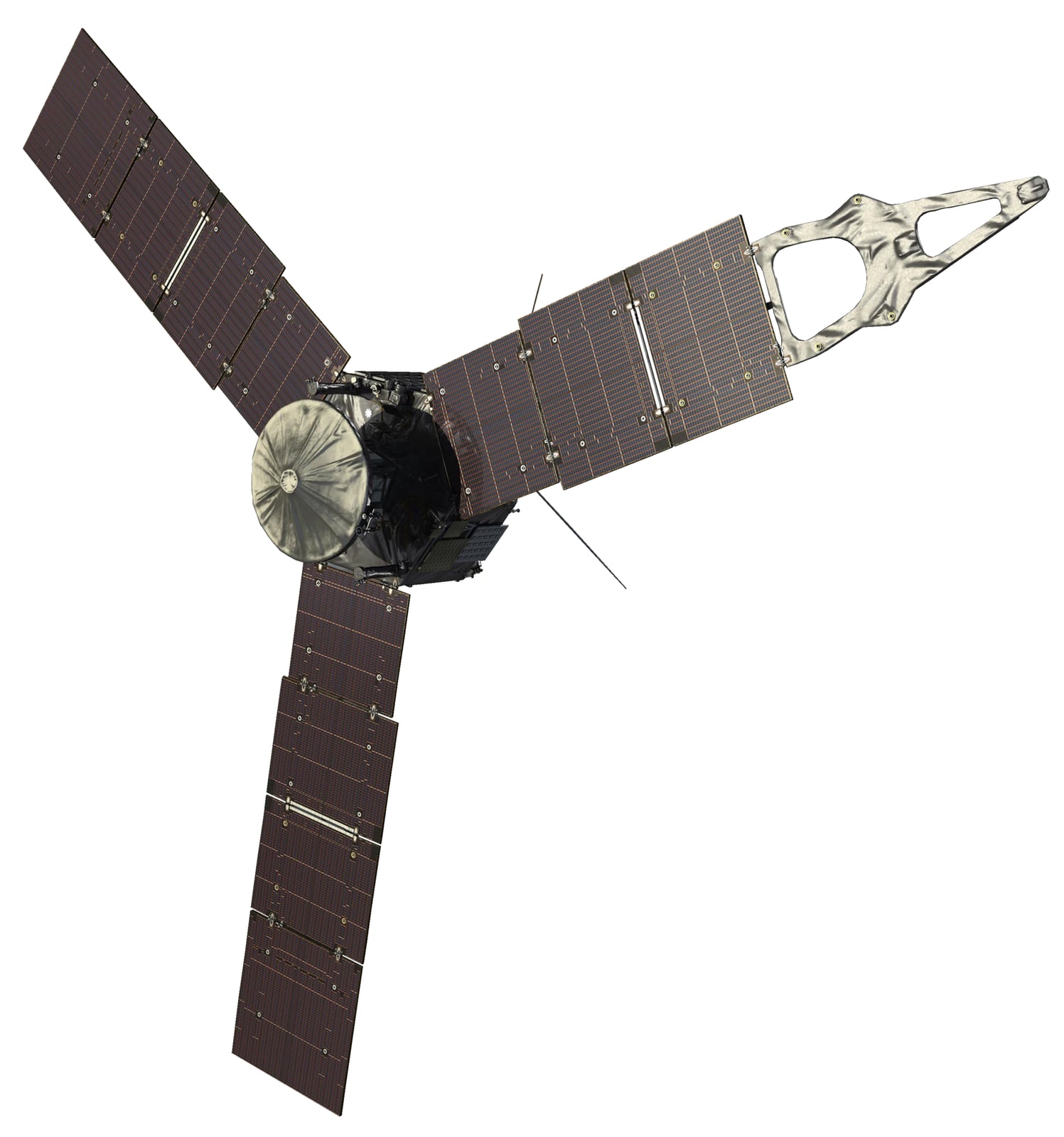
Juno Arrives at Jupiter
A solar-powered probe entered orbit to study the giant planet’s interior and poles.
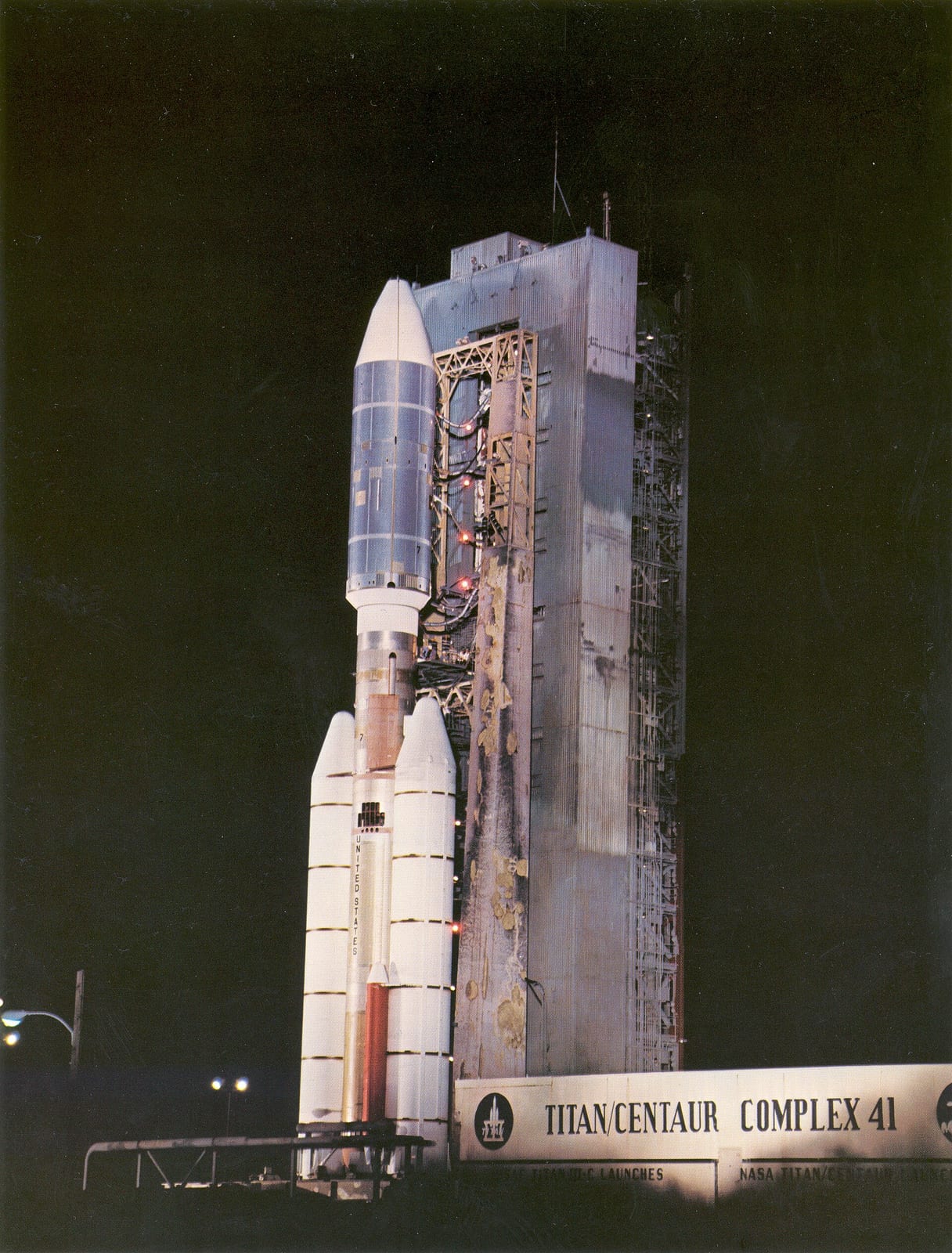
On July 4, 2016 (July 5 in Universal Time), NASA's Juno spacecraft fired its main engine for 35 minutes, slowing by about 542 meters per second, enough to slip into orbit around Jupiter. The probe had traveled roughly 2.8 billion kilometers over nearly five years after launching from Cape Canaveral in August 2011. The burn left the craft in an elongated polar orbit designed to carry it to within about 5,000 kilometers of Jupiter's cloud tops on its closest passes.
After its 2011 launch, Juno followed a looping route that included a deep-space maneuver in the asteroid belt in 2012 and an Earth gravity assist in 2013, which sent it on toward Jupiter. Built by Lockheed Martin and managed by NASA's Jet Propulsion Laboratory as part of the New Frontiers Program, the spacecraft prepared for orbit insertion by raising its spin rate from two to five revolutions per minute to steady itself. Confirmation of the successful burn reached Earth through Deep Space Network antennas in Goldstone, California, and Canberra, Australia. The mission's principal goal was to understand the origin and evolution of Jupiter by looking for a solid core, mapping the planet's intense magnetic field, measuring water and ammonia in the deep atmosphere and observing its auroras.

Keep reading in Yester
Coming soon to the App Store
Keep following the story
Sources
- NASA's Juno Spacecraft in Orbit Around Mighty Jupiter (NASA Jet Propulsion Laboratory)
- NASA's Juno Mission to Remain in Current Orbit at Jupiter (NASA)
- Juno (NASA Science)
- Juno enters Jupiter's orbit, NASA says (Associated Press, via The Washington Times)
- Juno Detections Shatter Ideas About Origin of Zodiacal Light (NASA / Southwest Research Institute)
- Juno (spacecraft)
Image: National Aeronautics and Space Administration (NASA)