The Eclipse That Put Gravity in the Frame
During a few minutes of darkness, astronomers photographed stars near the Sun. Their positions offered a difficult test of Einstein’s new account of gravity.
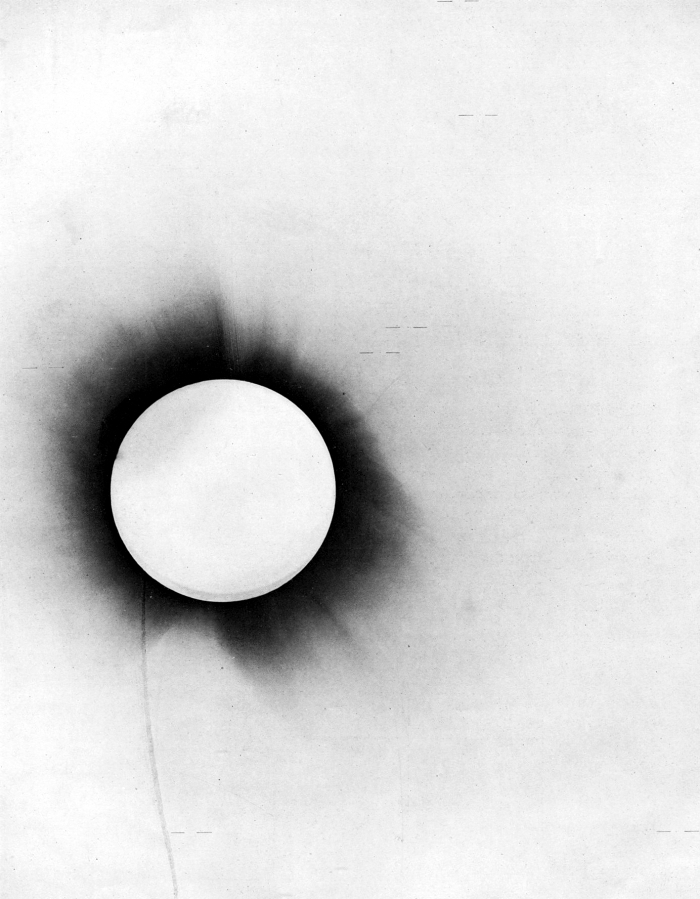
The stars had not moved, but gravity might make them appear to have shifted. That was the difficult proposition behind expeditions sent to observe the total solar eclipse of May 29, 1919. Einstein’s general theory of relativity predicted that light passing near the Sun would be deflected. Ordinarily, sunlight hid the relevant stars from view. During totality, the Moon would briefly cover the bright solar disk, giving astronomers a chance to photograph them.
Two observing stations offered protection against the obvious danger of bad weather. Arthur Eddington and Edwin Cottingham traveled to Príncipe, off the west coast of Africa. Andrew Crommelin and Charles Davidson worked at Sobral in Brazil, with Astronomer Royal Frank Dyson helping organize the undertaking from Britain. Remembering both parties matters. The famous shorthand of Eddington proving Einstein compresses a coordinated expedition, multiple instruments and substantial photographic work into a scene centered on two celebrated names.

Keep reading in Yester
Coming soon to the App Store
Keep following the story
Sources
Image: F. W. Dyson, A. S. Eddington, and C. Davidson