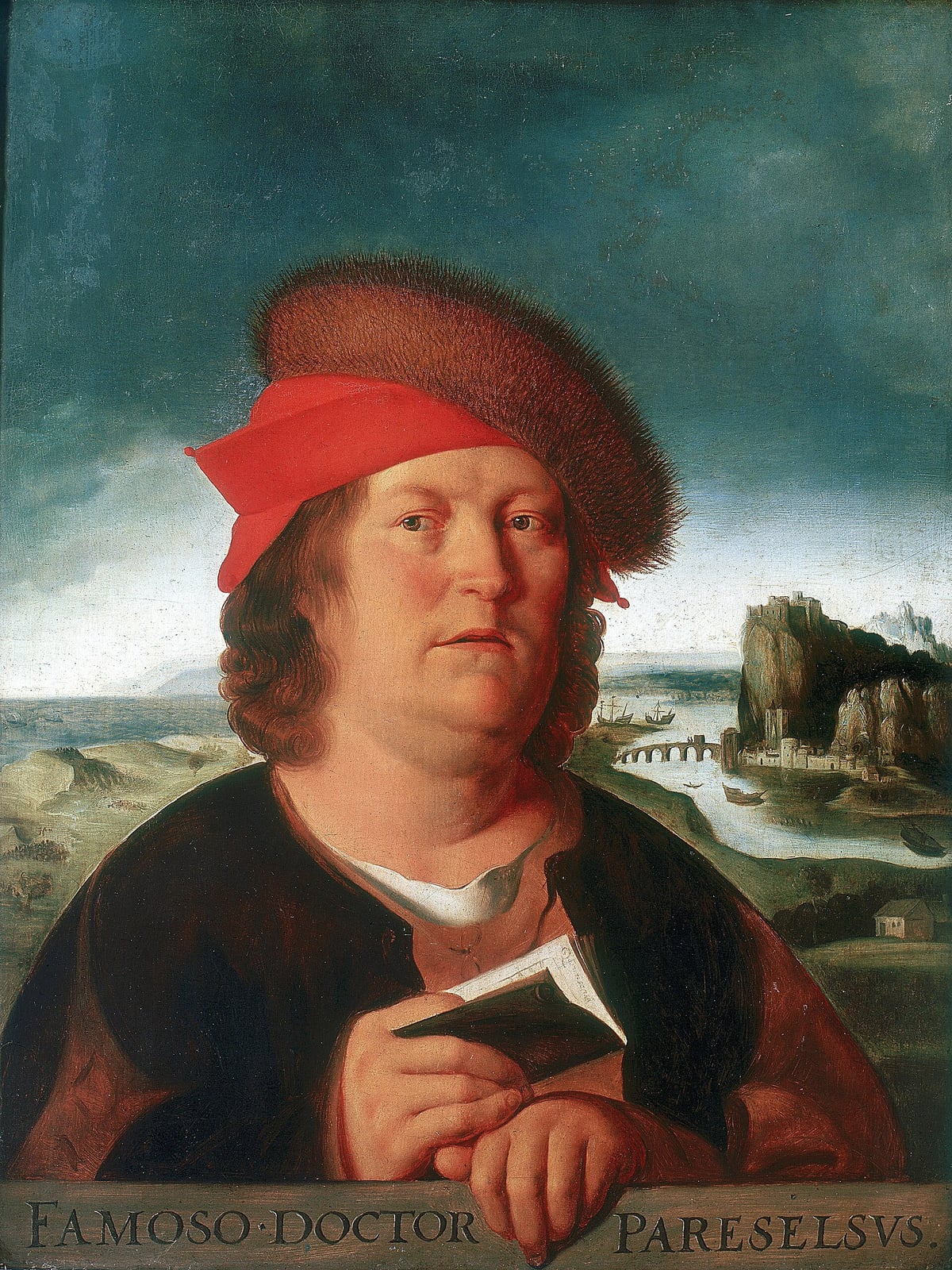
Paracelsus Challenges Medical Tradition in Basel
A combative physician lectured in German and championed chemical remedies.
In 1526, the Swiss physician and alchemist Theophrastus Bombast von Hohenheim arrived in Basel to treat the prominent printer Johann Frobenius. His reported success secured him the admiration of the humanist scholar Erasmus of Rotterdam, who was residing in the city and initiated a correspondence with the physician on medical and theological matters. The following year, the municipal authorities appointed him city physician, an office that included the privilege of lecturing at the University of Basel. Rather than adhering to conventional academic rituals, he immediately began confronting the city's medical establishment.
The new lecturer broke sharply with institutional norms by delivering his university lectures in German rather than academic Latin, explaining that he wished his instruction to be accessible to a broader audience. He also opened his hall to barber-surgeons, alchemists, and apothecaries who possessed practical craft knowledge rather than university degrees. Contending that the sickbed and the patient were the only legitimate sources of medical learning, he openly mocked physicians who prioritized scholastic titles and untried theories above empirical practice.

Keep reading in Yester
Coming soon to the App Store
Keep following the story
Sources
Image: After Quinten Metsys