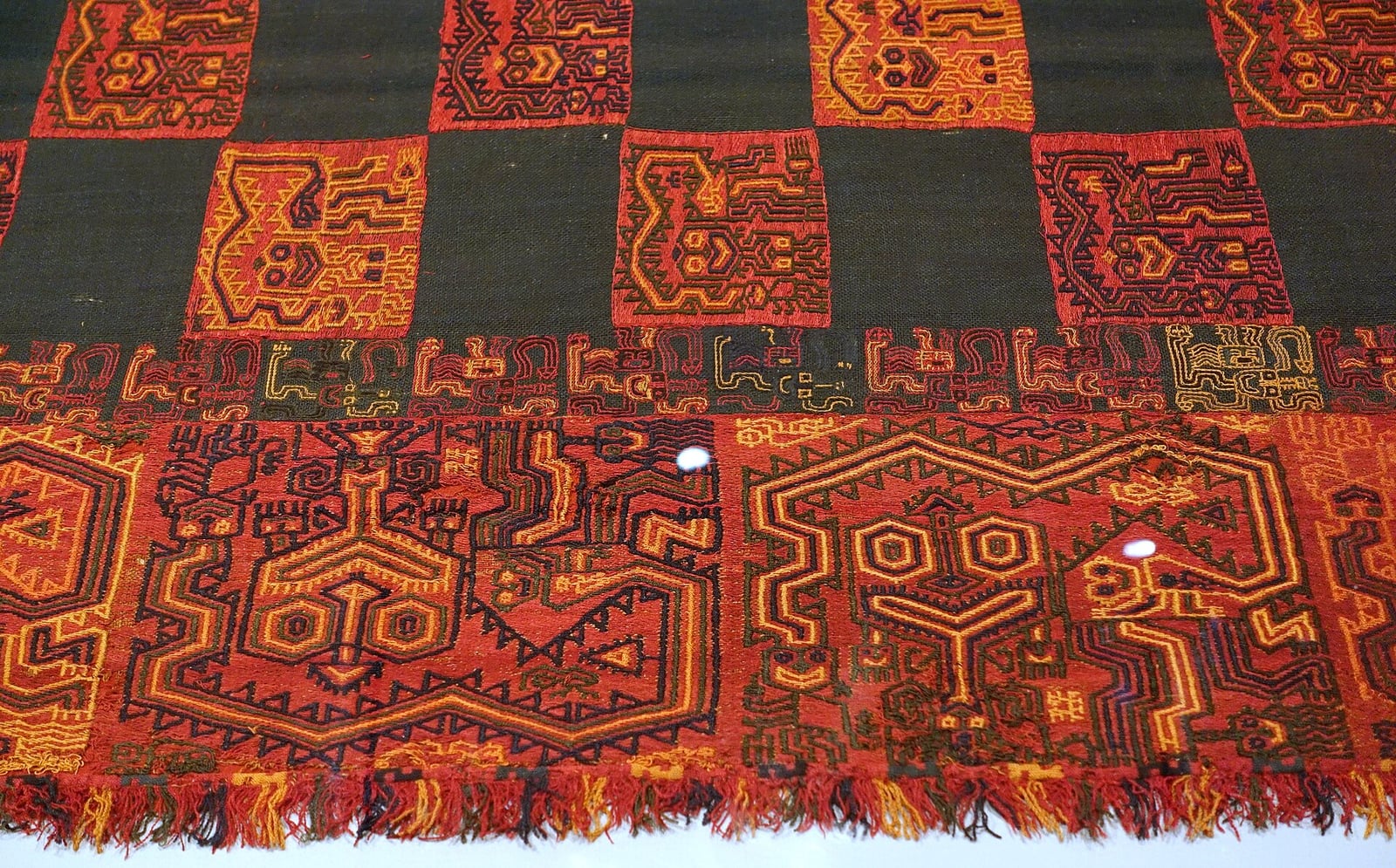
Paracas Weavers Make Textiles for the Dead
Brilliant embroidered mantles wrapped the dead in a desert necropolis.
On the arid desert peninsula of southern Peru, archaeological work initiated in the 1920s by Julio Tello revealed hundreds of elaborate mortuary bundles preserved in pit tombs and shaft chambers. These burials belonged to the Paracas culture, an Andean society that flourished roughly between 800 BCE and 100 BCE across the river valleys of the modern Ica Region. Lacking a centralized state or solitary ruler, the population was organized into politically autonomous local chiefdoms tied together by common religious customs, ceremonial feasts, and extensive trade networks.
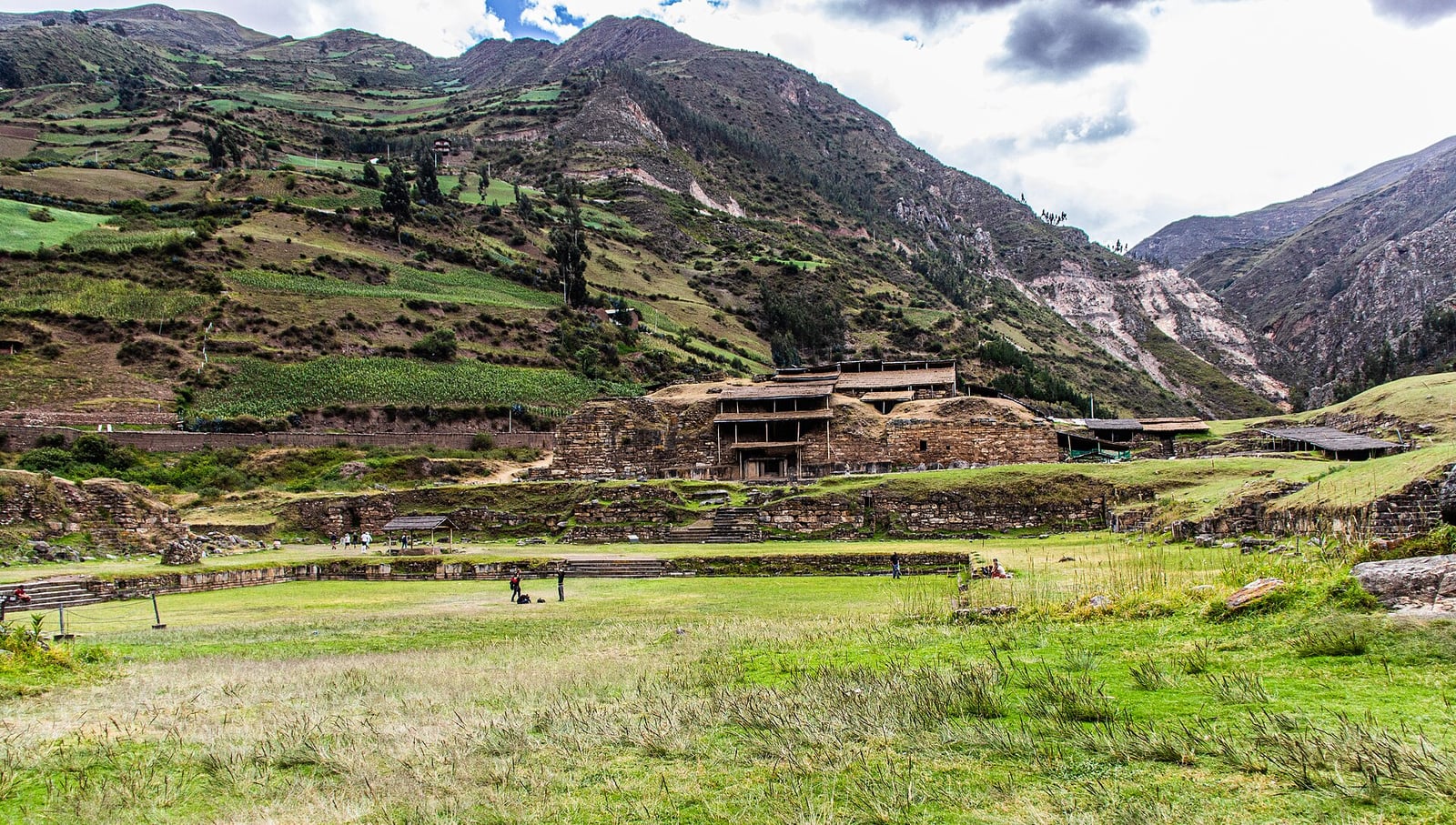
Early Paracas communities operated within the cultural reach of the highland chavin tradition, incorporating religious motifs such as felines into their early ceramics before developing their own distinct styles between 500 and 380 BCE. Regional centers developed around ceremonial mound complexes in valleys like Chincha, where strontium isotope analysis of offerings indicates that people traveled from distant territories to participate in ritual gatherings. Agriculture and coastal fishing supported these populations, enabled by sophisticated canal systems constructed to channel water across the desert valleys.

Keep reading in Yester
Coming soon to the App Store
Keep following the story
Sources
- The Wari Kayan Cemetery and Its Discoverer (Museo Chileno de Arte Precolombino)
- Paracas Mummy Bundles (Bard Graduate Center)
- Paracas and Other Andean Textiles (Bard Graduate Center)
- Paracas Textiles: an introduction, by Ananda Cohen-Aponte (Smarthistory, via LibreTexts)
- A 2,300-year-old architectural and astronomical complex in the Chincha Valley, Peru (PNAS, via PubMed Central)
- The Final Days of Paracas in Cerro del Gentil, Chincha Valley, Peru (PLOS ONE, via PubMed Central)
- How Feasting Rituals Help Shape Human Civilization (Smithsonian Magazine)
- Paracas culture
Image: Daderot