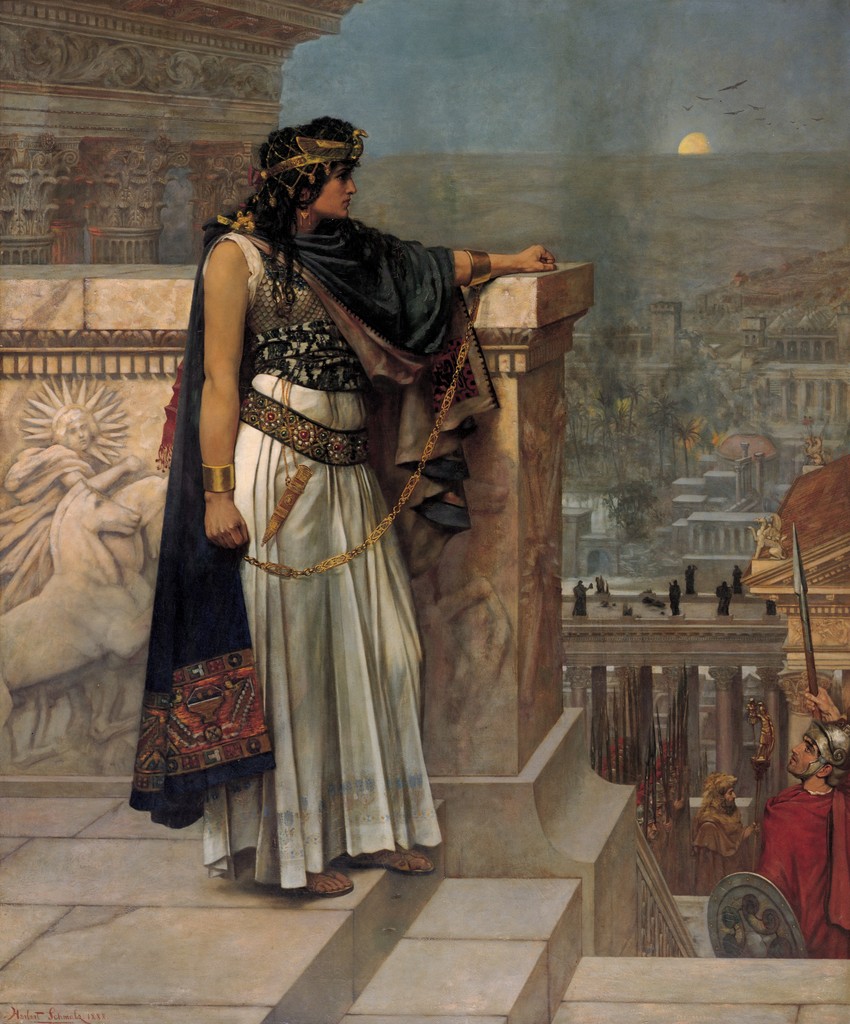
Zenobia of Palmyra Challenges Rome
A queen ruled a desert trading city that briefly held much of the Roman East.
In the Syrian desert, the wealthy trading city of Palmyra reached the height of its influence during the political crises that shook the Roman world in the third century. The local ruler Odaenathus had established strong authority across the Near East by checking the advances of the Sasanian Persian Empire on Rome's behalf. Following his assassination in 267 along with his eldest son, his widow Septimia Zenobia assumed the regency for her young son, Vaballathus. While she never formally claimed to rule alone, Zenobia held effective power over Palmyra's court, retaining administrative continuity and maintaining the loyalty of the army without facing documented local opposition.
The institutional basis of Palmyrene authority in the region soon became a source of tension with Rome. While the central Roman imperial administration viewed the military ranks and regional governorship held by Odaenathus as personal offices that reverted to the emperor upon his death, the Palmyrene leadership treated those titles as a hereditary dynastic prerogative. To secure her family's hold, Zenobia applied both royal designations like King of Kings and senior Roman military offices to her young son. During her early years as regent, she consolidated control across Syria, reinforced fortifications along the Euphrates River, and addressed conflicts with regional tribes and Sasanian forces.

Keep reading in Yester
Coming soon to the App Store
Keep following the story


Sources
- Zenobia (Livius.org)
- Vaballathus (Livius.org)
- Odaenathus (Livius.org)
- Aurelian (Livius.org)
- Zosimus, New History, Book 1 (1814 translation, Tertullian Project)
- Historia Augusta, Life of Aurelian (LacusCurtius, University of Chicago)
- Historia Augusta, The Thirty Pretenders (LacusCurtius, University of Chicago)
- Zenobia
Image: Herbert Gustave Schmalz