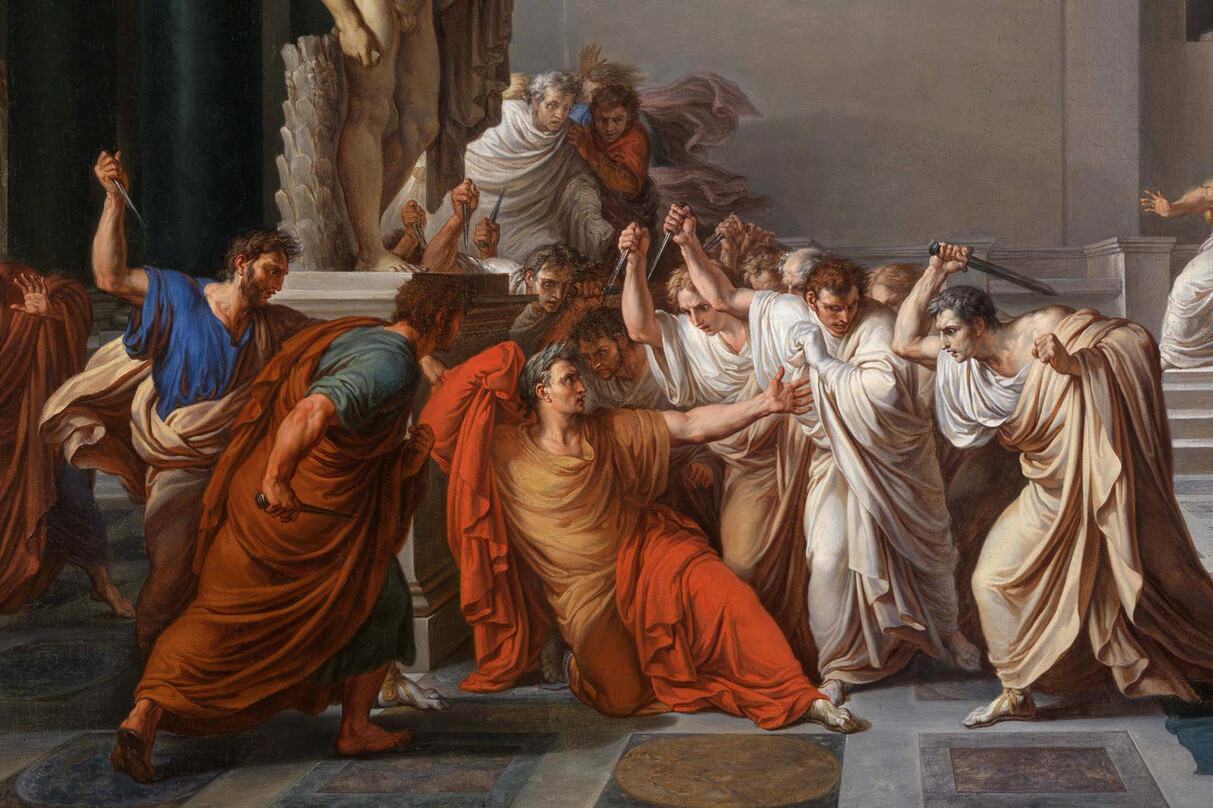
Julius Caesar Is Assassinated
Senators killed Rome’s dictator, and a civil war followed.
On 15 March 44 BC, Julius Caesar attended a scheduled meeting of the Roman Senate held at the Curia of Pompey, adjacent to the Theatre of Pompey in Rome. Caesar had recently been appointed dictator in perpetuity following years of civil conflict and his conquest of Gaul. This accumulation of supreme authority alarmed traditionalist aristocrats who feared the permanent loss of civic liberties. As Caesar took his place, a group of conspirators, drawn from a plot that more than sixty men had joined according to Suetonius, converged upon him under the guise of presenting a routine petition, drew concealed daggers, and attacked him before the assembled house.
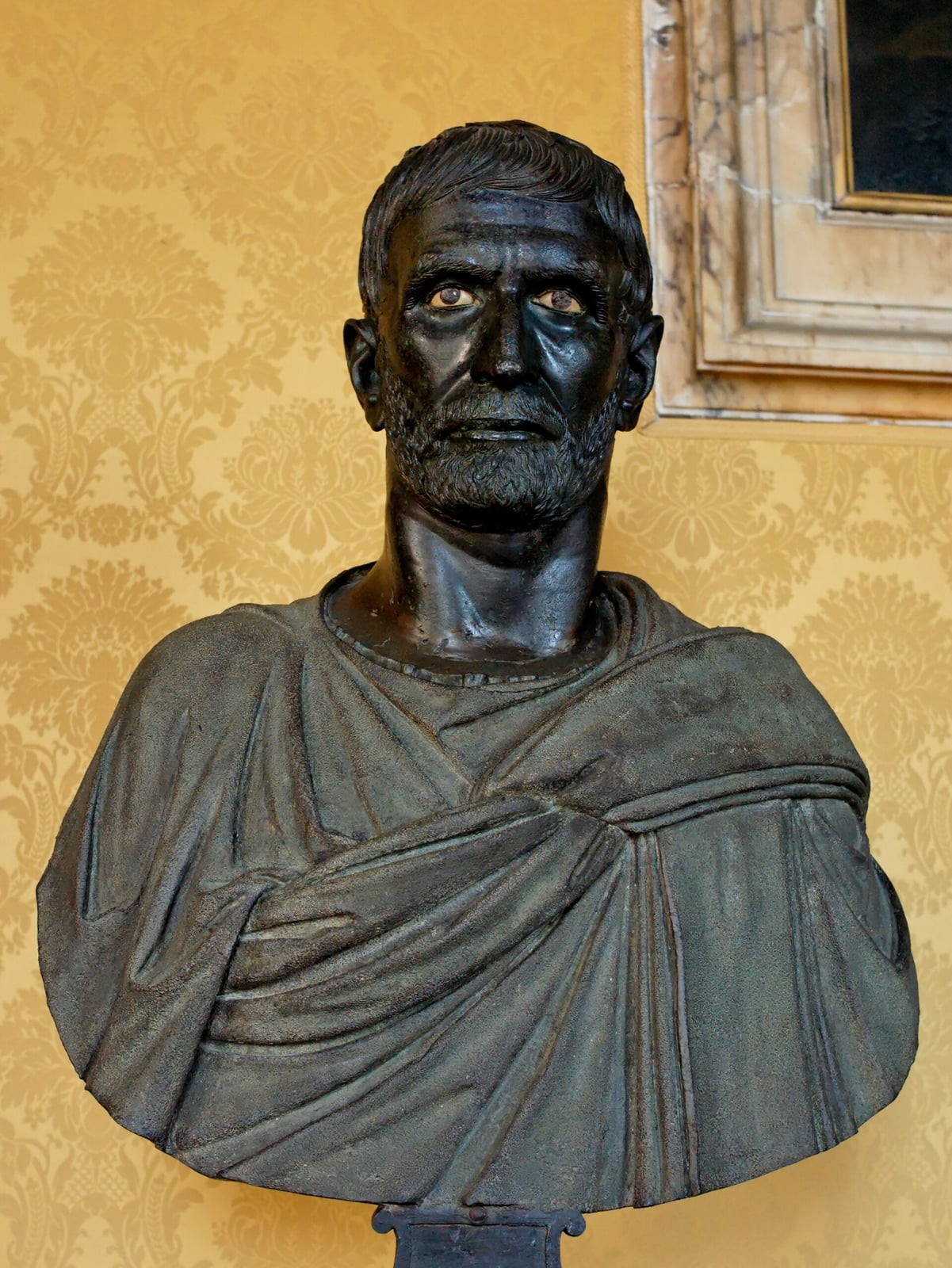
The plot had taken shape weeks earlier, organized principally by Marcus Junius Brutus and Gaius Cassius Longinus. The conspirators, later joined by Caesar's former lieutenant Decimus Junius Brutus Albinus, resolved that direct violence was necessary to defend the Roman Republic. While some joined out of principled devotion to republican traditions, the ancient writer Nicolaus of Damascus noted that others acted out of personal resentment, believing that Caesar had passed them over for honors or distributed too much wealth to former adversaries.

Keep reading in Yester
Coming soon to the App Store
Keep following the story

Sources
- Suetonius, Life of Julius Caesar (Loeb translation, LacusCurtius, University of Chicago)
- Plutarch, Life of Caesar (Loeb translation, LacusCurtius, University of Chicago)
- Cassius Dio, Roman History, Book XLIV (Loeb translation, LacusCurtius, University of Chicago)
- Appian, The Civil Wars, Book II (Loeb translation, LacusCurtius, University of Chicago)
- Assassination of Julius Caesar
Image: Vincenzo Camuccini