Baekje Sends Buddhist Scriptures and Images to Japan
A Korean kingdom’s gift helped bring Buddhism to the Japanese court.
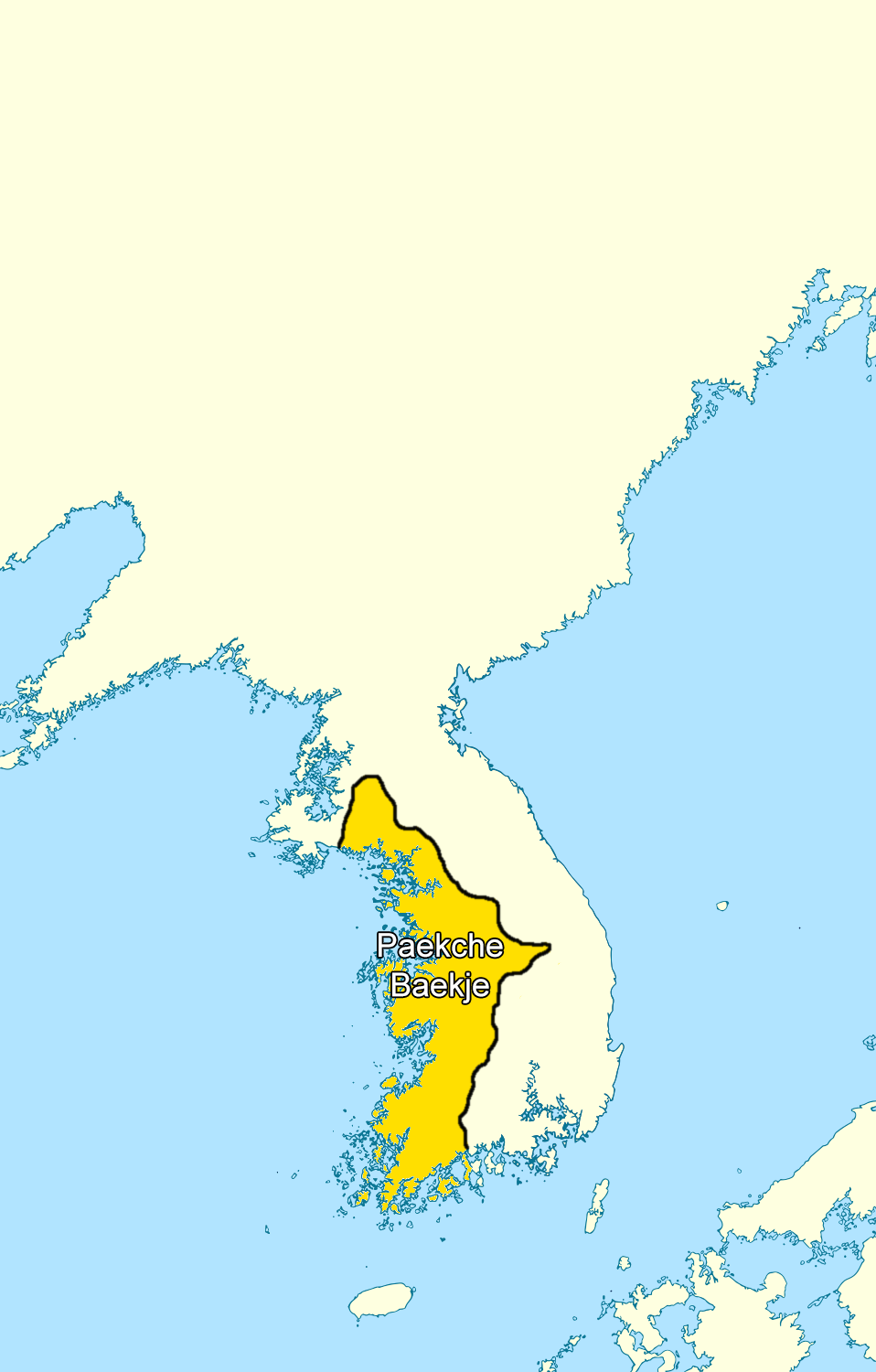
In 538, King Seong relocated the capital of the southwestern Korean kingdom of Paekche to Sabi, modern Buyeo County. Paekche had been pushed south from the Han River basin decades earlier by the northern kingdom of Goguryeo, eventually taking refuge at Ungjin. Secured behind mountains, the court at Ungjin had survived, but it was largely cut off from wider maritime trade. The transfer to Sabi on the navigable Geum River restored direct maritime routes to the Yellow Sea and allowed King Seong to reorganize his kingdom, which he temporarily renamed Southern Buyeo.
This relocation coincided with major diplomatic and religious initiatives. Paekche had officially accepted Buddhism in 384, credited in traditional accounts to an Indian monk named Malananta who had arrived from Eastern Jin China. From his new riverine capital, he worked to foster closer relations with southern Chinese dynasties such as Liang, which provided skilled artisans, cultural goods, and political recognition. Buddhism became an essential element of Paekche court identity, shaping royal authority, architecture, and international diplomacy.

Keep reading in Yester
Coming soon to the App Store
Keep following the story
Sources
Image: Asieon