The First Opium War Forces China Open to British Trade
A conflict over the opium trade ended with the cession of Hong Kong.
During the eighteenth century, European commerce with Qing China operated under the Canton System, which concentrated all Western maritime trade at the port of Guangzhou. Foreign merchants dealt exclusively through a licensed guild known as the Cohong and were confined to designated quarters outside the city walls. While British consumers developed an immense demand for Chinese tea, porcelain, and silk, British manufactures found little market in China. To settle this imbalance, British merchants paid in silver bullion. Seeking a commodity that could reverse the outflow of precious metal, the British East India Company promoted the cultivation of opium in India, creating a lucrative export trade to coastal China.
Although the imperial court repeatedly issued edicts against opium, smuggling grew rapidly during the early nineteenth century. Foreign merchants circumvented coastal regulations by anchoring hulks at the mouth of the Pearl River to serve as floating storehouses, transferring contraband onto fast Chinese vessels for distribution inland. Inbound drug sales steadily reversed the regional flow of silver. Compounding the drain on domestic currency, addiction spread widely through Chinese society, reaching imperial garrisons and bureaucratic offices. In response to mounting social decay and the loss of revenue, the Daoguang Emperor rejected proposals to legalize the trade and decided in 1839 to enforce a comprehensive prohibition.

Keep reading in Yester
Coming soon to the App Store
Keep following the story
Sources
- Rise and Fall of the Canton Trade System II (MIT Visualizing Cultures)
- Drug Fighter Lin Zexu (Chinese Culture, Hong Kong)
- Opium Wars and Economic Imperialism (OER Project)
- Treaty of Nanking text (worldjpn)
- The First Opium War: The Opium Trade, by Peter C. Perdue (MIT Visualizing Cultures)
- The First Opium War: Hostilities (MIT Visualizing Cultures)
- The Opening to China Part I: the First Opium War, the United States, and the Treaty of Wangxia, 1839-1844 (U.S. Department of State, Office of the Historian)
- The Second Opium War: Timeline (MIT Visualizing Cultures)
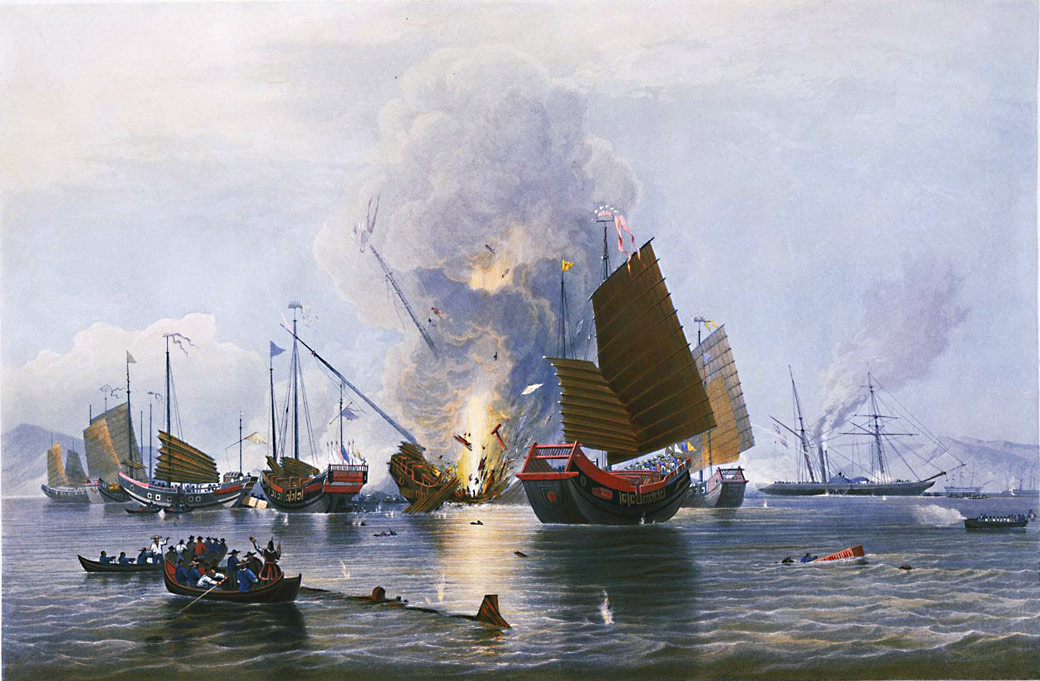
Image: Edward Duncan