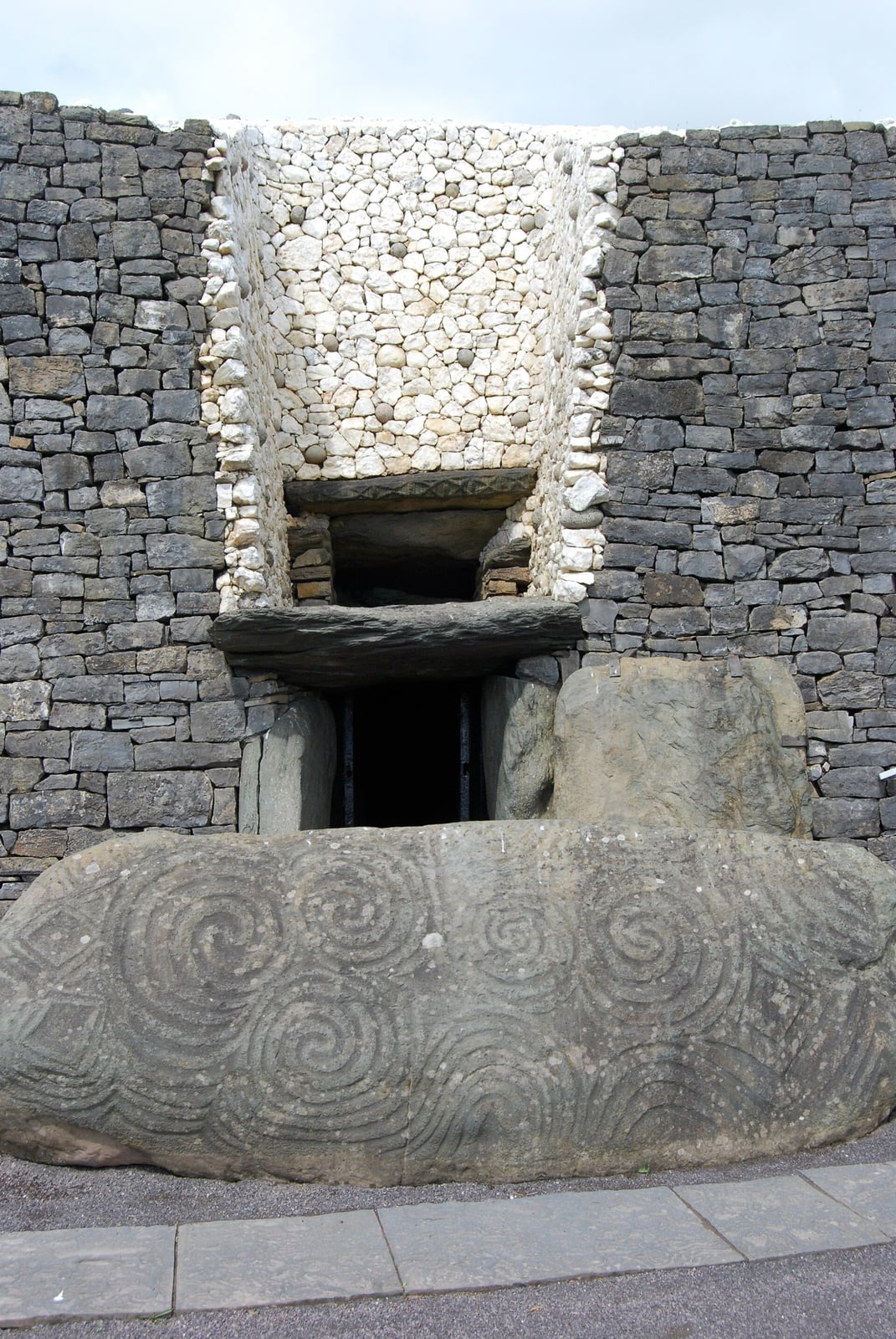
Newgrange Lets the Winter Sunrise into Its Tomb
An Irish passage tomb was built so the solstice sunrise lights its inner chamber.
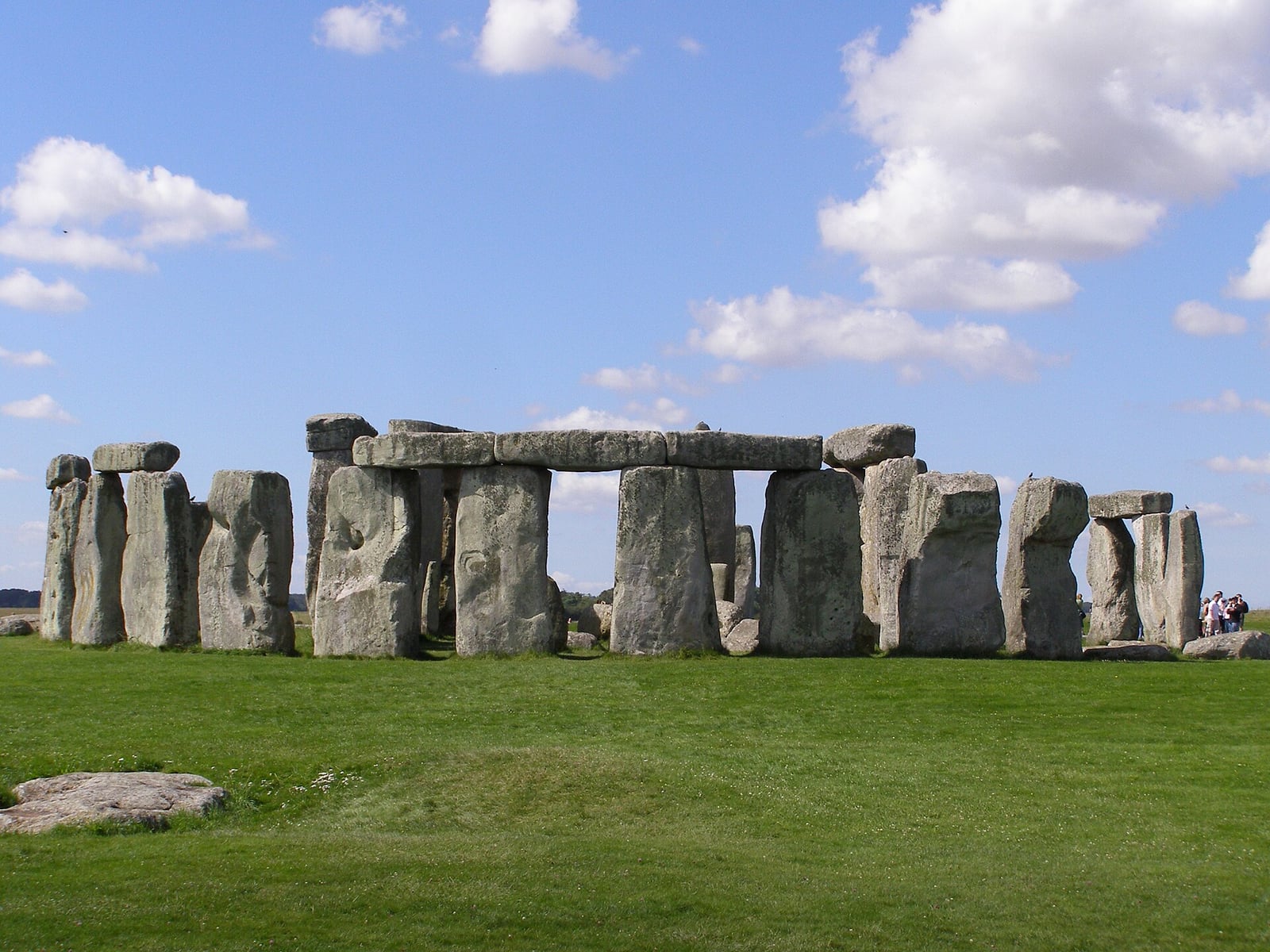
Overlooking the River Boyne in County Meath, the prehistoric mound of Newgrange stands as the central monument of the Brú na Bóinne complex. Constructed during the Neolithic period around 3200 BC, the circular cairn was raised centuries before the builders of Stonehenge set up its monumental sarsens. The mound spans roughly 85 metres at its widest point, rises 12 metres high, and encloses about 200,000 tonnes of earth and stone collected from local river terraces and distant regional sources. An inner stone passageway 19 metres long leads beneath the earthen mass, opening into a central chamber with a high corbelled vault flanked by three smaller recesses.
The structure's engineering is renowned for its solar alignment at the winter solstice. Above the entrance sits a specialized architectural opening called a roofbox. Each year around the shortest day of the year, the rising sun shines directly through this aperture and projects a narrow beam along the length of the graded stone passage. The light gradually illuminates the central burial chamber and its carved stones for approximately 17 minutes. Because of shifts in the axial tilt of the Earth over the past five millennia, the beam now strikes the centre of the chamber floor rather than reaching the back wall as it originally did. Archaeologist Michael J. O'Kelly was the first person in modern times to record this event on 21 December 1967, though earlier caretakers had noted winter sunlight entering the passage.

Keep reading in Yester
Coming soon to the App Store
Keep following the story
Sources
- The Winter solstice at Newgrange (National Museum of Ireland)
- Brú na Bóinne Visitor Centre: Newgrange and Knowth (Heritage Ireland, Office of Public Works)
- Brú na Bóinne: Archaeological Ensemble of the Bend of the Boyne (UNESCO World Heritage Centre)
- Newgrange (Newgrange.com)
- Description of Newgrange by Claire O'Kelly (Newgrange.com)
- Michael J. O'Kelly (Newgrange.com)
- Newgrange
Image: jemartin03