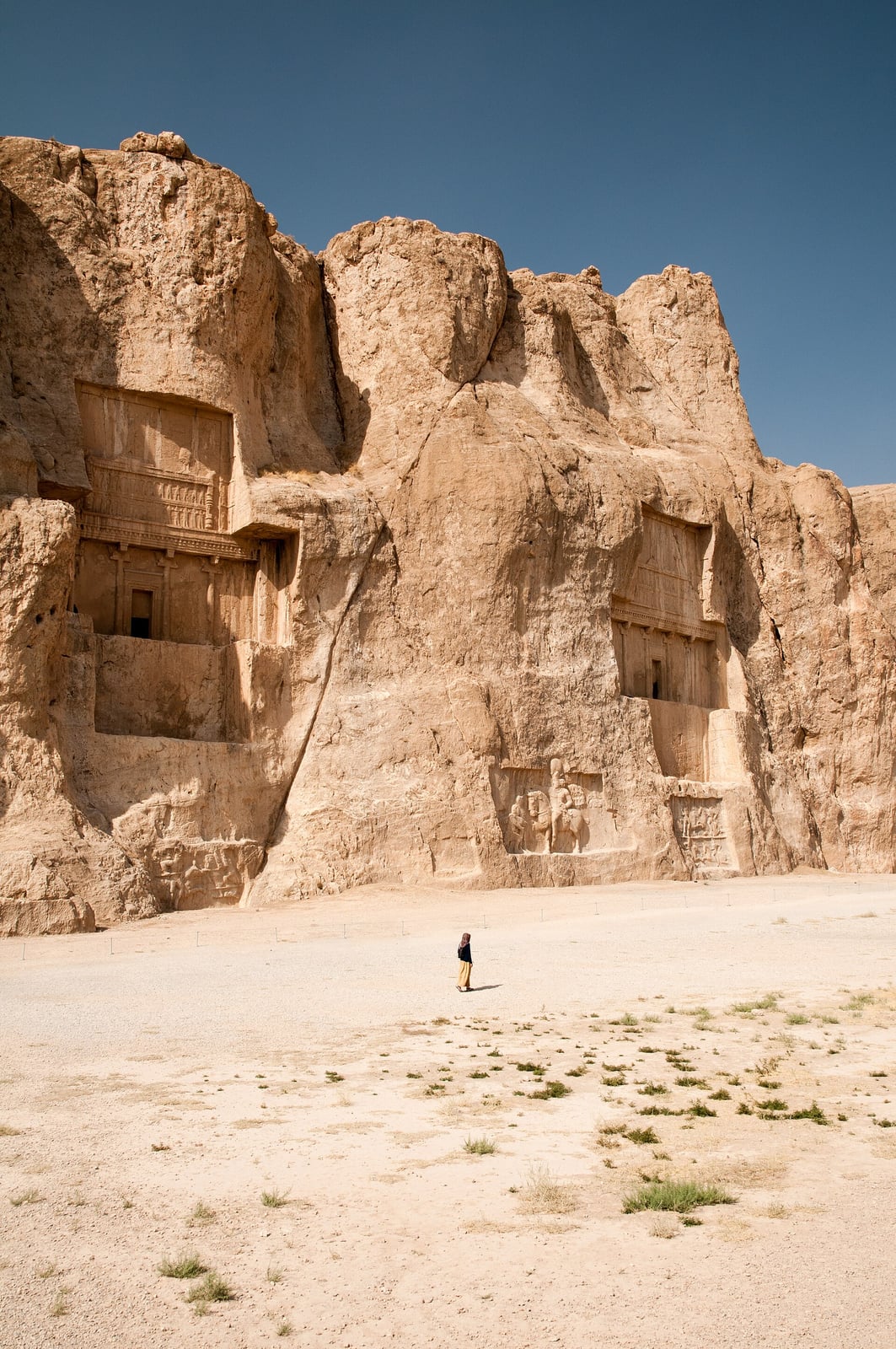
Darius the Great Is Buried in a Cliff at Naqsh-e Rostam
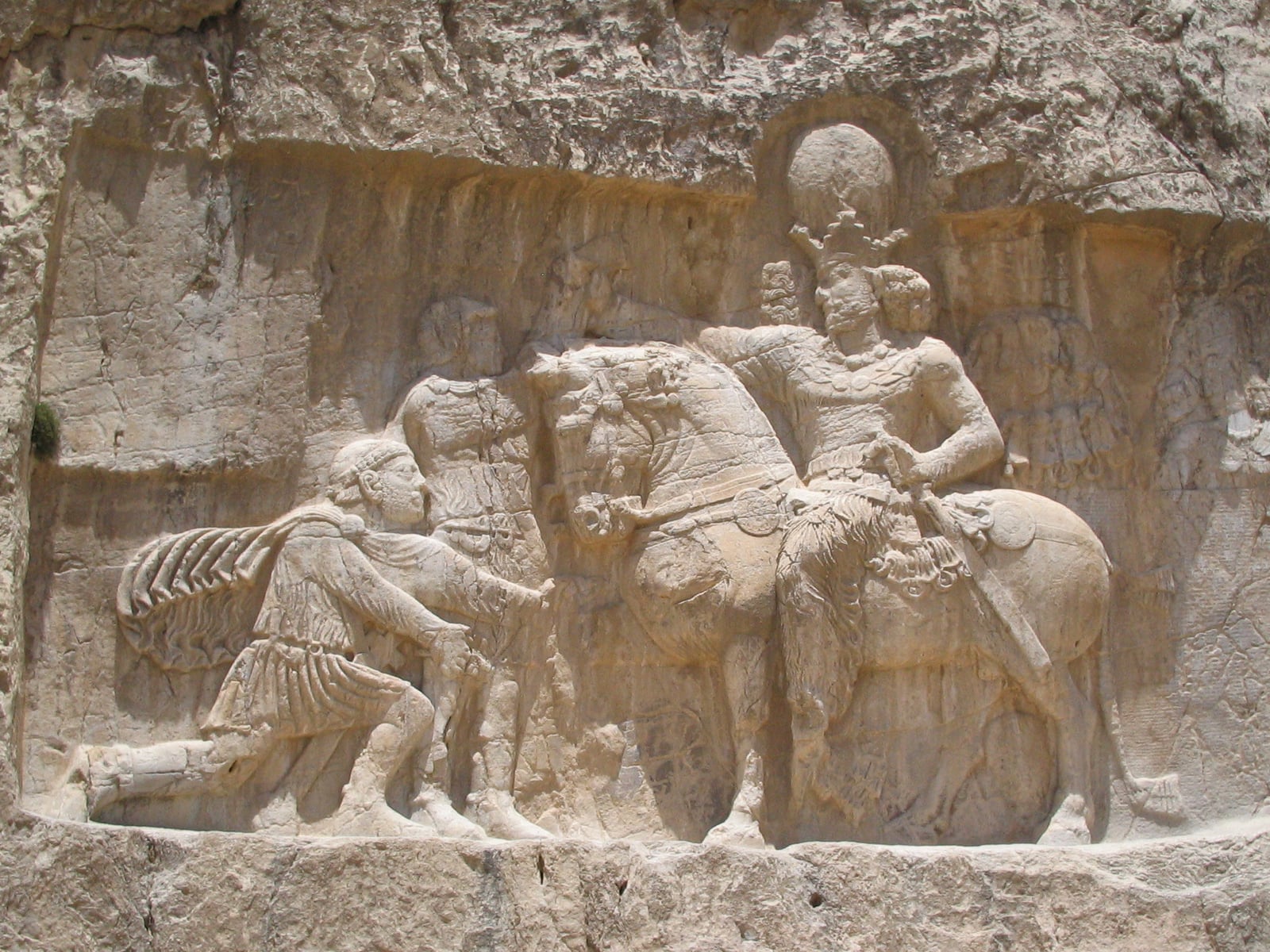
Later Persian kings cut their tombs, and Sasanian victory reliefs, into the same rock face.
A few kilometers north-west of the ancient capital of Persepolis, the sheer rock cliffs of Naqsh-e Rostam rise above the plain in Iran's Fars province. Long before Persian monarchs selected the site, early carvers had already left their mark on the stone during the Elamite era. Although mostly erased or altered in later centuries, faint remains of an Elamite relief, including figures seated upon coiled snake thrones and a female figure wearing a mural crown, indicate that the vertical mountain wall held ceremonial prominence well before the rise of the Achaemenid Empire.
Around the fifth century BCE, Darius I chose this towering cliff face for his final resting place. Workers carved a monumental cruciform facade high into the stone, centering on a small chamber designed to hold the monarch in a sarcophagus. Above the entryway, the design featured a faux-portico imitating an Achaemenid palace with bull's-head capitals, surmounted by an elaborate religious tableau. In this upper scene, the king stands before a fire altar and beneath a winged disk, elevated on a platform supported by two rows of fifteen figures representing provinces from across his extensive realm.

Keep reading in Yester
Coming soon to the App Store
Keep following the story
Sources
Image: Laurens R. Krol