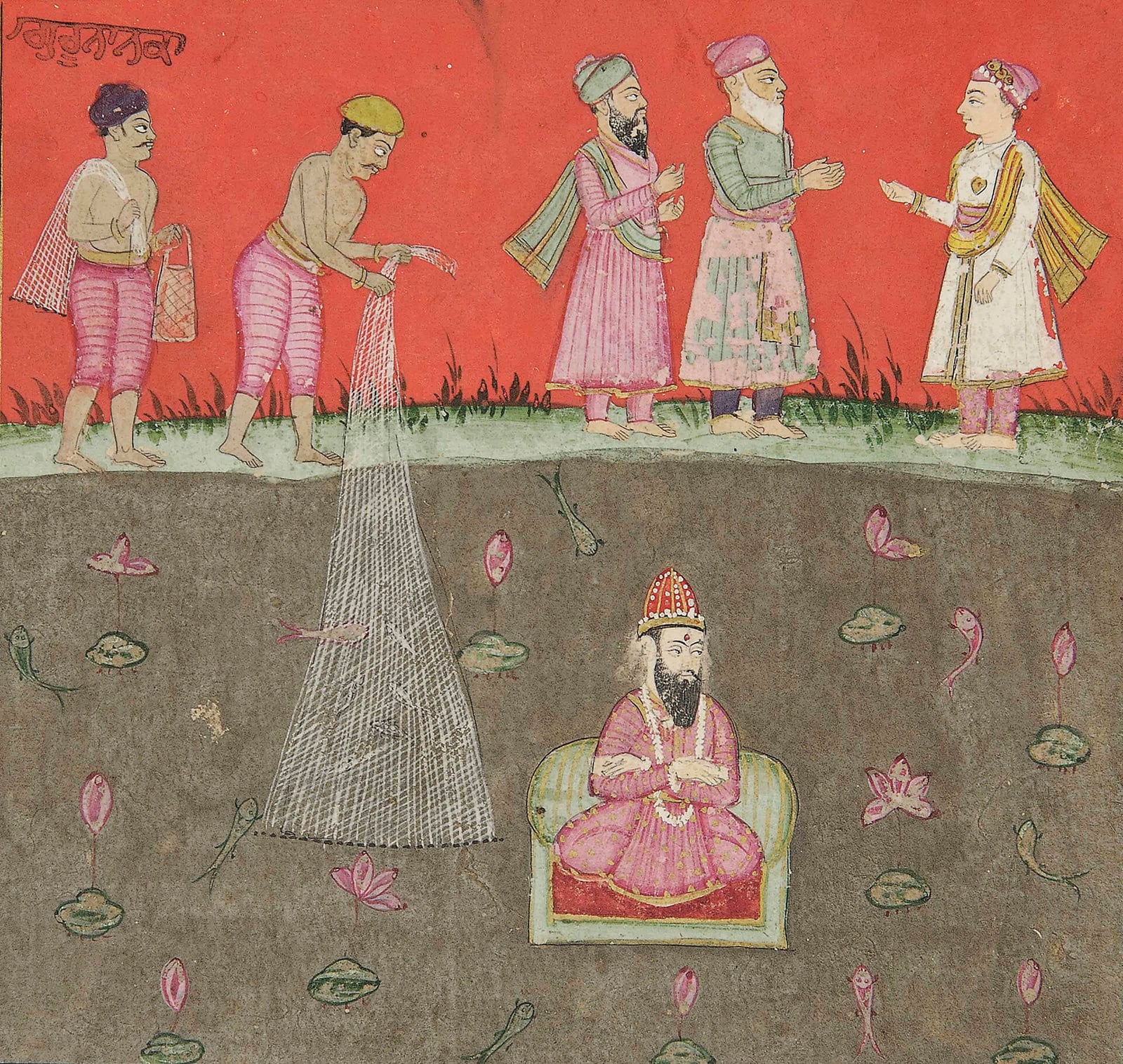
Guru Nanak Begins His Teaching
The first Sikh Guru taught devotion to one God beyond ritual divisions.
During his youth in the late fifteenth century, Nanak worked as a state storehouse custodian in Sultanpur Lodhi, an administrative centre of the Delhi Sultanate in Punjab. According to traditional Sikh accounts, his spiritual mission began after he vanished into the local Bein river during his dawn ablutions. While townspeople assumed he had drowned, Nanak reappeared after several days in seclusion. When he broke his silence, he uttered the declaration that there was neither Hindu nor Muslim, presenting a divine revelation that looked past external confessional divisions to proclaim the unity of all humanity under one formless Creator, Ik Onkar.
Following this experience, Nanak renounced his governmental post and embarked on extensive journeys known as udasis. Often accompanied by his companion Mardana, a Muslim musician who played the rabab, Nanak traveled across northern India and beyond, engaging in dialogue with Hindu and Muslim religious teachers. In his encounters, Nanak opposed ritual formalisms and social hierarchies, most notably rejecting the hereditary barriers of the traditional caste system. His early verses shared spiritual themes of inward devotion with figures of the Sant movement such as Kabir, though Nanak maintained a distinctive path focused on active social engagement.

Keep reading in Yester
Coming soon to the App Store
Keep following the story
Sources
Image: Unknown author Unknown author