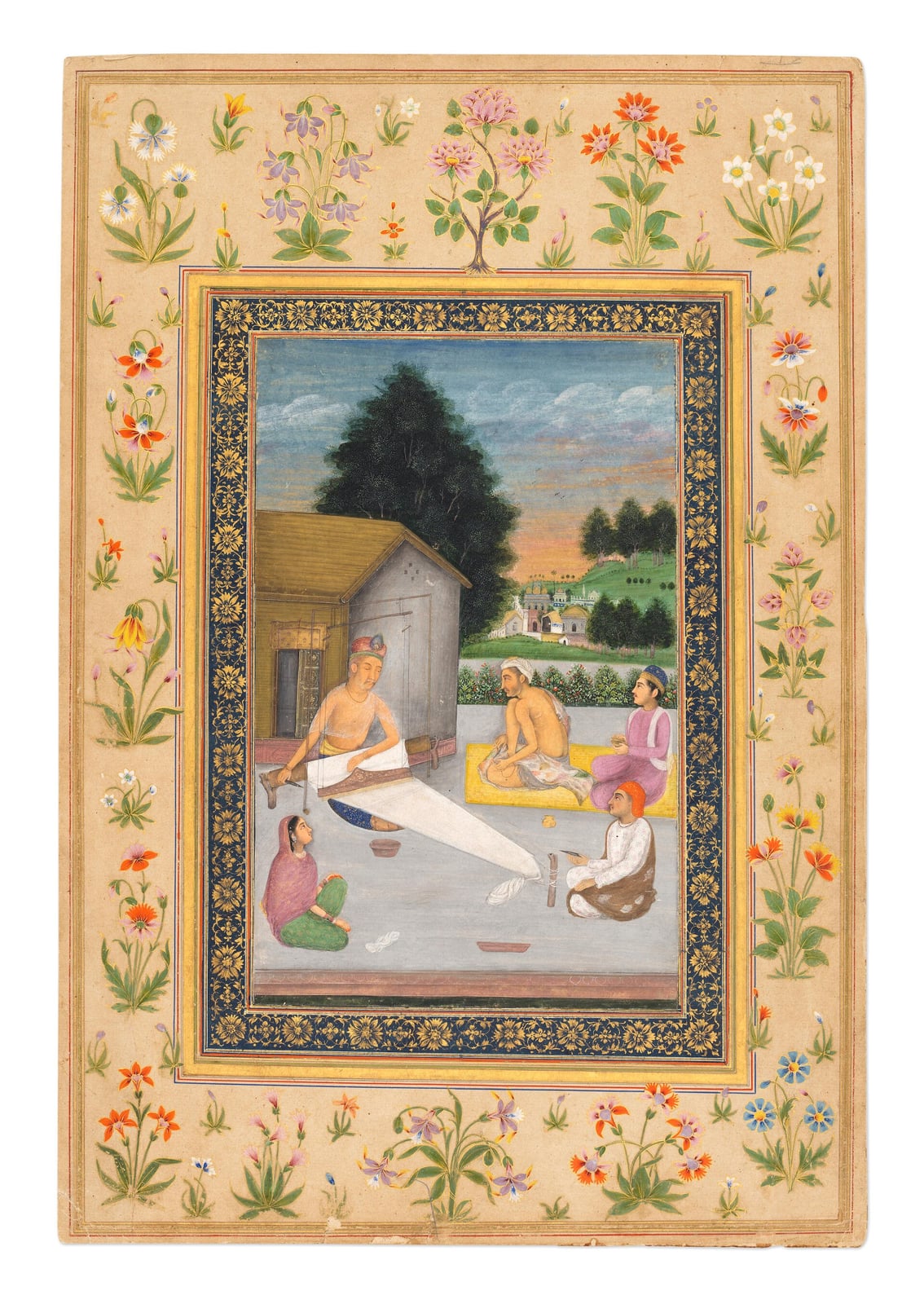
Kabir’s Songs Challenge Divisions of Caste and Creed
A weaver-poet of Varanasi sang verses that Hindus, Muslims and Sikhs still share.
During the fifteenth century, the city of Varanasi witnessed the rise of Kabir, a mystic poet whose vernacular verses questioned entrenched social hierarchies and formal religious orthodoxy. Historical records regarding his exact dates remain unsettled, with scholars debating life spans placing his birth as early as 1398 or around 1440. According to long-standing biographical traditions, Kabir was associated with a Muslim weaver family, specifically raised by Niru and Nima in the neighborhood of Kabir Chaura. Other accounts describe him as a follower of the Vaishnava teacher Ramananda. This convergence of environments positioned him at the crossroads of northern Indian religious culture, though he refused adherence to sectarian boundaries.
Kabir shared his teachings orally in Sadhukkadi, a regional idiom incorporating elements of dialects such as Khadi Boli, Braj, Bhojpuri, and Awadhi. Known as banis, or utterances, these compositions circulated as concise couplets and lyrical songs, often classified as dohe or sakhis. The verses avoided specialized scholarly vocabularies in favor of everyday imagery drawn from trade, domestic labor, and human vulnerability. Kabir used this plain diction to urge inward reflection, arguing that divine reality resides within all entities rather than in mechanical rituals, pilgrimage journeys, or exclusive scriptures.

Keep reading in Yester
Coming soon to the App Store
Keep following the story
Sources
Image: See description