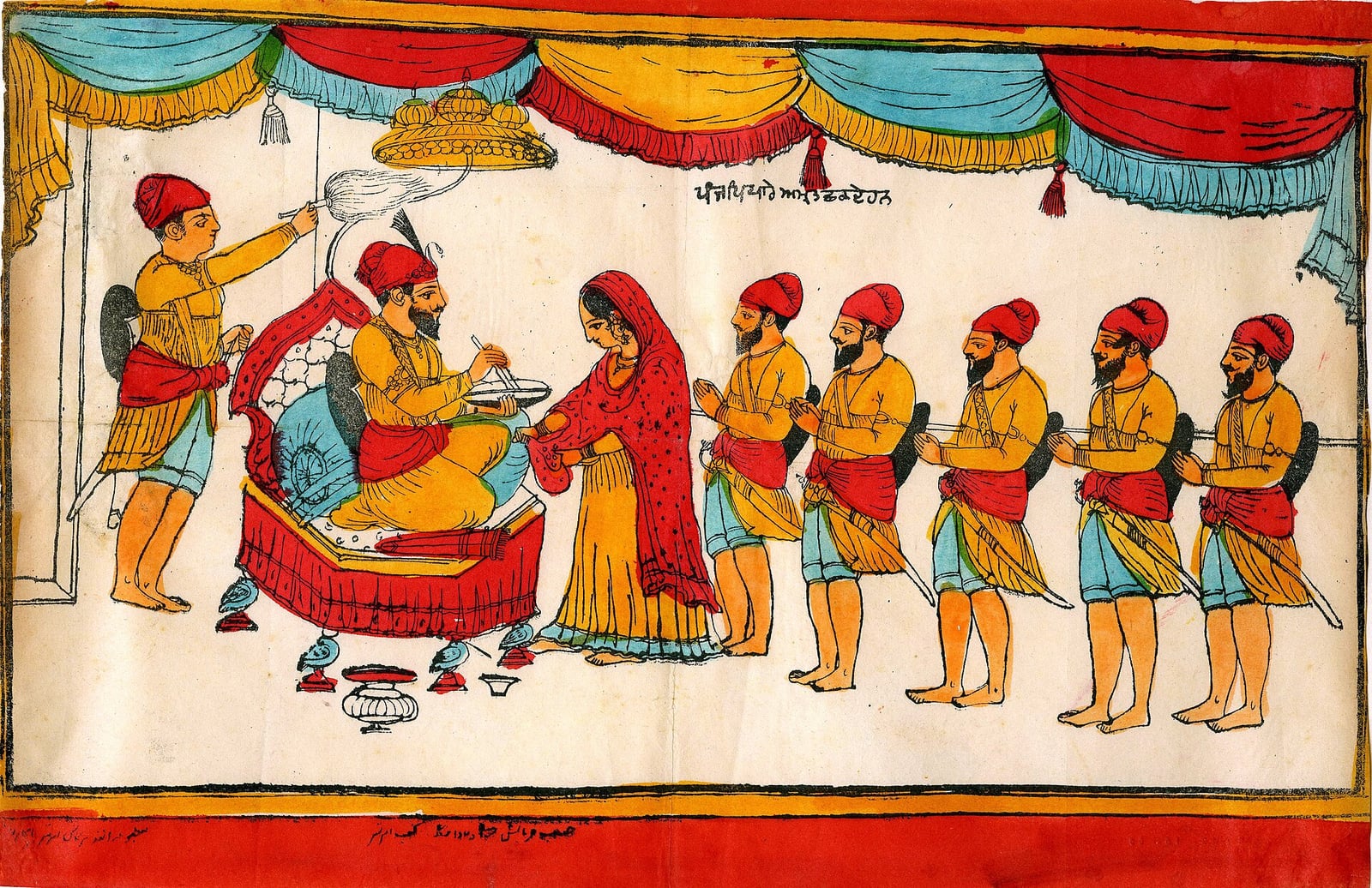
Guru Gobind Singh Creates the Khalsa
The tenth Sikh Guru founded a community of initiated Sikhs.
In 1699, during the annual spring festival of Vaisakhi at Anandpur Sahib, Guru Gobind Singh gathered his followers and inaugurated a dedicated order of initiated Sikhs known as the Khalsa. This development marked a defining shift in Sikh organization and identity. Decades of pressure from the Mughal authorities had intensified after the execution of the tenth Guru's father, Guru Tegh Bahadur, in 1675, which Sikh tradition attributes to his defence of non-Muslims against religious persecution. To safeguard the community and defend the vulnerable, Guru Gobind Singh sought to transform his disciples into disciplined, visible defenders who combined spiritual devotion with martial readiness.
According to popular tradition, the Guru addressed the large assembly outside a tent pitched on a hill and called for a volunteer willing to surrender his life. When a disciple stepped forward, the Guru escorted him inside the tent and reappeared alone with a bloodied blade. Repeating the summons until five volunteers had entered, he eventually brought all five men out unharmed; some later accounts add that goats had been slain inside the tent. These five disciples, drawn from diverse backgrounds and later revered as the Panj Pyare, or the Five Beloved Ones, became the inaugural initiates of the new order.

Keep reading in Yester
Coming soon to the App Store
Keep following the story
Sources
Image: Attributed at Punjab