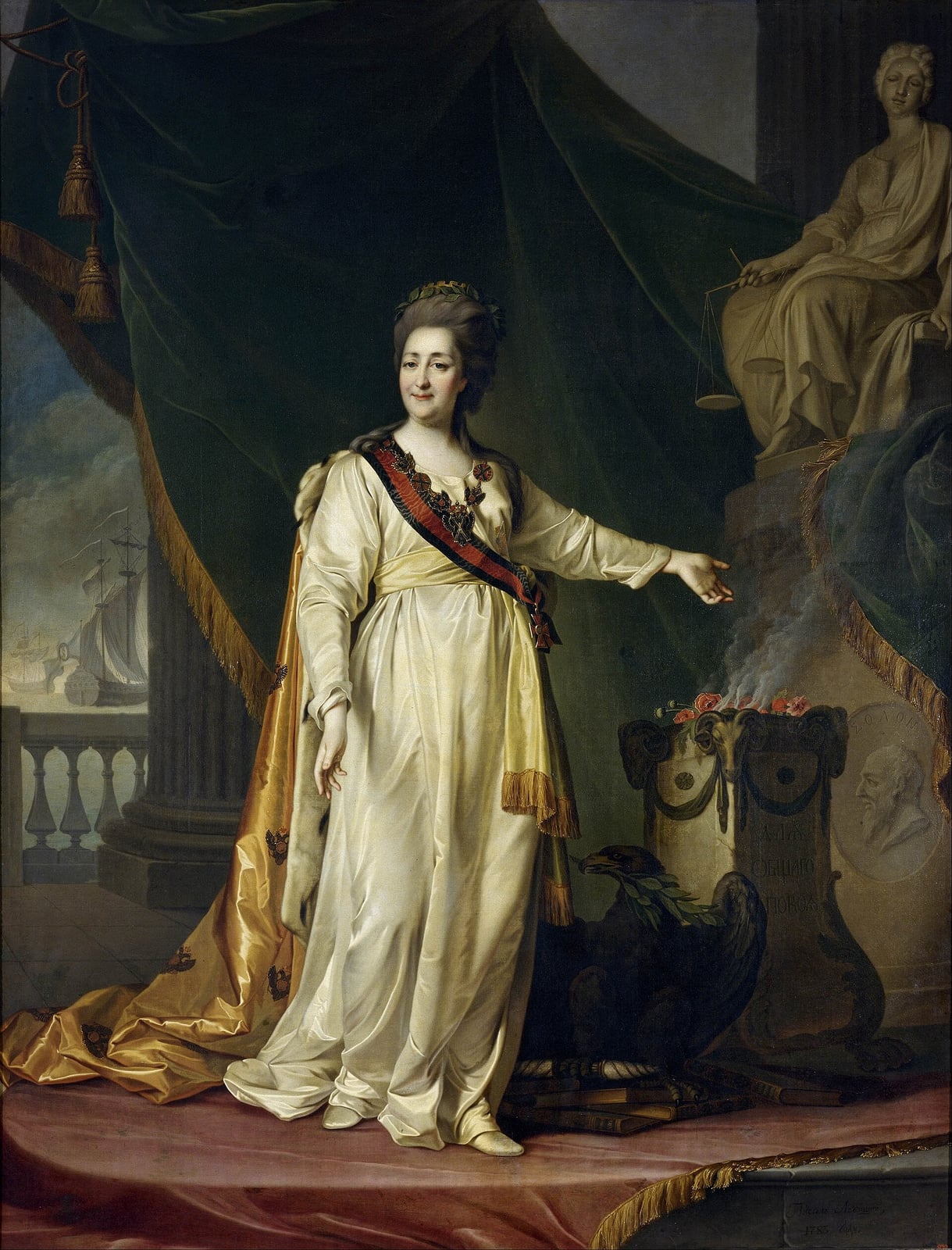
Catherine the Great Issues Her Nakaz
An empress drew on Enlightenment authors to instruct a law commission.
In 1767, Empress Catherine II of Russia issued the Nakaz, an extensive guide of legal principles designed for the All-Russian Legislative Commission. The assembly had been convened in Moscow to replace a seventeenth-century legal code that dated back to the Muscovite era with a unified, contemporary body of legislation. Catherine intended to furnish the delegates with unambiguous guidance, operating on the conviction that reforming domestic institutions and reinforcing legal structures would ultimately consolidate the power of the Russian crown. The resulting text sought to root ideas of the European Enlightenment in Russian law and government.
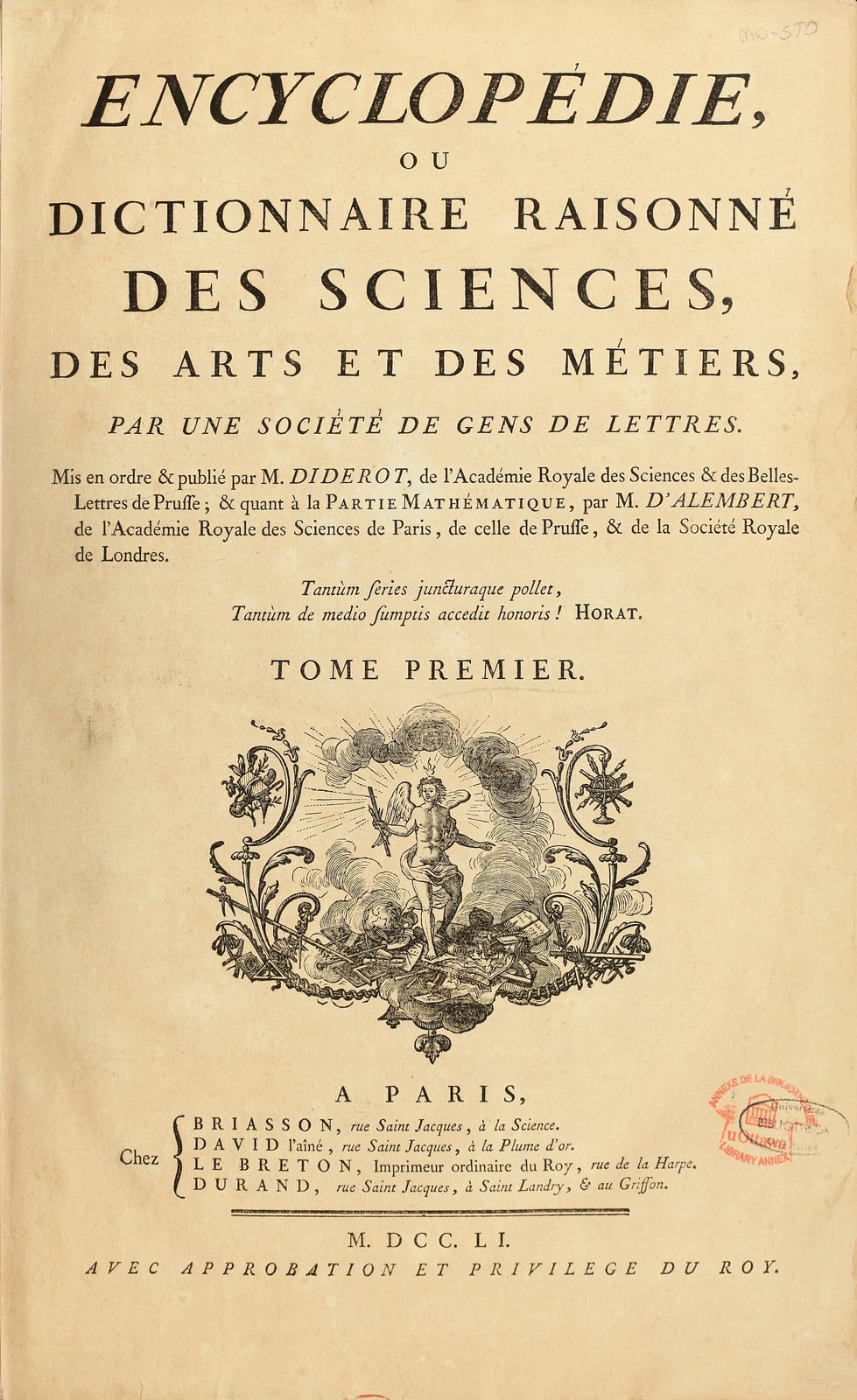
The compilation of the instruction occupied Catherine for roughly two years, beginning around 1764. Composing the initial manuscript in French, she translated it into Russian herself and submitted drafts in 1766 to her trusted advisors, Nikita Panin and Grigory Orlov. Her confidants reviewed the proposals and recommended alterations to soften more provocative passages. The final framework grew into twenty-two chapters containing 655 clauses, accompanied by an introduction and a conclusion. More than 400 of these articles were lifted almost verbatim from the works of European thinkers, particularly Montesquieu and Cesare Beccaria. In a letter to d'Alembert, the empress admitted to raiding Montesquieu without naming him, and she called his book her breviary.

Keep reading in Yester
Coming soon to the App Store
Keep following the story
Sources
Image: Dmitry Levitzky