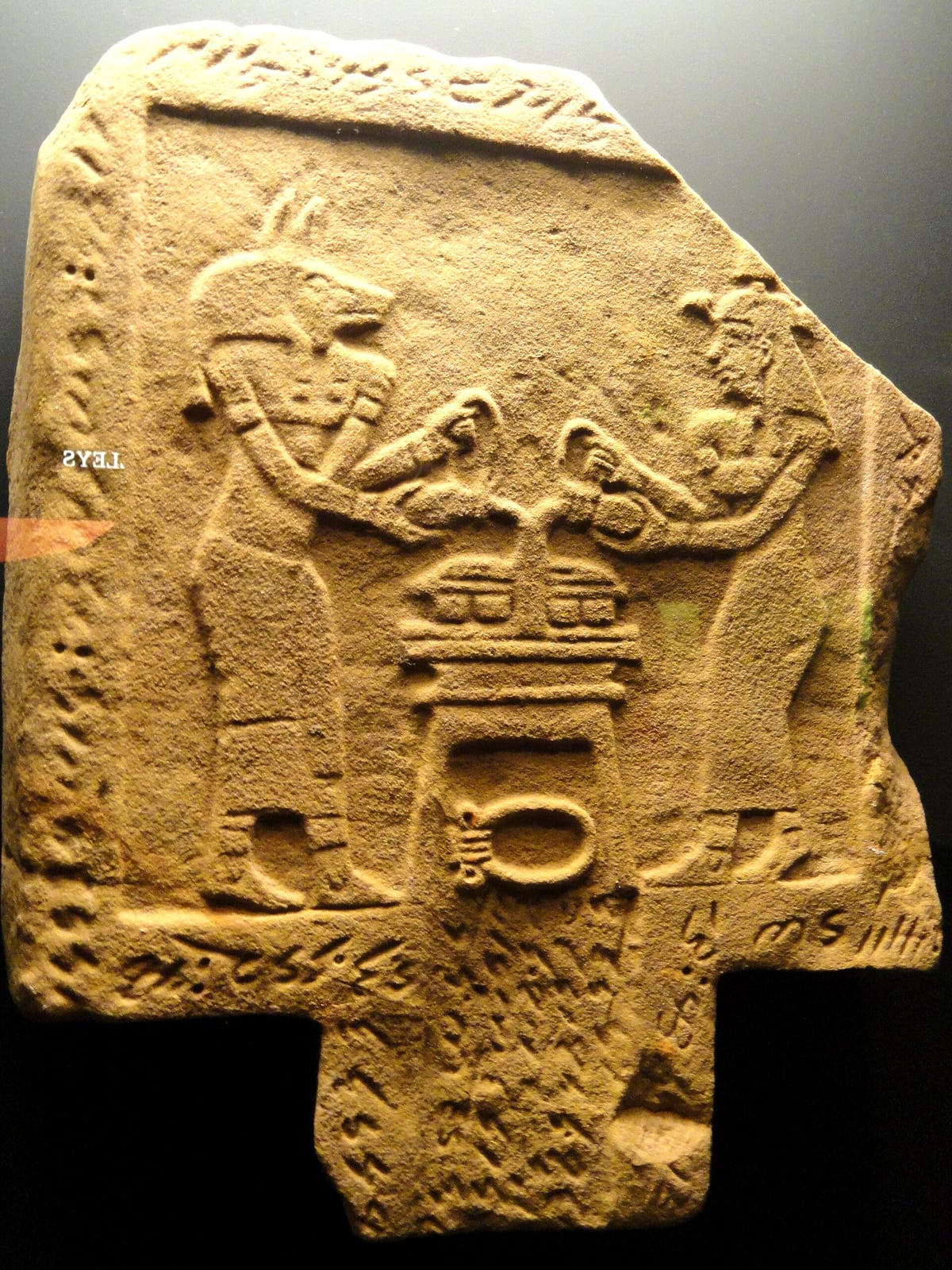
Kush Writes Its Own Language in Meroitic Script
Scholars can sound out its letters today, yet most of its words are still not understood.
Around the third or second century BCE, the Kingdom of Kush developed an independent writing system to record its own indigenous language. In earlier eras, Kushite scribes had adapted Egyptian hieroglyphs to preserve local personal names and specific lexical terms. The shift toward a dedicated national script marked a major transition in Nubian administrative and cultural life. Kushite writers created two related formats for their language: a formal monumental script adapted from Egyptian hieroglyphs and a cursive everyday script derived from Demotic Egyptian.
The cursive style proved far more common in daily use and came to be used even for most royal texts. Inscriptions in the cursive form ran from right to left in horizontal lines descending down the surface, while the monumental version was typically arranged in vertical columns that read downward and proceeded from right to left.

Keep reading in Yester
Coming soon to the App Store
Keep following the story
Sources
- Meroitic inscriptions in Egypt, Ahmed Mansour (Bibliotheca Alexandrina course material, edX)
- The Meroitic Mystery (AramcoWorld, 1983)
- Diodorus Siculus, Library of History, Book III (LacusCurtius, University of Chicago)
- Glimmer of Sudan's rich cultural history (History News Network, from History Today, 2008)
- Meroitic script
Image: Daderot