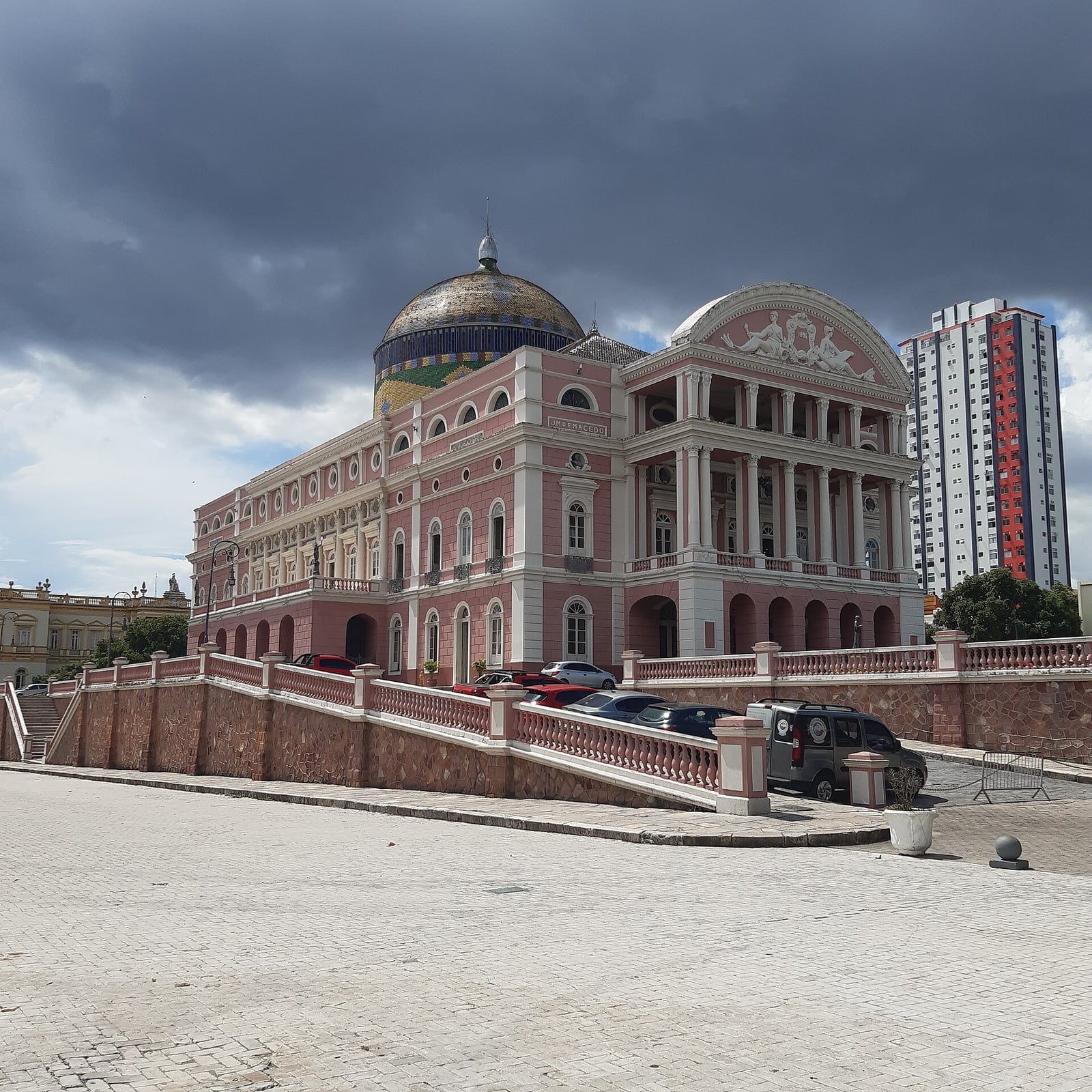
Rubber Money Builds an Opera House in the Amazon
Manaus opened the Teatro Amazonas at the height of the rubber trade.
During the second half of the nineteenth century, global manufacturing created an intense demand for natural latex extracted from Hevea brasiliensis, a tree native to the Amazon Basin. After Charles Goodyear developed vulcanization in 1839 by combining rubber with sulphur under high temperatures, rubber ceased melting or hardening in extreme weather. As European and North American industrial enterprises expanded, shipments of crude Amazonian latex climbed rapidly, rising from over 2,100 tons in 1855 to 10,000 tons by 1879. Because natural rubber was then sourced exclusively from South American rain forests, the commercial trade generated enormous wealth for regional merchants and landowners known as rubber barons.
This influx of commercial revenue radically transformed urban centers situated along the Amazon's vast river network. Manaus, the capital of the Brazilian state of Amazonas, grew from a settlement of 5,000 inhabitants in 1849 to a population of 70,000 around the turn of the century. Flush with export duties and British pounds sterling paid for shipments, municipal authorities and private elites financed ambitious modern infrastructure. Manaus became the first Brazilian city to undergo comprehensive urbanization and the second to install electric lighting. Paved avenues replaced dissected gullies, electric tramways carried commuters, and clean water and sewer systems were installed beneath burgeoning neighborhoods.

Keep reading in Yester
Coming soon to the App Store
Keep following the story
Sources
Image: Ridiculopathy