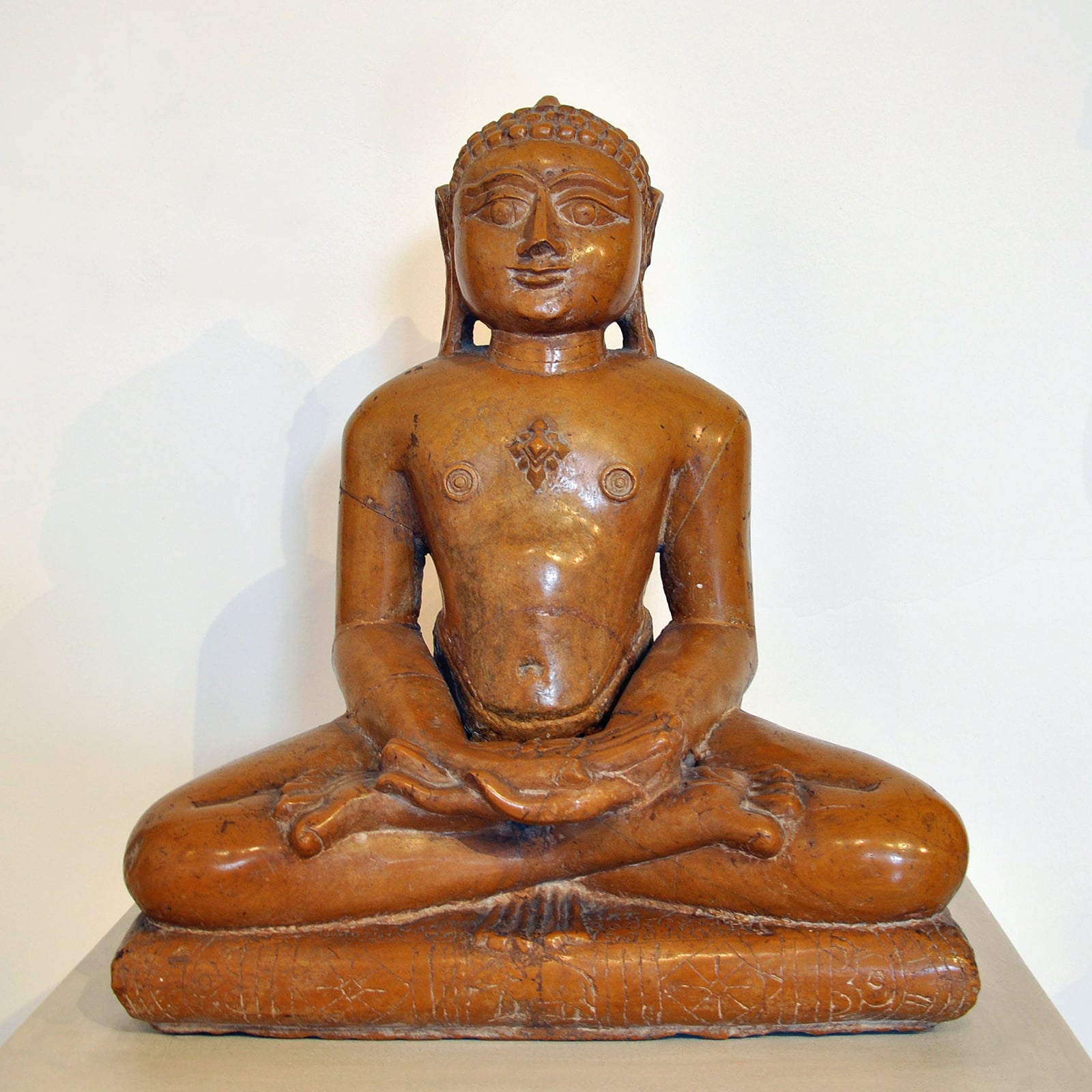
Mahavira Shapes the Teachings of Jainism
A teacher of non-violence gave Jainism the form it still follows.
During the sixth and fifth centuries BCE, the ancient region of Bihar emerged as a prominent center of ascetic debate and monastic reform across northern India. Mahavira, born Vardhamana into a royal kshatriya family of the Naya tribe, is recognized by Jains as the twenty-fourth and concluding tirthankara of the current cosmic cycle. While traditional accounts place his birth in 599 BCE, modern historians debate his precise chronology, often relying on synchronisms with the contemporary rulers Bimbisara and Ajatashatru of Magadha, as well as the lifespan of Gautama Buddha. Many modern scholars date his life later than the tradition does, some placing it at about 563 to 483 BCE and others later still.
Jain tradition holds that Mahavira was not the initial founder of his religion, but rather the reformer of an established spiritual lineage previously guided by Parshvanatha. At roughly thirty years of age, Mahavira abandoned his princely household, royal status, and worldly possessions to adopt an itinerant life of severe austerity. For twelve and a half years, he endured continuous meditation and rigorous physical mortification. Jain scriptures record that he achieved Kevala Jnana, or infinite knowledge, while meditating beneath a sala tree along the banks of the Rijuvalika River near the settlement of Jrimbhikagrama.

Keep reading in Yester
Coming soon to the App Store
Keep following the story
Sources
Image: Vassil