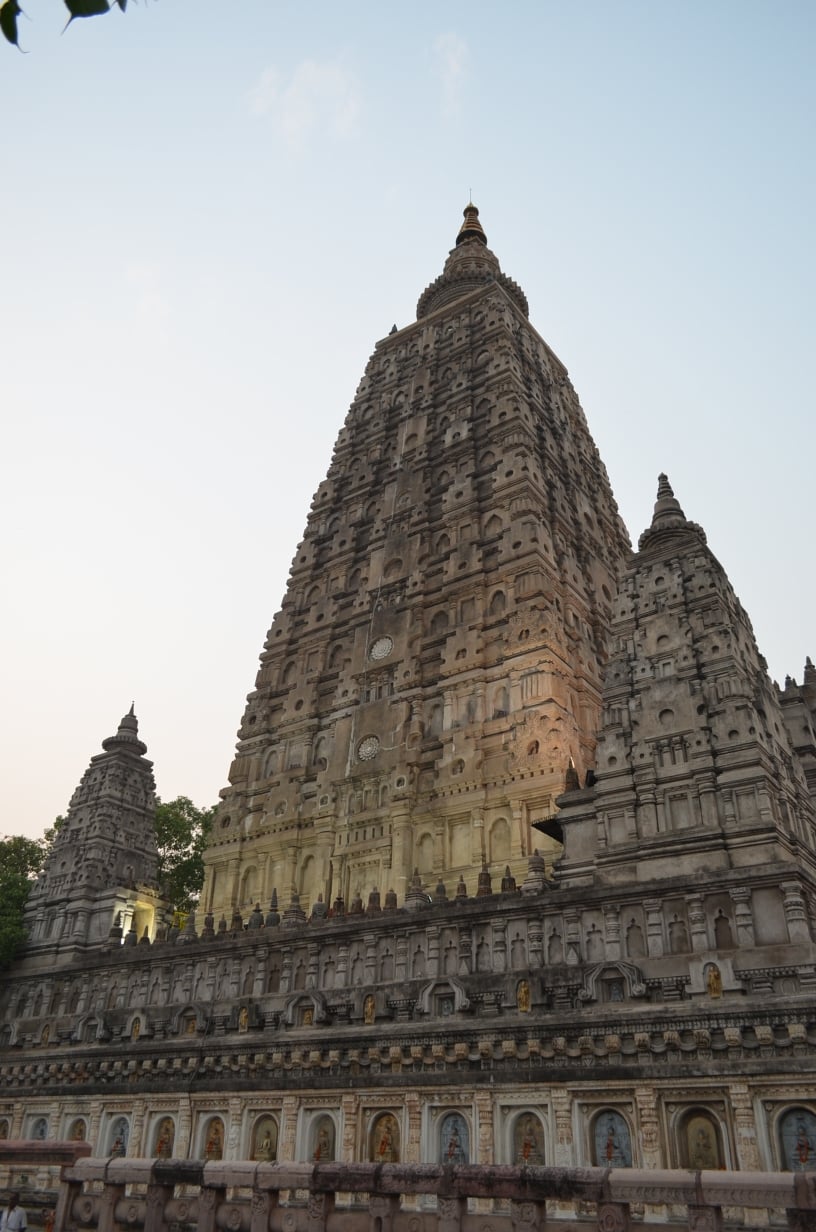
A Temple Rises Where the Buddha Found Enlightenment
The Mahabodhi Temple marks the place of the Buddha’s awakening.
On the banks of the Phalgu River in what is now Bihar, the Mahabodhi Temple marks the location where Buddhist tradition holds that Siddhartha Gautama attained enlightenment. According to religious accounts, he meditated under a sacred fig tree, known as the Bodhi Tree, before spending seven subsequent weeks contemplating his realization at adjacent locations. Emperor Ashoka of the Mauryan Empire is credited with building the first temple at the site in the third century BCE. Although that early shrine no longer survives, the carved stone slab known as the Vajrasana, or Diamond Throne, remains from the third century BCE at the foot of the sacred tree.
Archaeological evidence traces successive layers of construction around the holy ground. During the Sunga period in the second and first centuries BCE, sculptors erected sandstone railings and carved columns with pot-shaped bases to demarcate the sacred space. Relief carvings found at Bharhut and Sanchi depict these early protective structures. Later builders extended the perimeter with coarse granite railings during the Gupta era, carving them with foliate designs, stupas, and mythical figures. Today, many of the original stone posts reside in museums to protect them from weathering, with casts standing in their place.

Keep reading in Yester
Coming soon to the App Store
Keep following the story
Sources
Image: Matt Stabile