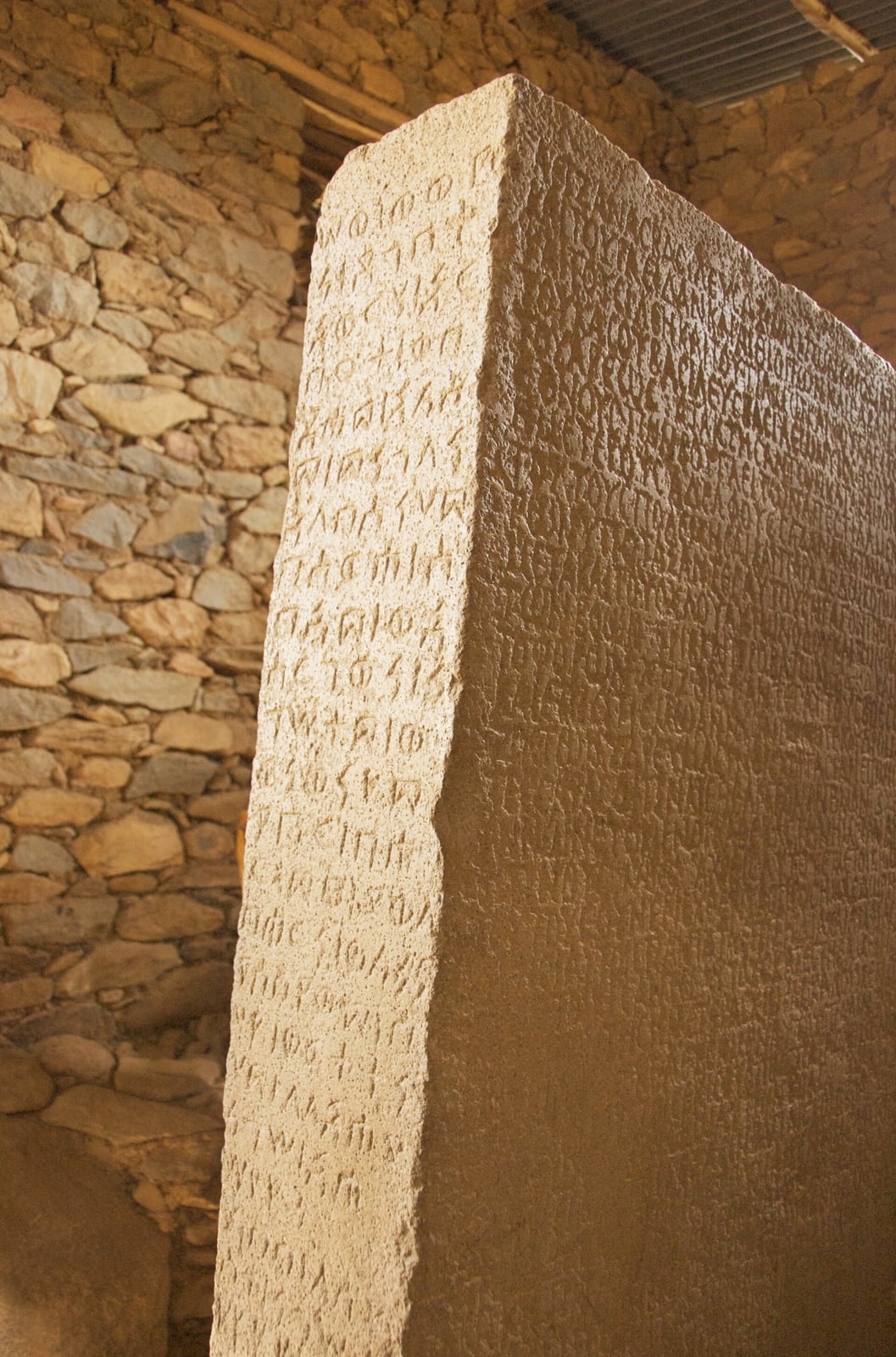
King Ezana Turns Aksum Toward Christianity
Coins and inscriptions record a king of Aksum adopting the cross.
During the fourth century, the Kingdom of Aksum emerged as one of the most prominent regional powers in northeast Africa, commanding trade routes that linked the Mediterranean basin with South Asia. In the 320s, a young ruler named Ezana acceded to the throne following the death of his father, Ella Amida, who is also known as Ousanas. Because Ezana was still a child at the time of his accession, historical tradition records that his mother, Sofya, governed the realm as regent until he reached adulthood. Through this transitional period, the royal administration maintained the political stability necessary for the young monarch eventually to assume direct control over the realm.
Ezana became one of the best-documented monarchs of ancient Aksum, leaving behind extensive physical evidence of his governance through royal coinage, monumental stelae, and multilingual stone inscriptions. In the early stages of his rule, these public monuments reflected traditional religious practices, with royal inscriptions referring to the king as the son of Ares. Over the course of his reign, however, the official presentation of the monarchy underwent a major shift. Later inscriptions and currency documented his conversion to Christianity, making him the first sovereign of his realm to adopt the new faith.

Keep reading in Yester
Coming soon to the App Store
Keep following the story

Sources
- Ezana of Aksum, Research Starters (EBSCO)
- Ezanas, biography and coins (British Museum)
- Silver coin of Ezanas with disc and crescent, 1989,0518.43 (British Museum)
- Religious statecraft: Narratives of persecution and diplomacy in the case of Byzantine, Aksum and Himyar, R. Rukuni (HTS Teologiese Studies/Theological Studies, 2021)
- Ezana of Axum
Image: A. Davey from Where I Live Now: Pacific Northwest