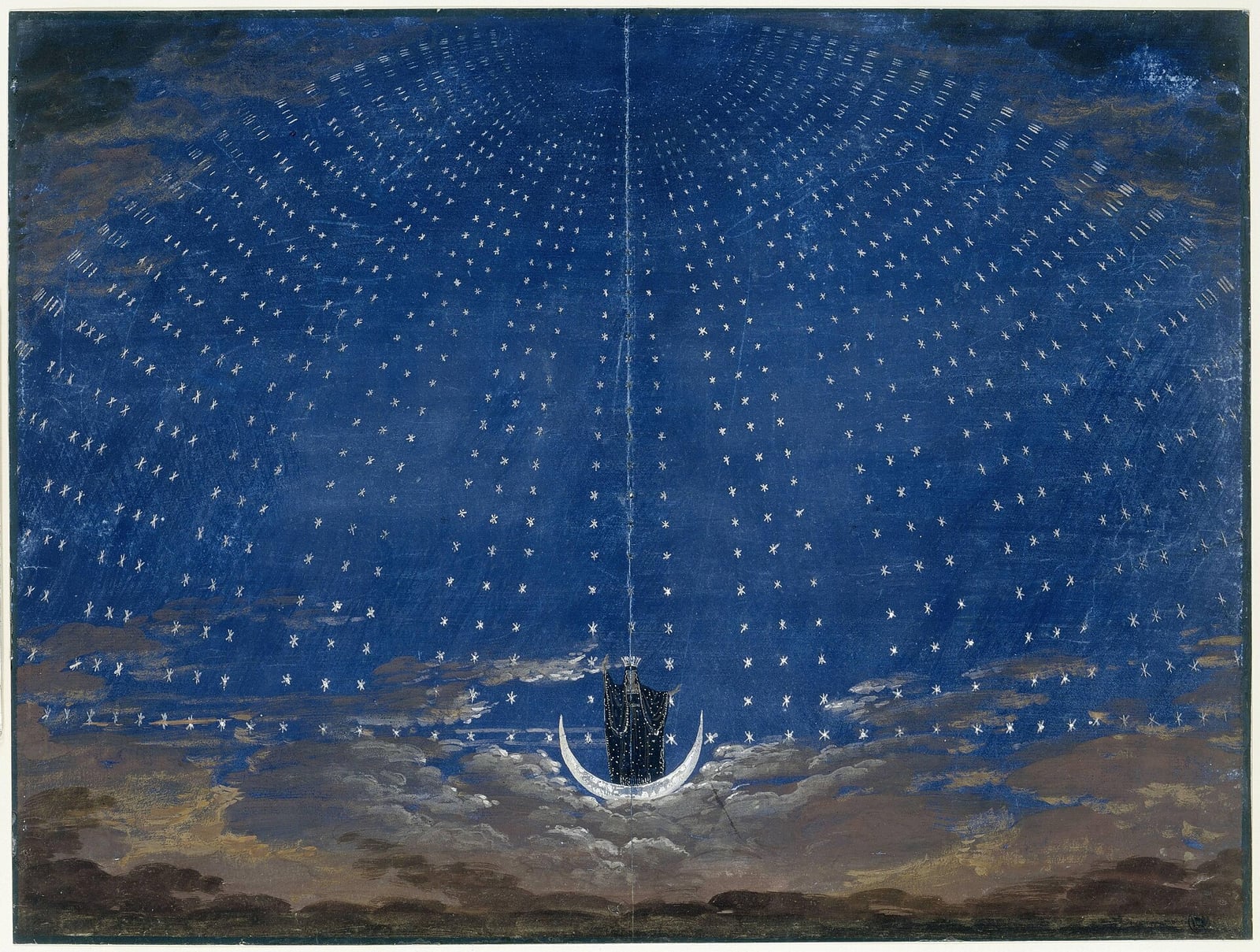
The Magic Flute Premieres in Vienna
Mozart’s last opera mixed fairy tale, comedy and Enlightenment ideals.
On 30 September 1791, Wolfgang Amadeus Mozart conducted the premiere of his two-act opera The Magic Flute at the Freihaus-Theater auf der Wieden, a suburban venue in Vienna. Staged by the resident theatrical company of Emanuel Schikaneder, who wrote the German libretto and performed the role of Papageno, the production took the form of a Singspiel, combining musical numbers with spoken dialogue. The cast also featured Mozart's friend Benedikt Schack as Prince Tamino and the composer's sister-in-law Josepha Hofer as the Queen of the Night. Though there were no printed reviews of the opening night, the opera quickly drew substantial audiences, marking a triumphant start just two months before Mozart's death.
The collaboration emerged from Mozart's deepening connection with Schikaneder's troupe, which had been resident at the Theater auf der Wieden since 1789. Mozart had previously contributed music to the ensemble's collaborative fairy-tale opera Der Stein der Weisen in 1790, which used many of the same performers in similar parts. In constructing the libretto for The Magic Flute, Schikaneder drew upon multiple literary sources, including medieval romance, Jean Terrasson's novel Life of Sethos, and the popular Hanswurst traditions of Viennese theater.

Keep reading in Yester
Coming soon to the App Store
Keep following the story
Sources
Image: Karl Friedrich Schinkel