Fossil Hunters Find Lucy in Ethiopia
A partial skeleton 3.2 million years old showed that early humans walked upright.
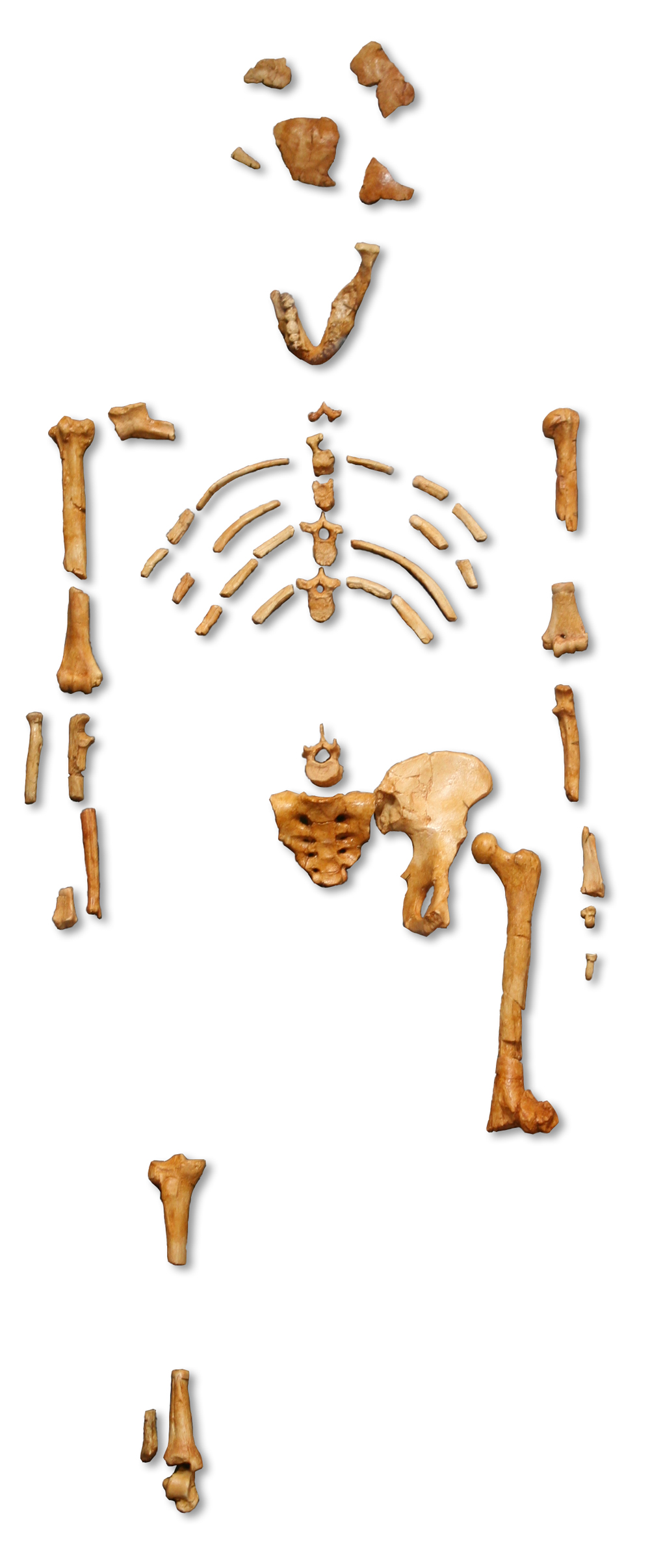
On the morning of 24 November 1974, paleoanthropologist Donald Johanson and graduate student Tom Gray were surveying a dusty gully at Hadar in the Awash Valley of Ethiopia. The site, situated in the Afar Triangle, had already yielded hominin fossils during an earlier expedition season. While turning to leave, Johanson noticed an arm bone lying on the slope. A closer look revealed a piece of a small skull, a section of a thigh bone, vertebrae, ribs, and fragments of a pelvis and jaw. Over the following weeks, the team excavated several hundred bone fragments without any duplication, confirming that the collection came from a single individual.
Cataloged as AL 288-1, the specimen represents roughly forty percent of the skeleton of an adult female belonging to the species Australopithecus afarensis. In camp on the evening of the discovery, members of the expedition played the Beatles song Lucy in the Sky with Diamonds repeatedly on a tape recorder, inspiring the nickname Lucy. In Ethiopia, the fossil is also known as Dink'inesh, an Amharic phrase meaning you are marvellous. With permission from Ethiopian authorities, Johanson brought the fragments to the Cleveland Museum of Natural History, where they were studied and reconstructed with the help of anatomist C. Owen Lovejoy of Kent State University. The original bones were later returned and are now kept at the National Museum of Ethiopia in Addis Ababa.

Keep reading in Yester
Coming soon to the App Store
Keep following the story
Sources
- About the Fossil Lucy (Institute of Human Origins, Arizona State University)
- AL 288-1 'Lucy' (Smithsonian National Museum of Natural History, Human Origins Program)
- Lucy at 50: The CMNH team's ongoing role in human origins research (Freshwater Cleveland)
- Scientists Divided Over How Lucy Died (NPR, via WFAE)
- Did fall from tree kill famous human ancestor Lucy? (Associated Press, via The Gazette)
- Lucy (hominid)
Image: 120