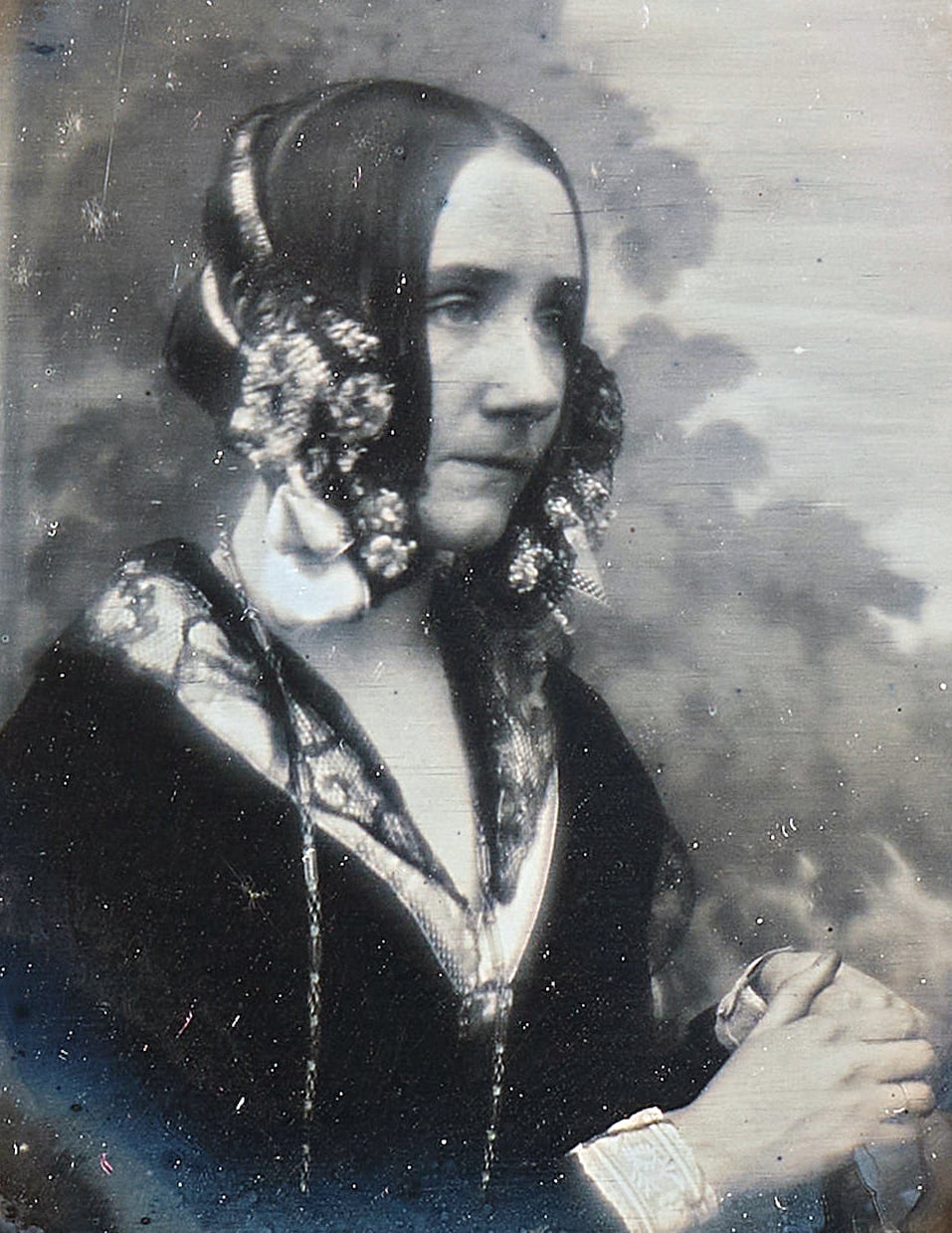
Ada Lovelace Imagines What a Computing Machine Could Do
Notes on an unbuilt engine explored a future beyond arithmetic.
In September 1843, the third volume of Richard Taylor's Scientific Memoirs appeared in London containing an unsigned technical treatise identified only by the initials AAL. The core text was an English translation of a French paper by the Italian engineer Luigi Menabrea, who had transcribed a lecture given in Turin by Charles Babbage about his planned Analytical Engine. Lovelace, encouraged by Babbage's friend Charles Wheatstone, spent roughly nine months translating the paper and supplementing it with seven extensive explanatory essays, labeled Note A through Note G. These additions ran approximately three times longer than Menabrea's original account, turning a mechanical synopsis into a profound exploration of machine logic.
Babbage had spent years designing elaborate calculating engines, but Lovelace addressed the Analytical Engine's operational philosophy rather than merely its brass clockwork. While earlier devices like Babbage's Difference Engine were confined to tabulating mathematical tables, the Analytical Engine was designed to accept punched cards and manipulate internal variables. In her notes, Lovelace pointed out that the apparatus could act upon things other than numerical quantities. If the fundamental relations of pitched sound in harmony could be translated into operational notation, she observed, the machine might compose complex, scientific pieces of music. This leap conceived of computing as the systematic manipulation of arbitrary symbols according to rules.

Keep reading in Yester
Coming soon to the App Store
Keep following the story
Sources
Image: Antoine Claudet