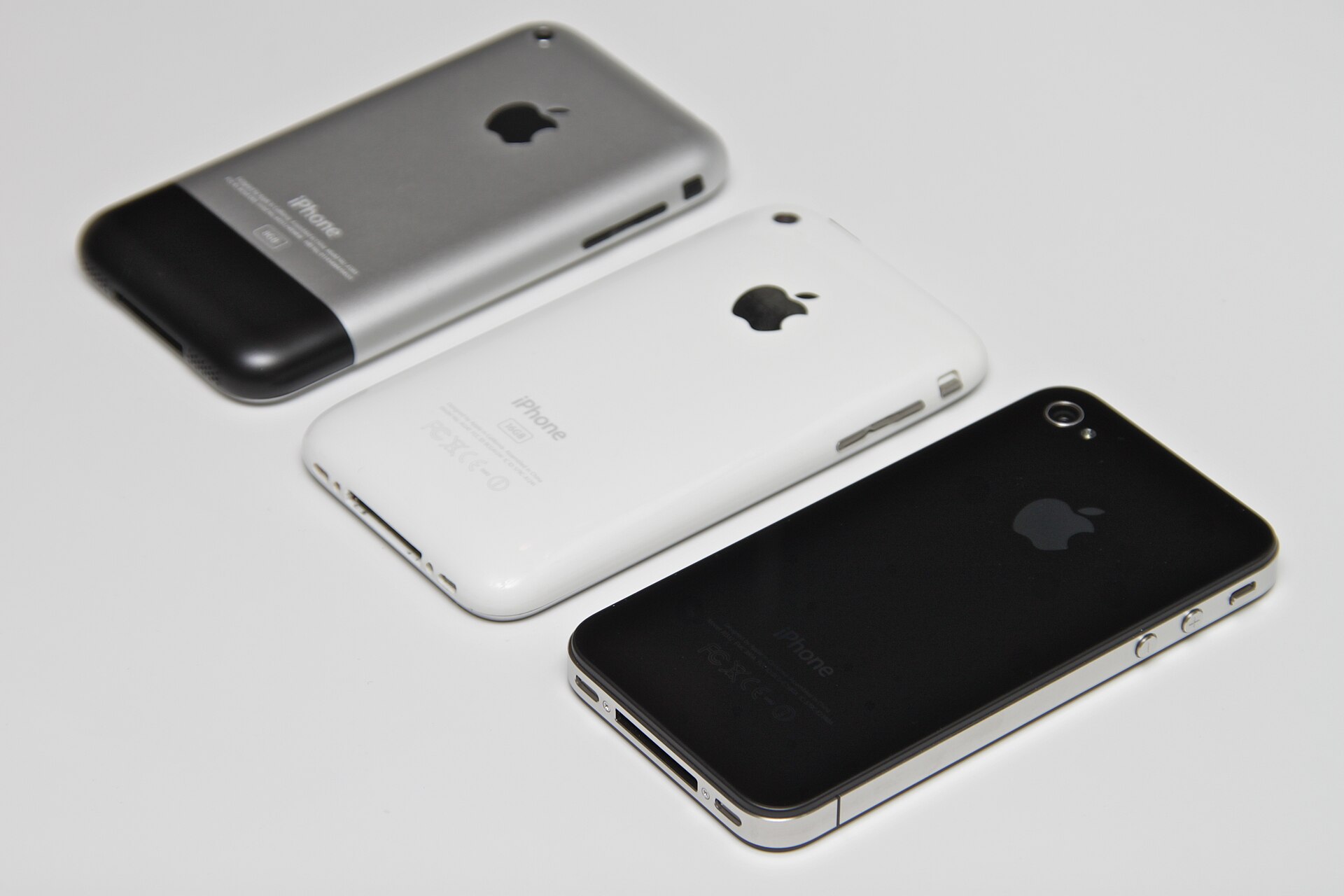
Apple Introduces the iPhone
A phone built around a touchscreen changed how people used the internet.
On January 9, 2007, Apple chief executive Steve Jobs took the stage at the Macworld conference in San Francisco to present a device that combined a widescreen digital media player, a mobile telephone, and an internet communicator. The product, named the iPhone, had been developed under the internal code name P2, short for Purple 2. It drew on earlier work by Apple engineers on touchscreen technology for a tablet computer. To bring the concept to market, Apple had partnered confidentially with Cingular Wireless, while retaining complete control over the phone's design, manufacturing, and marketing; one insider later estimated that Apple spent roughly 150 million dollars building the iPhone.
The physical design marked a distinct shift away from the mechanical numeric keypads and thumb keyboards that dominated the mobile phone market. With an aluminum back cover, the device featured a 3.5-inch liquid-crystal display covered in glass rather than hard plastic, after Jobs found that a prototype carried in his pocket needed a screen that would resist scratching. Interaction relied on a capacitive multi-touch system that recognized bare fingers, accompanied by only four physical buttons and a single ringer switch. Internally, it relied on an ARM11-generation processor, alongside an accelerometer, an ambient light sensor, and a proximity sensor that helped save power.

Keep reading in Yester
Coming soon to the App Store
Keep following the story

Sources
- Apple Reinvents the Phone with iPhone (Apple Newsroom)
- Apple Sells One Millionth iPhone (Apple Newsroom)
- Apple Announces iPhone 2.0 Software Beta (Apple Newsroom)
- The Untold Story: How the iPhone Blew Up the Wireless Industry (Wired)
- Apple reports $818 million profit, record Mac sales (Macworld)
- IPhone (1st generation)
Image: Yutaka Tsutano from Lincoln, United States