Carvers Begin the Buddhas of Longmen
Northern Wei patrons started a cliff of caves that would hold tens of thousands of statues.
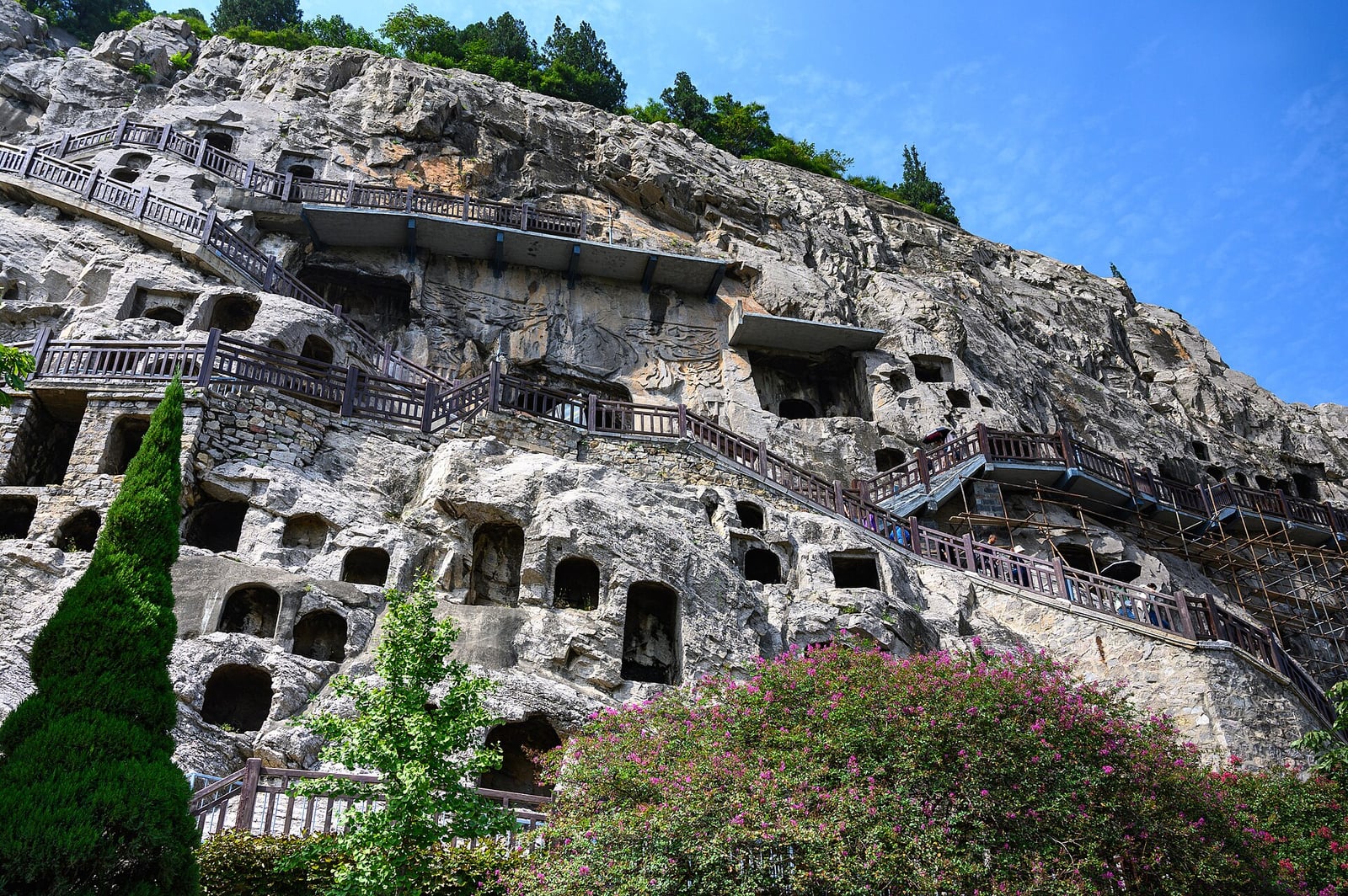
In 493, Emperor Xiaowen of the Northern Wei dynasty transferred his imperial capital southward from Datong to Luoyang. The city carried immense historical prestige, having served as the seat of government for numerous earlier regimes. South of the new capital, the Yi River cut through limestone hills known as Xiangshan and Longmenshan, forming a natural passage known as Yique, or the Gate of the Yi River. There, along a one-kilometer corridor of steep riverbank, imperial stonemasons began excavating hollow chambers directly into the rock face, initiating the complex now known as the Longmen Grottoes.
Guyangdong, carved into the west cliff, was the first cave temple established under Emperor Xiaowen's initiative. Inside its horseshoe-shaped interior, sculptors shaped a grand central triad centered on Shakyamuni Buddha, flanked by attendant bodhisattvas. The figures reflected the Northern Wei aesthetic, marked by slender, elongated bodies and delicate garments. Surrounding the main shrine, elite patrons, court officials, and pious lay societies commissioned hundreds of smaller niches. These private devotions left roughly eight hundred wall inscriptions recording the names of artists, dates of dedication, and specific spiritual motives, creating the densest calligraphic archive in any Chinese grotto.

Keep reading in Yester
Coming soon to the App Store
Keep following the story
Sources
Image: xiquinhosilva