Detectors Hear Gravitational Waves for the First Time
Two black holes that collided more than a billion years ago shook instruments on Earth.
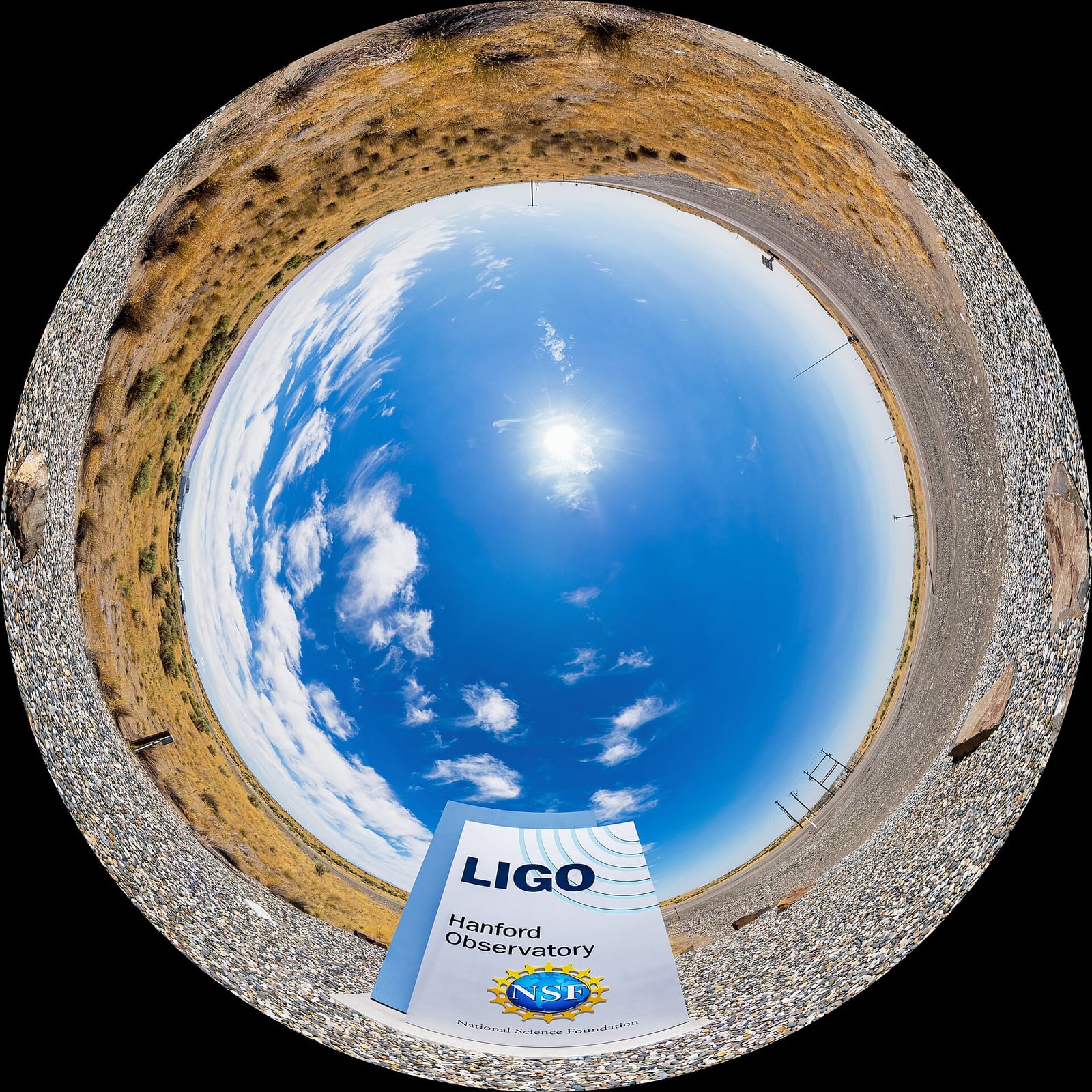
In the early morning hours of 14 September 2015, two separated facilities of the Laser Interferometer Gravitational-Wave Observatory recorded a fleeting signal from deep space. Recently upgraded as Advanced LIGO, detectors at Hanford, Washington, and Livingston, Louisiana, registered synchronized distortions in their laser paths just milliseconds apart. The disturbance lasted about two tenths of a second, sweeping sharply upward in frequency as it grew in strength. Known formally as GW150914, this brief vibration marked the earliest direct detection of ripples traversing the geometry of spacetime.
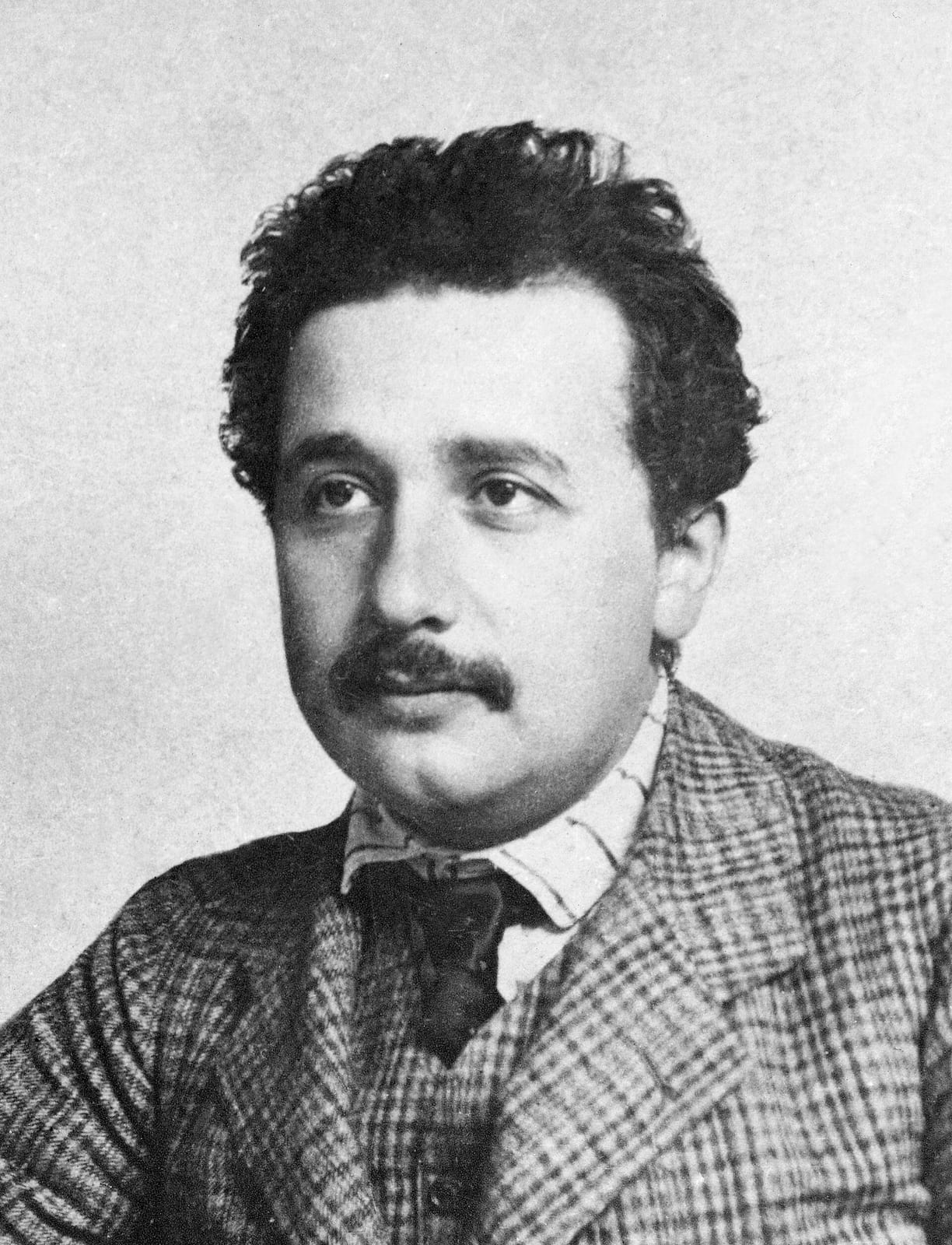
The theoretical foundation for these oscillations had originated nearly a century earlier, in 1916, when Albert Einstein proposed their existence through his formulation of general relativity. The framework conceived gravity as a curvature induced in spacetime by mass and predicted that accelerating concentrations of matter would shed energy as ripples traveling outward at the speed of light. Because the anticipated distortion was minute, Einstein doubted that laboratory instruments would ever achieve the precision needed to register it. For decades afterward, scientists could only verify the concept indirectly, most notably through decades of radio timing observations tracking the gradual orbital decay of a binary pulsar system discovered in 1974.

Keep reading in Yester
Coming soon to the App Store
Keep following the story
Sources
- LIGO Detects Gravitational Waves from Colliding Black Holes, news release (Caltech LIGO Laboratory)
- Observation of Gravitational Waves from a Binary Black Hole Merger (Physical Review Letters)
- Observation of gravitational waves from a binary black hole merger, science summary (LIGO Scientific Collaboration)
- The Nobel Prize in Physics 2017, press release (Nobel Foundation)
- The Nobel Prize in Physics 1993, press release (Nobel Foundation)
- First observation of gravitational waves
Image: NOIRLab/LIGO/NSF/AURA/T. Matsopoulos