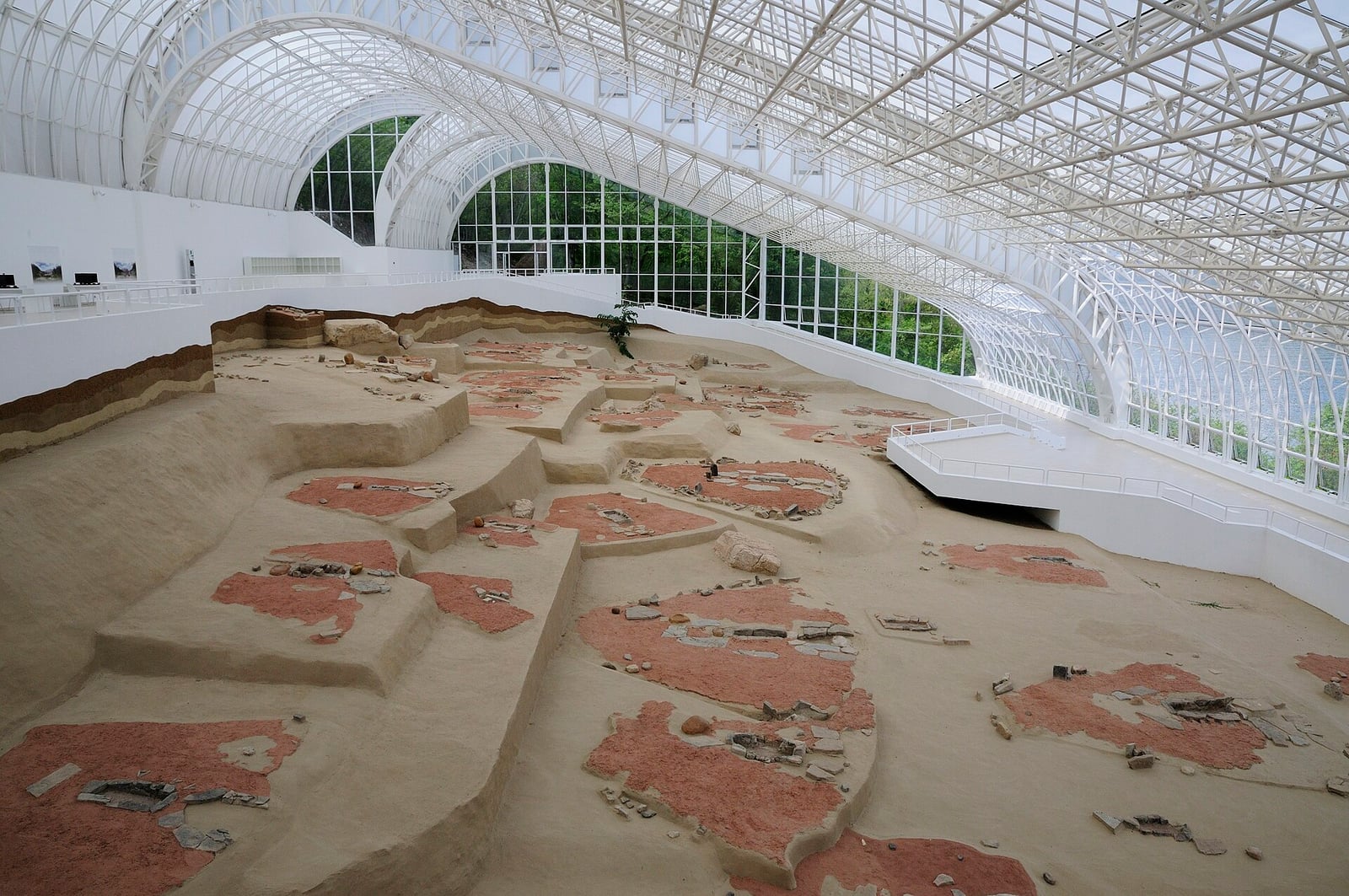
Fisher-Folk at Lepenski Vir Carve Faces in Stone
A Danube settlement left boulder sculptures with strange, fish-like human faces.
Along the rocky banks of the Danube River in eastern Serbia, where the swirling waters of the Đerdap gorge narrow into the Iron Gates, prehistoric foragers established a enduring settlement at Lepenski Vir. The location possessed distinctive natural advantages. Protruding river boulders formed a stable promontory resistant to river erosion while generating deep whirlpools. These churning, oxygen-rich currents attracted dense concentrations of fish, providing a steady and abundant supply of food that enabled an unusually sedentary lifestyle long before farming became universal across Europe.
Archaeologists led by Dragoslav Srejović began excavating the site in 1965, spurred by plans to build the Iron Gate I hydroelectric dam, which threatened to flood the riverbanks. As the team dug beneath the surface humus, they uncovered multiple layers of human occupation spanning several millennia, from Mesolithic hunter-gatherer horizons into the Early Neolithic. In 1967, excavators unearthed carved stone boulders with striking fish-like human faces, revealing an artistic and ceremonial culture unlike anything previously known from prehistoric Europe.

Keep reading in Yester
Coming soon to the App Store
Keep following the story

Sources
Image: Myself