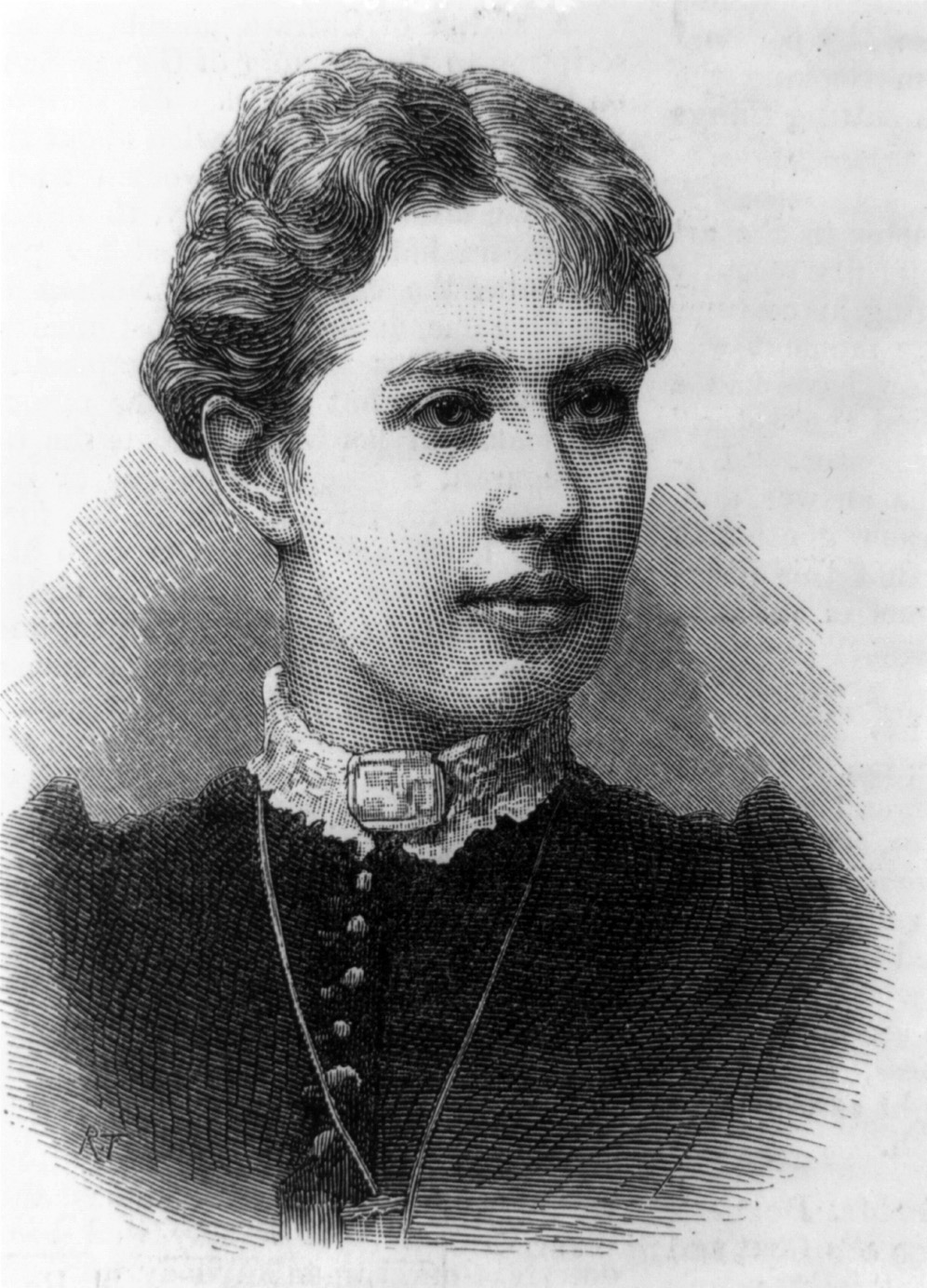
Sofya Kovalevskaya Solves a Problem in Motion
Work on the rotation of a rigid body earned a major prize in 1888. The mathematics mattered on its own, even as its author navigated institutions that restricted women’s careers.
In 1888, the French Academy of Sciences awarded its prestigious Prix Bordin to Sofya Kovalevskaya for her memoir examining how a heavy rigid body rotates around a fixed point. For decades, mathematicians had possessed complete solutions for only two cases of this motion, established by Leonhard Euler and Joseph-Louis Lagrange. Kovalevskaya derived an entirely new, third solvable case using ultraelliptic functions of time, demonstrating that a rigid body with a particular distribution of mass spinning under gravity could be described by exact equations under specific mathematical conditions. Her breakthrough yielded what is now called the Kovalevskaya top, an accomplishment that stood alongside the classical foundations of nineteenth-century mechanics.
This triumph came at the culmination of a career pursued against pervasive legal and institutional obstacles. Born into the Russian nobility in Moscow in 1850, Kovalevskaya demonstrated an early grasp of advanced mathematics, but Russian universities barred female students. To bypass the legal requirement that unmarried women obtain their father's formal consent to travel abroad independently, she entered into a fictitious marriage with the radical publisher and palaeontology student Vladimir Kovalevsky in 1868. The arrangement, popular among progressive Russian nihilists who viewed scientific pursuit as an instrument of social progress, permitted her to leave the country for higher education in Germany.

Keep reading in Yester
Coming soon to the App Store
Keep following the story
Sources
Image: "R. T."