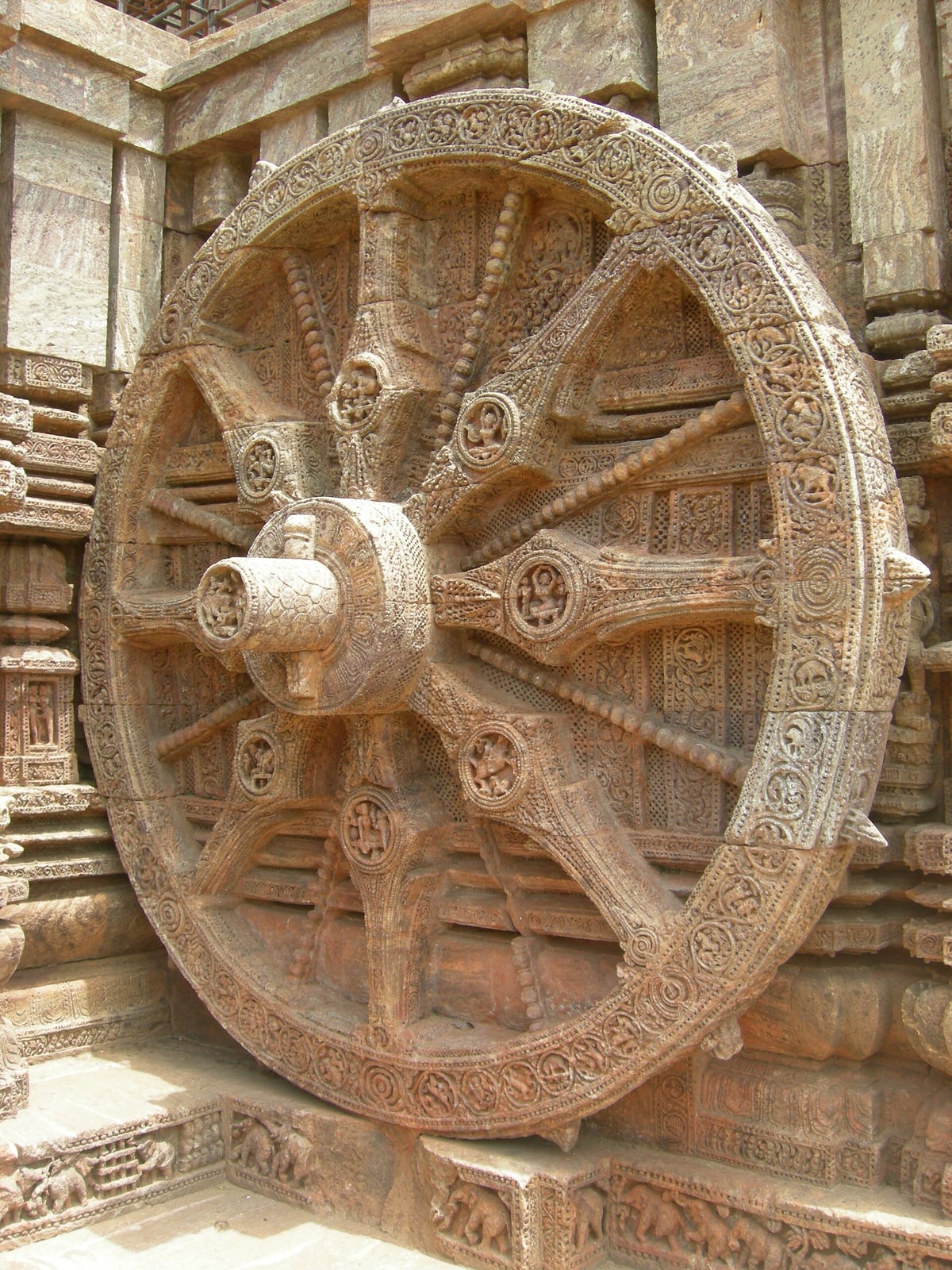
Konark Gives the Sun Temple the Form of a Chariot
Stone wheels and sculptural programs shape a monumental sacred site.
Around 1250, King Narasimhadeva I of the Eastern Ganga dynasty commissioned a massive stone temple dedicated to the Hindu solar deity Surya along the coast of modern Odisha. Conceived in the Kalinga architectural style, the complex was planned not as a static shrine but as a celestial conveyance. The surviving structures present the appearance of an enormous chariot rising on a high terrace, outfitted with twenty-four intricately carved stone wheels, each about 3 metres across, and drawn by seven sculpted stone horses. Located roughly thirty-five kilometres northeast of Puri, the site gave physical form to Vedic imagery of the Sun god traveling across the sky, with the wheels symbolizing the divisions of the annual calendar.
The construction required three principal types of stone, none available near the site, so the material was brought over long distances. Builders used durable green chlorite for delicate sculptures and door frames, laterite to reinforce the foundation core and stairways, and softer khondalite for the bulk of the elevations. Masonry was laid as smooth ashlar with tightly fitted joints. The complex adopted the standard axial components of regional temple design, originally dominated by a towering main sanctuary, or deul, fronted by a large square assembly porch called the jagamohana. While the primary tower eventually collapsed, the jagamohana still stands, its pyramidal roof stepped into diminishing tiers.

Keep reading in Yester
Coming soon to the App Store
Keep following the story
Sources
Image: Seenez