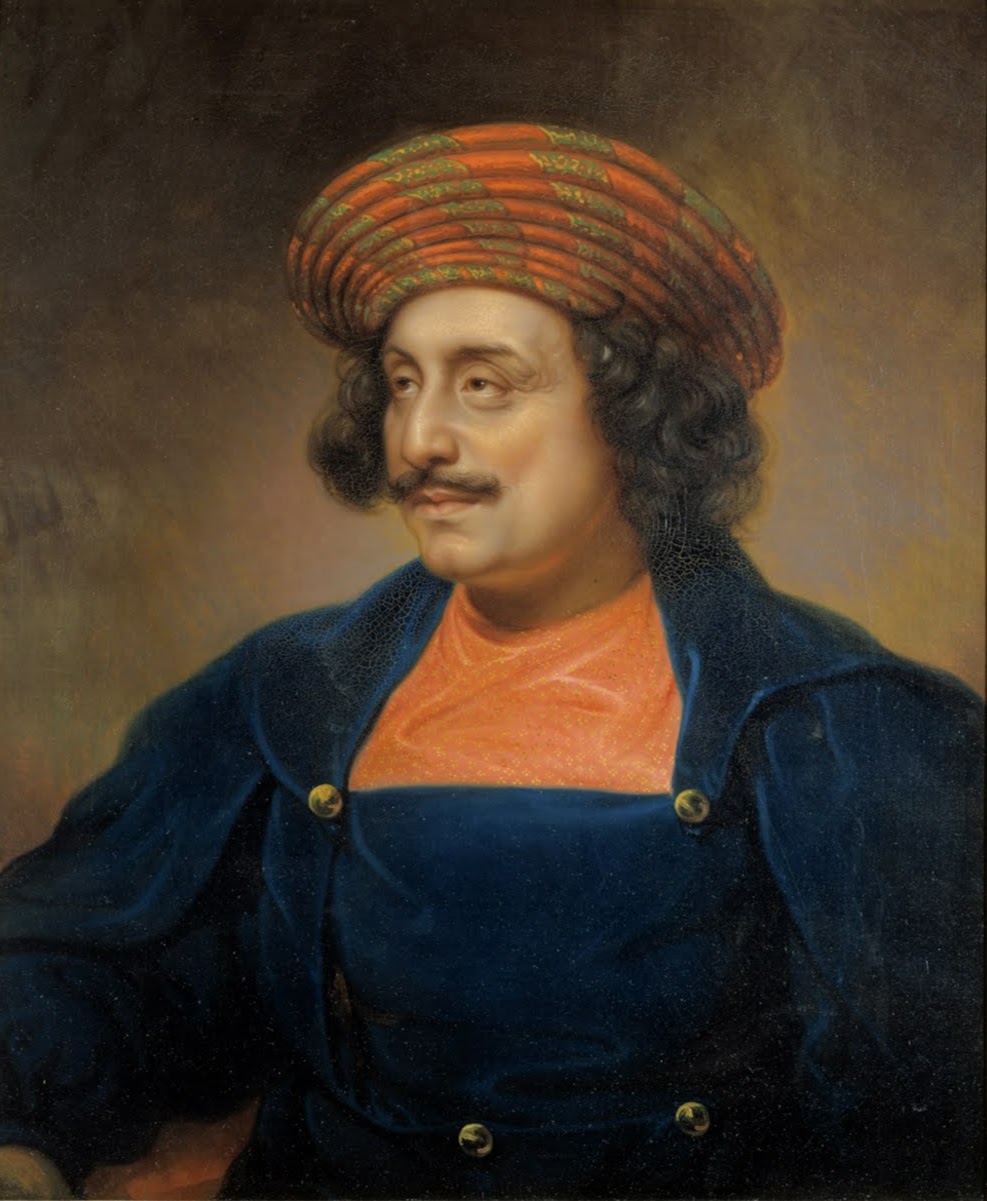
Ram Mohan Roy Founds the Brahmo Samaj
A reformer sought a rational, monotheistic Hinduism.
On 20 August 1828, the inaugural assembly of the Brahmo Sabha convened at the North Calcutta residence of Firingi Kamal Bose. Organised by Raja Ram Mohan Roy alongside the prominent landowner and entrepreneur Dwarkanath Tagore, the gathering established an open platform for collective worship designed to transcend traditional social fractures. Roy instituted a liturgy centered on readings from the Vedas by Telugu Brahmins, vernacular Bengali expositions of the Upanishads and Vedanta delivered by Utsavananda Bidyabagish, and devotional music composed by Roy and his circle. Caste distinctions were largely set aside at these meetings, although the Brahmins who recited the Vedas would not admit non-Brahmin listeners to their presence. The gatherings reflected Roy's ambition to cultivate a rational, monotheistic current within Hindu thought.
The institutional groundwork expanded rapidly over the following two years. On 8 January 1830, progressive members of the Tagore and Roy families executed a formal Trust Deed to erect a permanent house of prayer on Chitpore Road in Calcutta. Two weeks later, on 23 January 1830, this new building was publicly inaugurated. Ram Chandra Vidyabagish took up duties as the first resident superintendent. By late 1830, Roy departed for England after receiving the title of Raja from the Mughal emperor Akbar II. Roy died near Bristol in 1833, leaving the small organisation vulnerable to falling attendance.

Keep reading in Yester
Coming soon to the App Store
Keep following the story
Sources
Image: Rembrandt Peale