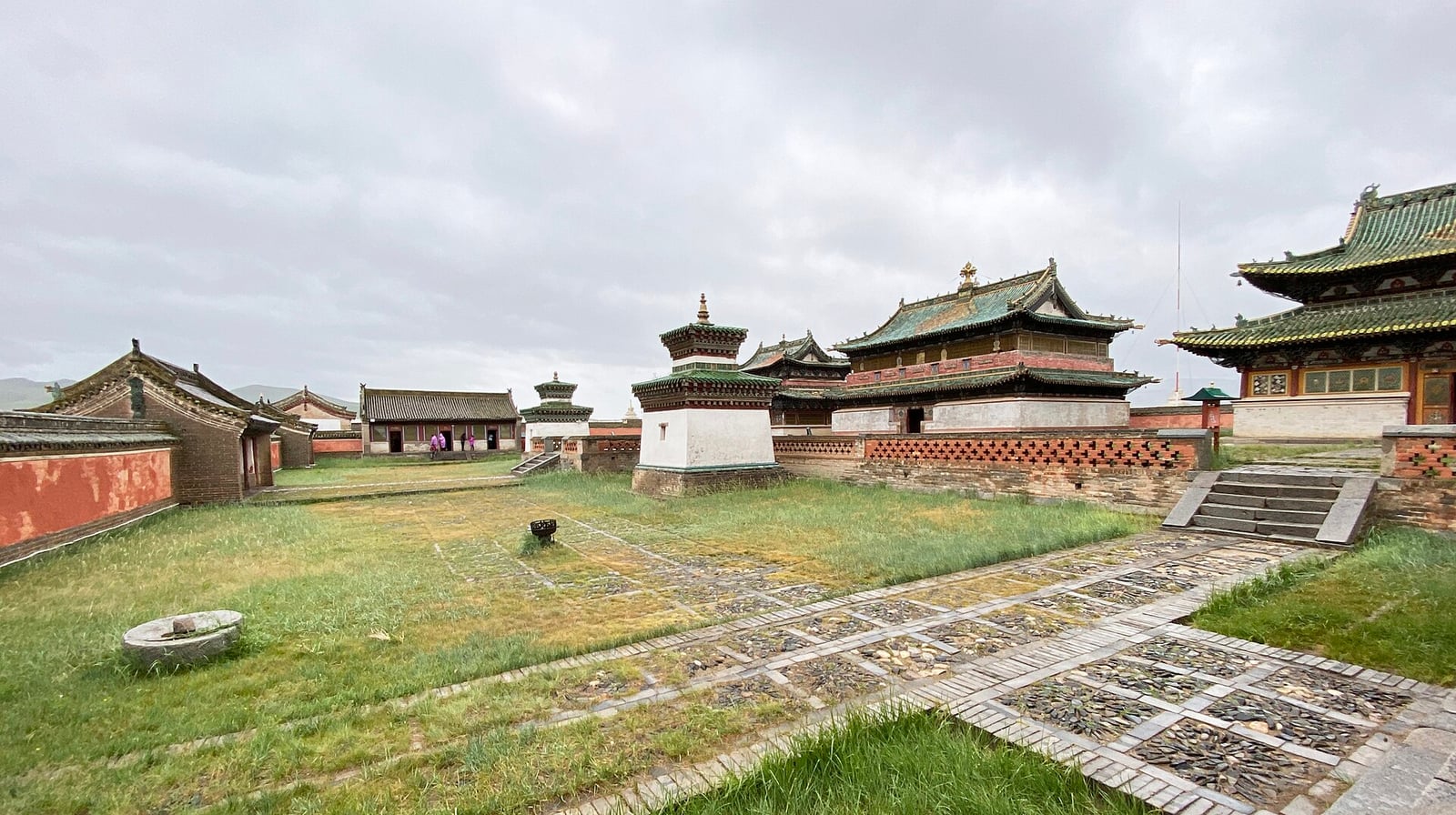
Ögedei Walls the Mongol Capital at Karakorum
The steppe capital later had a silver fountain tree that poured drinks for guests.
In 1220, Genghis Khan selected an ancient seat of steppe power in the Orkhon Valley as the permanent centre of his growing domain. The location carried profound political resonance, having previously housed the capital of the Uyghur Empire and the sacred lands of earlier nomadic confederations. Moreover, its unusual north to south river course offered a rare transit route across the east to west drainage of the surrounding terrain, while pasturage benefited from a relatively warm and moist regional climate. For the first fifteen years, the settlement remained little more than a vast encampment of felt tents, functioning primarily as a strategic gathering point rather than a masonry capital.
The character of the settlement altered dramatically following the accession of Genghis Khan's son and successor, Ögedei. Fresh from the military defeat of the Jin dynasty in 1234, the new ruler resolved to formalise his authority through architectural permanence. In 1235, Ögedei ordered the construction of defensive earthen walls surrounding the city, alongside a dedicated royal residence known as the Palace of Myriad Peace. Completed within a single year, this complex occupied the southern sector of the enclosure, shielding the court from the bustling commercial life of the city while providing unhindered access to river waters and hunting forests to the south.

Keep reading in Yester
Coming soon to the App Store
Keep following the story
Sources
Image: Bernard Gagnon