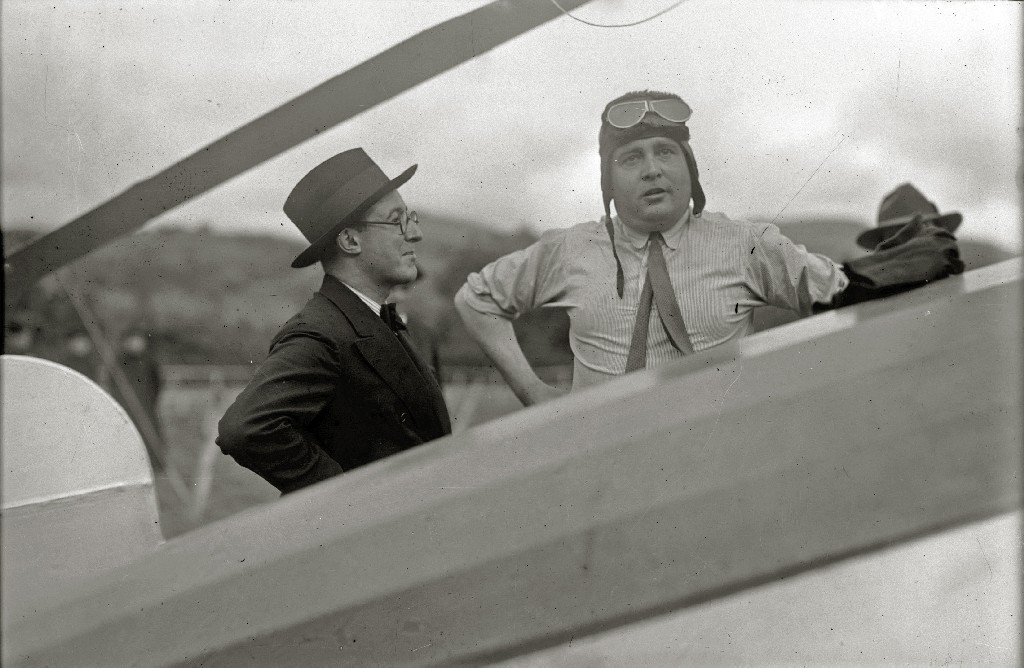
An Autogiro Finds a Different Way to Stay Aloft
A freely rotating rotor opened an alternative approach to flight and influenced later rotorcraft engineering.
In 1919, Spanish civil engineer Juan de la Cierva turned his attention to a persistent hazard of early aviation: the aerodynamic stall. Having designed aircraft since 1912, including early fixed-wing designs, he sought a method to generate lift at low airspeeds. Rather than relying on fixed wings, he conceived the autogiro in 1920. His concept depended on an unpowered rotor that spun solely through autorotation. In this arrangement, forward thrust from a conventional propeller pulled the rotor through the air, creating a balance of aerodynamic lift and drag that sustained level flight, climb, and descent.
Initial prototypes suffered from violent rolling tendencies during takeoff runs. This instability occurred because the advancing rotor blade generated far more lift than the retreating blade, creating severe lift dissymmetry. After four years of trial designs, de la Cierva solved the imbalance by introducing a flapping hinge, which allowed each blade to oscillate vertically and adjust its angle during rotation. In January 1923, his C.4 prototype made a successful sustained autogiro flight at Getafe aerodrome, piloted by Lieutenant Gomez Spencer.

Keep reading in Yester
Coming soon to the App Store
Keep following the story
Sources
Image: Pascual Marín