Before Eradication, a Risky Experiment
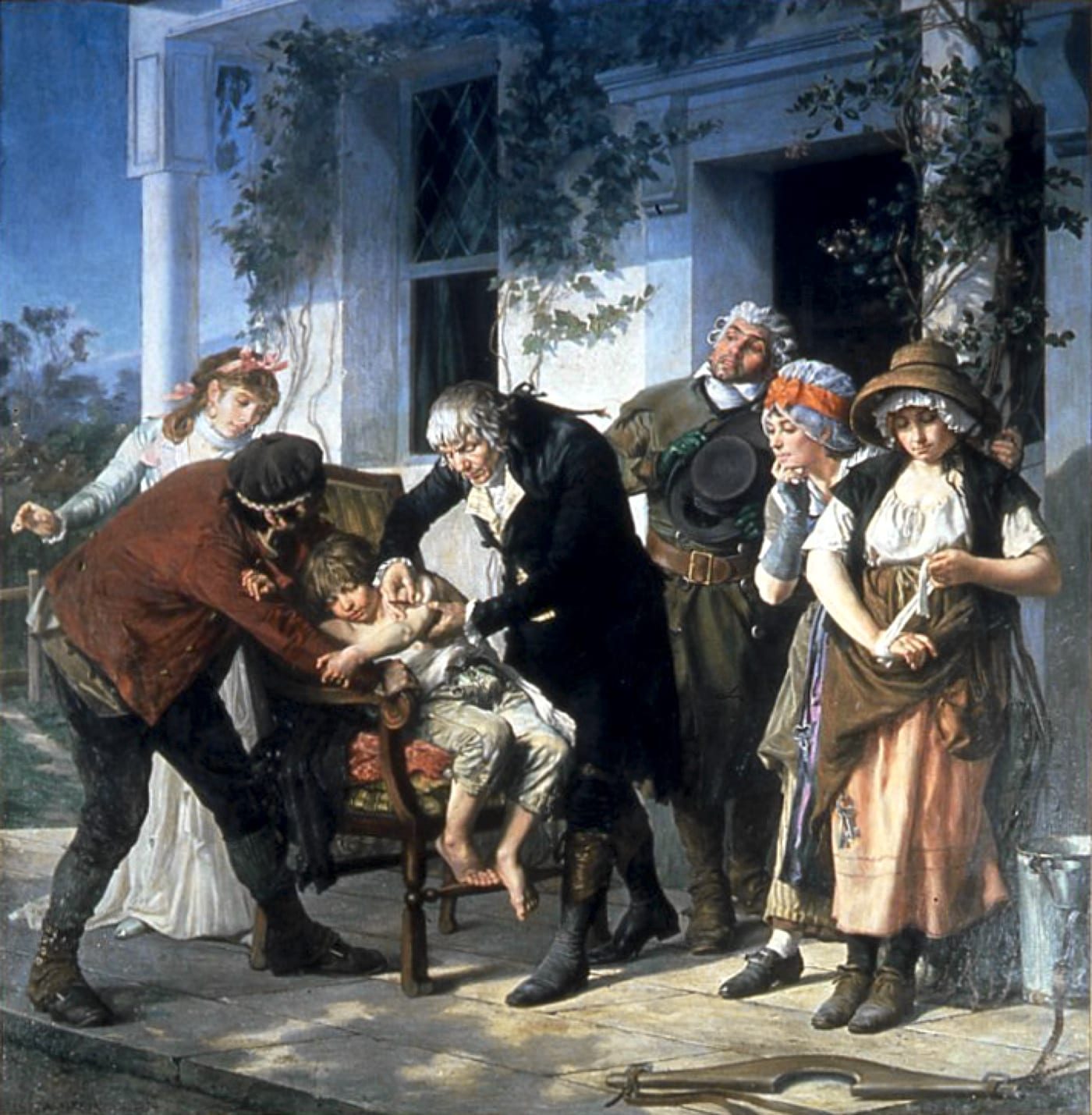
Edward Jenner’s experiment helped establish vaccination against smallpox. The path from one child’s inoculation to a disease’s disappearance would take nearly two centuries.
In May 1796, Edward Jenner introduced material from a cowpox sore into the arm of eight-year-old James Phipps. The material came from Sarah Nelmes, a milkmaid. Jenner was investigating the observation that people who had experienced cowpox seemed protected from smallpox. The experiment became foundational to vaccination, but it began as an intervention involving particular people, not as a complete public-health system ready for the world.
Attempts to protect people from smallpox were older than Jenner. Variolation used material from smallpox itself to provoke an infection intended to produce protection. It had been practiced in several parts of the world and carried real dangers. Knowledge did not travel along a single European path: accounts of earlier practices include Ottoman and African experience. Jenner worked within a much longer history of people seeking ways to survive a devastating disease.

Keep reading in Yester
Coming soon to the App Store
Keep following the story
Sources
Image: Gaston Mélingue