The Treaty That Removed a Class of Missiles
The United States and Soviet Union agreed to eliminate an entire category of land-based missiles. Making that promise credible required more than signatures.
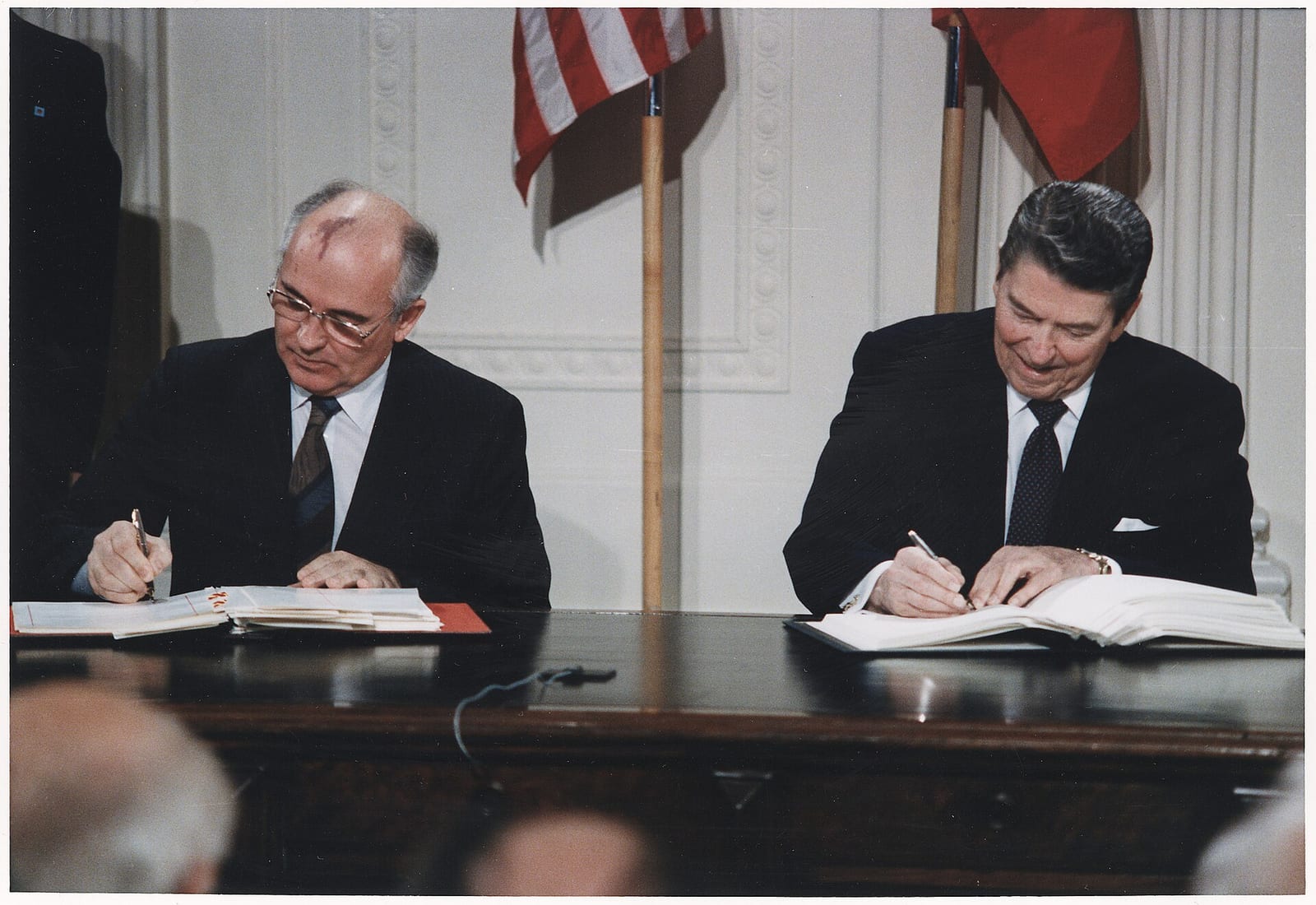
On December 8, 1987, Ronald Reagan and Mikhail Gorbachev signed a treaty in the White House that went beyond placing a ceiling on certain weapons. The United States and Soviet Union agreed to eliminate a whole category of land-based missiles. The Intermediate-Range Nuclear Forces Treaty made dismantling existing systems part of the obligation, rather than simply limiting how many more could be built.
The weapons concerned had been central to confrontation over European security. Missiles capable of striking targets across the region raised fears about warning times, escalation and whether Europe could become the battlefield of a nuclear exchange. Arguments over deployments produced both government decisions and public protest. By the time an agreement was reached, the systems were carrying political meanings as well as military capabilities.

Keep reading in Yester
Coming soon to the App Store
Keep following the story

Sources
Image: Unknown author Unknown author or not provided