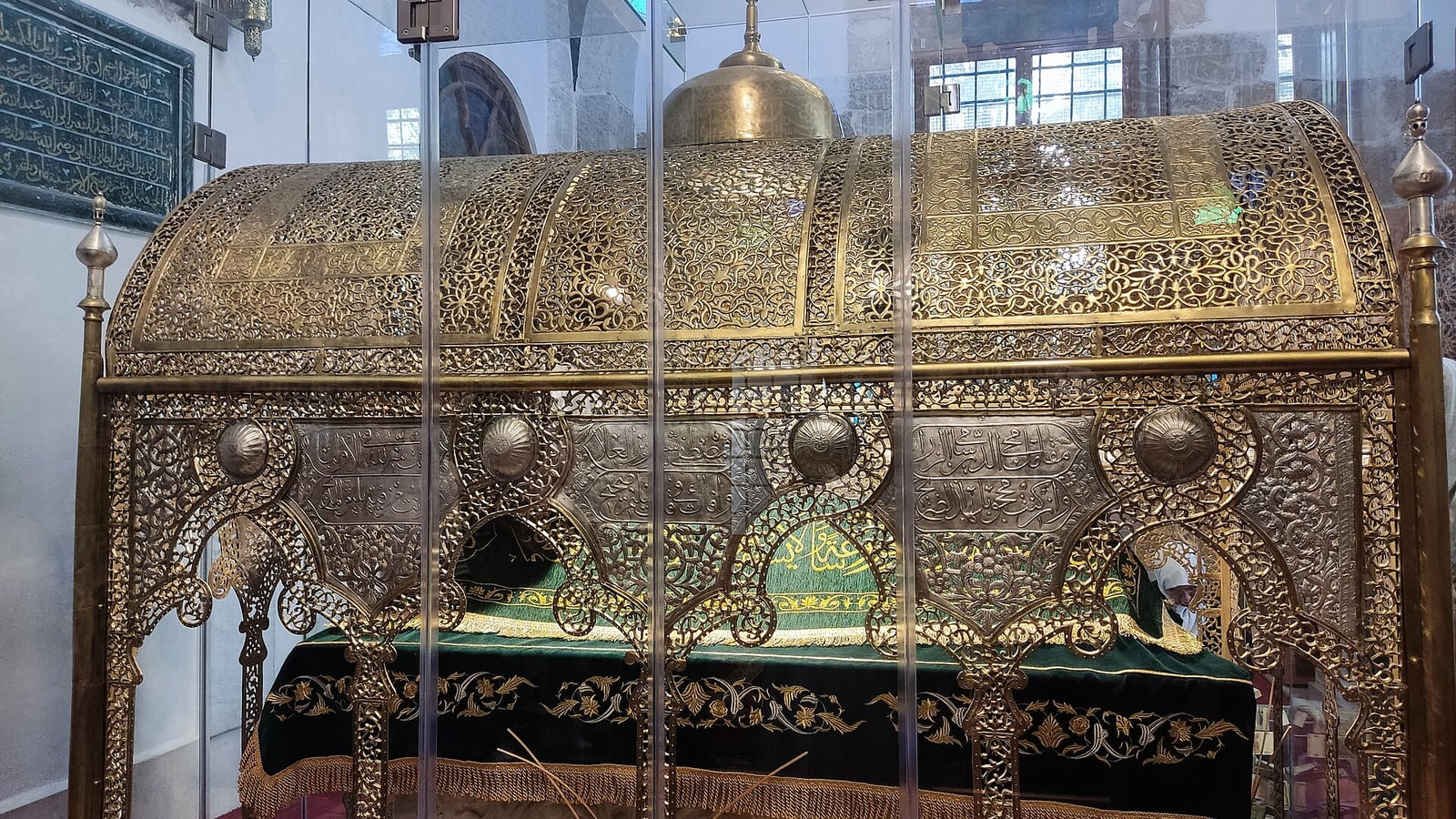
Ibn Arabi Writes on the Unity of Being
A mystic from al-Andalus became one of Sufism’s most influential thinkers.
In 1223, the Andalusian mystic and scholar Ibn Arabi established his final residence in Damascus after more than two decades of travel through the central Islamic lands. Born in Murcia in 1165 into a family of Arab lineage, he moved to Seville as a boy and in his early teens underwent a visionary conversion that turned him toward the spiritual path. In Damascus, he devoted his remaining seventeen years to teaching, refining extensive texts, and drafting influential summaries of his worldview until his death in November 1240.
His philosophical framework is often summed up as the unity of being, or wahdat al-wujud, although modern scholars note that he never used that expression himself. Ibn Arabi maintained that all diverse phenomena across the cosmos are manifestations of a singular reality, which he termed Absolute Being. Rather than treating physical creation as entirely independent, he interpreted the universe through the lens of imagination, positioned between absolute reality and utter nothingness. In his model, created entities serve as qualities and reflections of the divine essence, comparable to a single object reflected across countless mirrors.

Keep reading in Yester
Coming soon to the App Store
Keep following the story
Sources
Image: Omar.Hafez