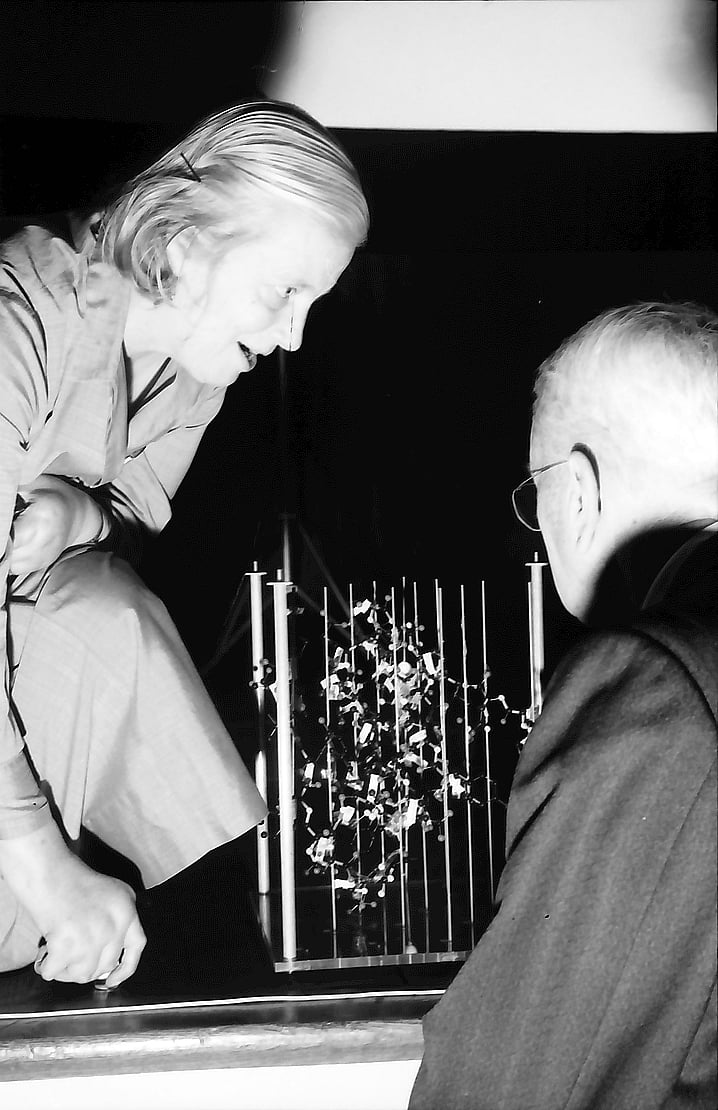
Dorothy Hodgkin Wins Recognition for Molecular Structures
X-ray crystallography revealed the shapes of important biological molecules.
In 1964, the English chemist Dorothy Crowfoot Hodgkin received the Nobel Prize in Chemistry for establishing the three-dimensional structures of vital biochemical substances through X-ray crystallography. She was the third woman to win the chemistry prize and, as of 2026, remains the only British woman to have won a Nobel Prize in the sciences. Her work transformed a technique once limited to simpler mineral compounds into an indispensable method for modern structural biology, enabling researchers to map the atomic architecture of large, complex natural molecules.
Hodgkin developed an interest in chemistry and crystals during her childhood, encouraged by her mother. In 1928, she entered Somerville College, Oxford, where she earned a first-class honours degree before undertaking doctoral research at Newnham College, Cambridge. Under the mentorship of John Desmond Bernal, she explored the potential of using X-ray diffraction photographs to understand biological substances, contributing to pioneering studies on pepsin and sterols. She returned to Somerville College in 1934, became its first fellow and tutor in chemistry in 1936, and received her doctorate in 1937.

Keep reading in Yester
Coming soon to the App Store
Keep following the story
Sources
- Dorothy Crowfoot Hodgkin, Facts (NobelPrize.org)
- Dorothy Crowfoot Hodgkin, Biographical (NobelPrize.org)
- Perspectives: Enhancing X-ray vision (NobelPrize.org)
- Dorothy Hodgkin FRS, Celebrating scientists with disabilities (The Royal Society)
- Dorothy Crowfoot Hodgkin, Ex Libris Universum (American Institute of Physics)
- Dorothy Hodgkin
Image: Willy Pragher