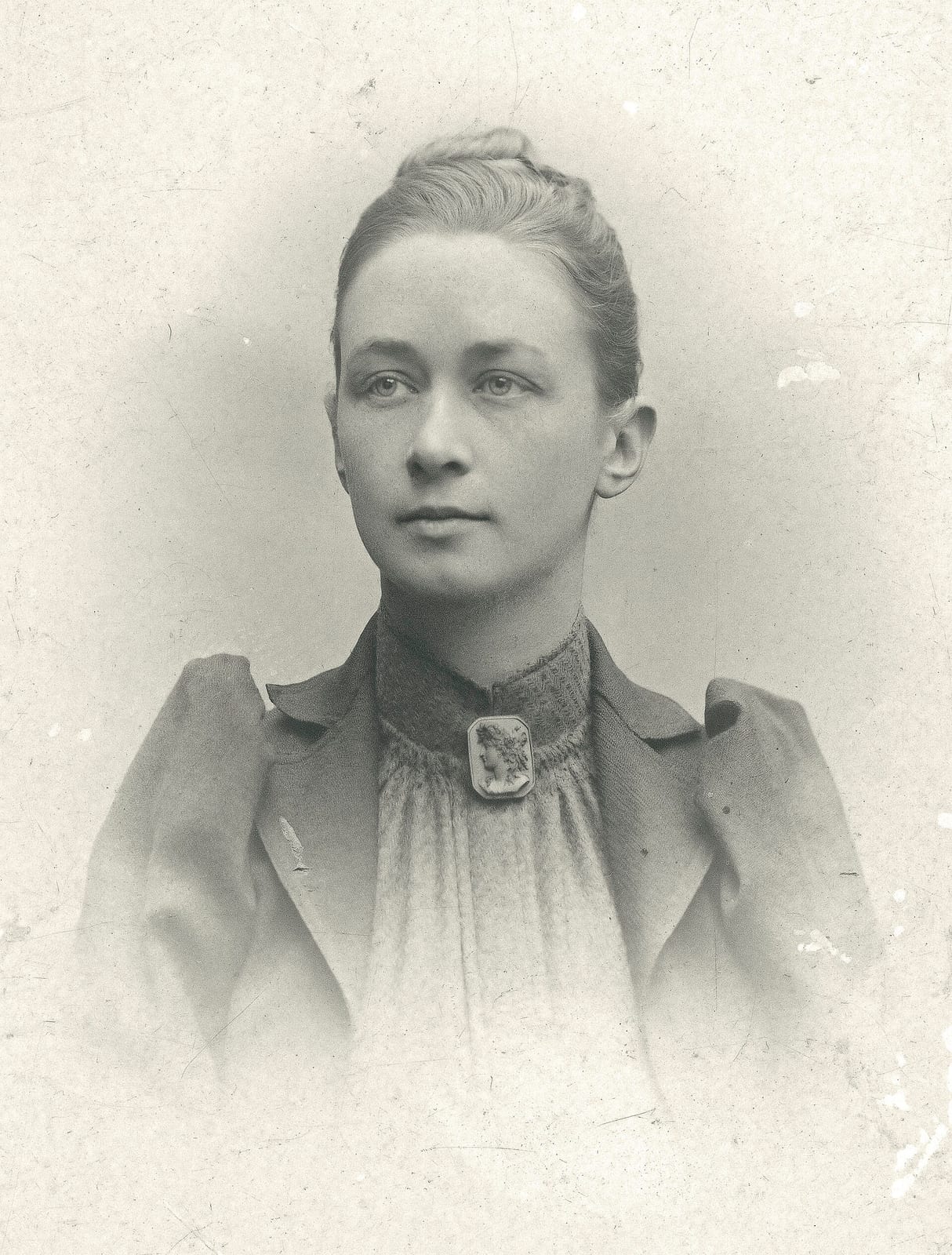
Hilma af Klint Begins Paintings beyond Visible Appearances
An ambitious painting project linked abstraction with spiritual ideas, long before it reached a wide public.
In 1906, at forty-four years of age, Swedish artist Hilma af Klint embarked on a sequence of canvases that broke away from conventional figurative traditions. Educated at Stockholm's Royal Academy of Fine Arts, she had built a dependable professional career painting portraits, botanical studies, and landscapes. In private, however, her creative practice turned toward nonrepresentational visual forms meant to depict unseen spiritual dimensions, beginning several years before prominent European modernists such as Wassily Kandinsky, Kazimir Malevich, and Piet Mondrian produced their own purely abstract works.
Af Klint's immersion in esoteric systems traced back decades. After the death of her sister Hermina in 1880, she pursued sustained spiritual investigations, taking an interest in spiritism, the philosophy of Christian Rosenkreuz, and Helena Blavatsky's Theosophy. Alongside fellow Academy graduate Anna Cassel and three other women, she formed a circle known as The Five. Meeting regularly for séances, scriptural analysis, and meditation, the group engaged in automatic drawing experiments as early as 1896, attempting to act as conduits for higher entities they termed the High Masters.

Keep reading in Yester
Coming soon to the App Store
Keep following the story
Sources
Image: According to Moderna Museet the photographer is unknown