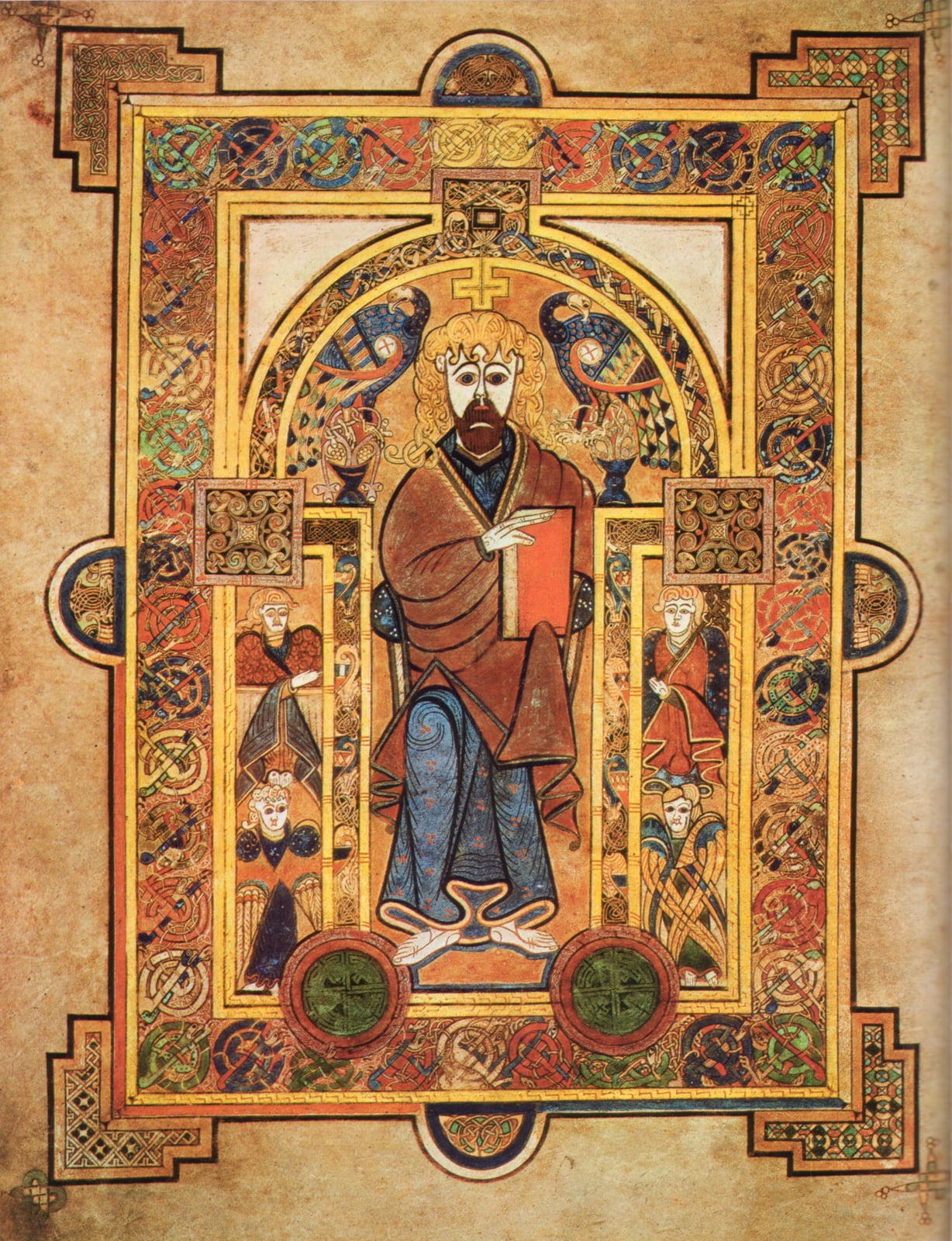
Monks Create the Book of Kells
An illuminated Gospel book became a masterpiece of Insular art.
Around the year 800, monastic scribes and artists produced an exceptionally ornate Latin Gospel book that came to represent the pinnacle of Insular manuscript illumination. The Book of Kells, known for centuries from its long association with the Abbey of Kells in County Meath, contains the four New Testament Gospels alongside introductory prefaces and concordances. While older traditions attributed the work directly to Saint Columba, who died in 597, modern palaeographic and stylistic analysis dates its creation long after his lifetime. Instead, scholars link the volume to Columban monks associated with the island monastery of Iona, who may have started the project there and brought it to Ireland as Norse incursions increased across the region.
The manuscript forms part of a broader network of Hiberno-Saxon illumination developed in Britain and Ireland from the late sixth to the early ninth centuries. Earlier masterworks in this lineage include the Book of Durrow and the Lindisfarne Gospels, whose decorated initial pages share the intricate interlace and animal motifs seen in later manuscripts. Although earlier works established the formal vocabulary of Insular script and design, the Book of Kells expanded these traditions through an unprecedented density of ornamentation, filling entire folios with vibrant knotwork, spirals, and miniature figures.

Keep reading in Yester
Coming soon to the App Store
Keep following the story

Sources
Image: Unattributed