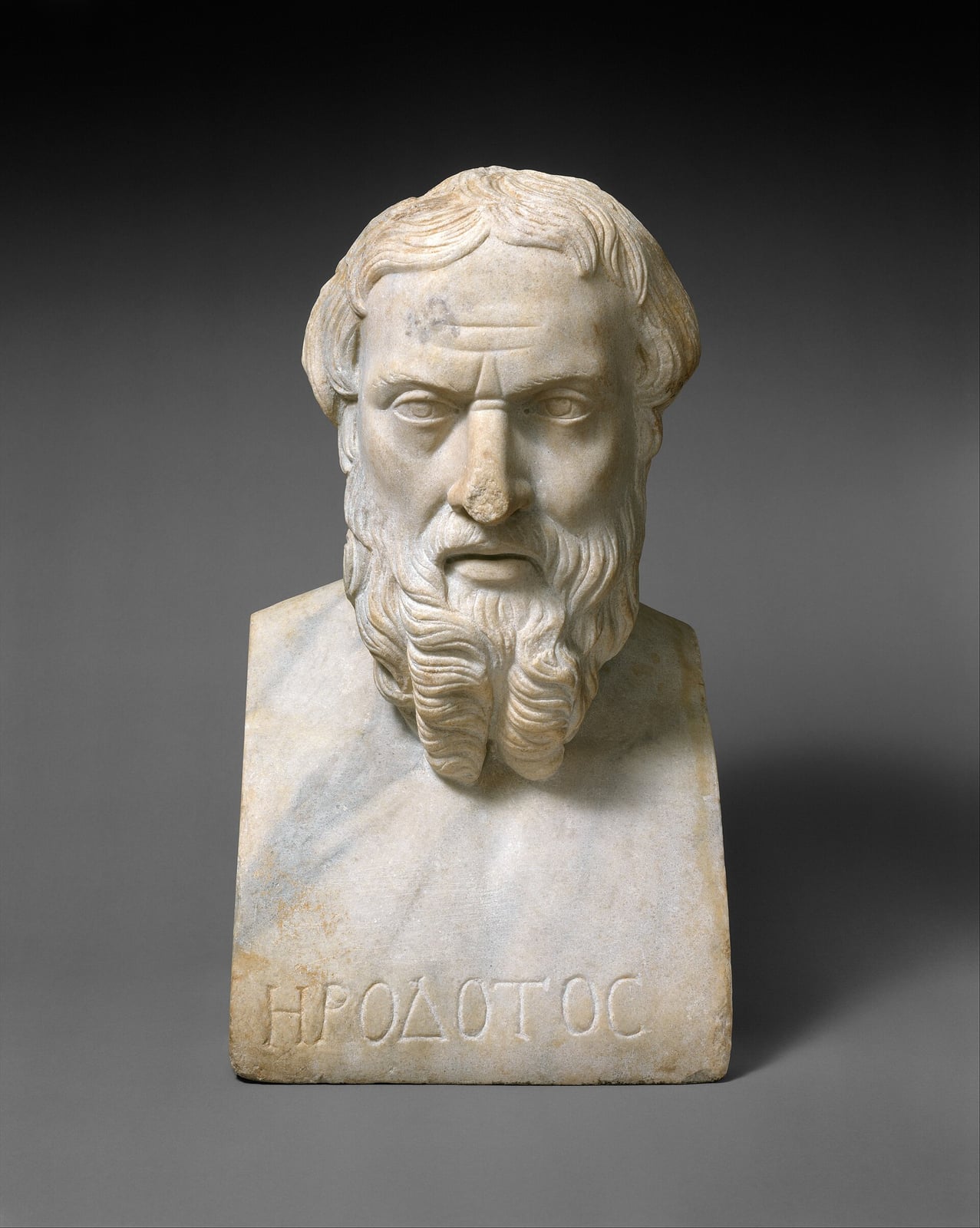
Herodotus Writes His Histories
A traveler from Halicarnassus investigated why Greeks and Persians went to war.
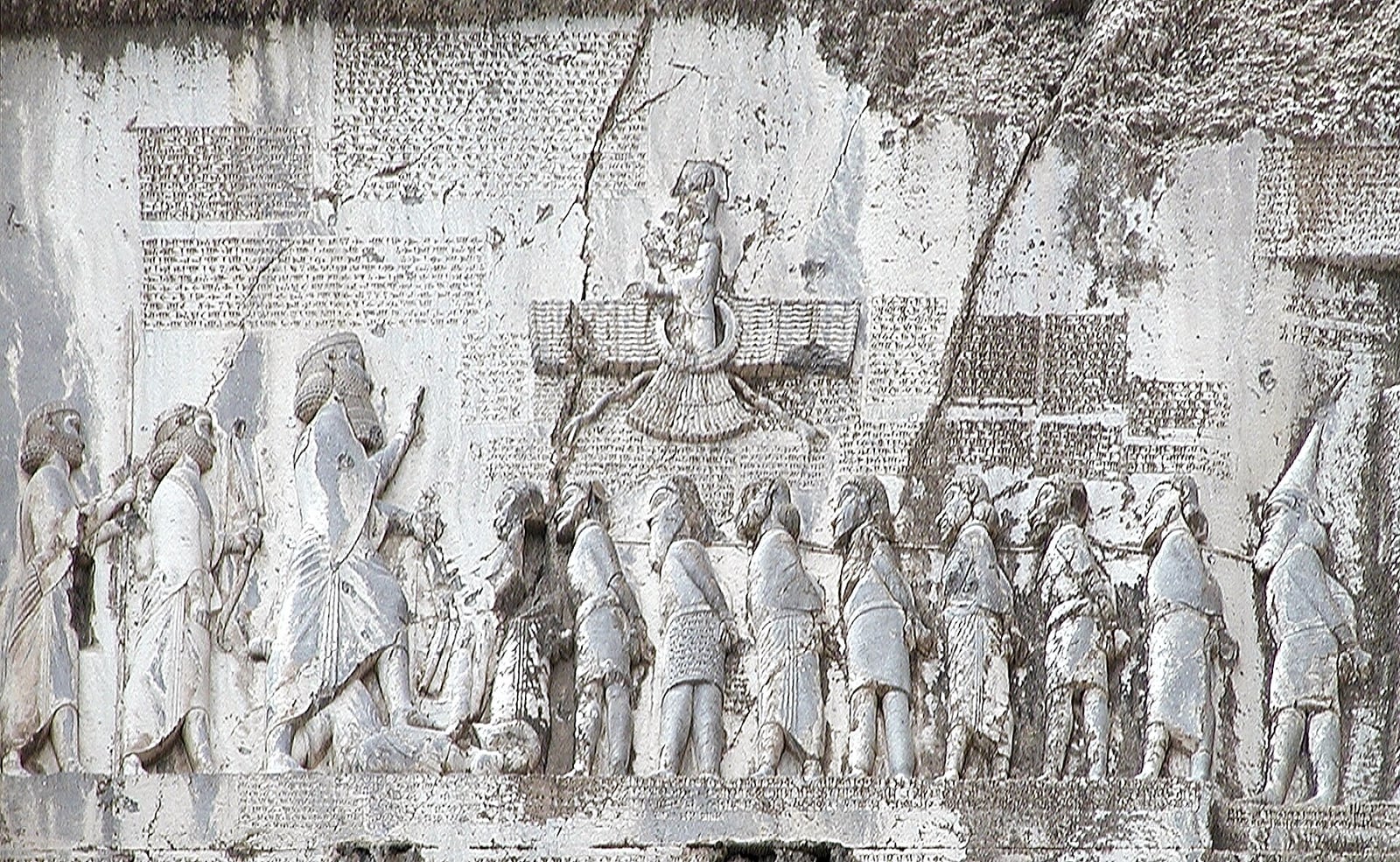
In the fifth century BC, Herodotus of Halicarnassus produced the Histories, an extensive prose inquiry into the origins and events of the Greco-Persian Wars. Framed as an investigation to prevent human deeds from being forgotten, the work traces the expansion of the Persian Empire and its confrontations with Greek city-states. In later editorial traditions, scholars organized the text into nine books named after the Muses. The earliest surviving complete manuscripts of this composition come down from Byzantine copies produced in the ninth and tenth centuries CE.
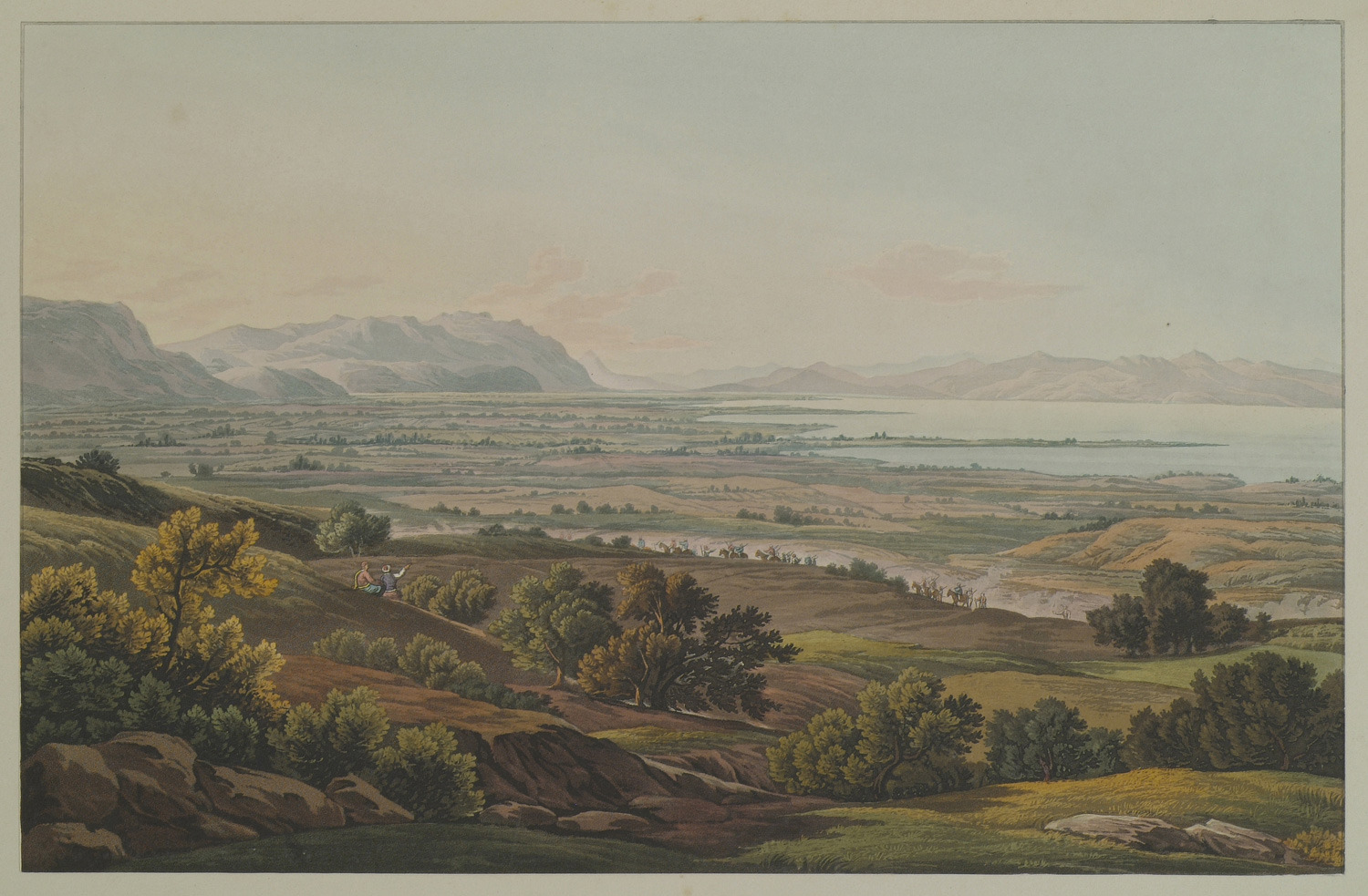
Herodotus presented the hostilities between Persia and Greece as a confrontation between imperial subjugation and Greek freedom. To construct his account, he drew upon extensive travels throughout regions controlled by or bordering the Persian Empire, collecting oral traditions, interviewing local informants, and examining geography. His inquiry ranges far beyond military campaigns, detailing the cultural practices, lineage of rulers, and natural features of Lydia, Babylon, Egypt, and Scythia. At key moments, such as the Greek defense at Thermopylae, he documented both grand strategic engagements and the specific human choices shaping their outcomes.

Keep reading in Yester
Coming soon to the App Store
Keep following the story
Sources
- Herodotus, The Histories 1.1, trans. A. D. Godley (Perseus Digital Library)
- Herodotus, The Histories 2.96, trans. A. D. Godley (Perseus Digital Library)
- Nile shipwreck discovery proves Herodotus right, after 2,469 years (The Guardian)
- DAI4UKR: Warrior Grave in Bilsk (Herodotus' Gelonus) (German Archaeological Institute blog)
- Scythian arrowheads and Bronze Age dwelling uncovered in Ukraine (Live Science)
- Plutarch's On the Malice of Herodotus and the Writing of History in the Greco-Roman World, John Marincola (Oxford Academic)
- Histories (Herodotus)