Hatshepsut Assumes the Role of Pharaoh
A woman ruled Egypt through established symbols of royal authority.
When Pharaoh Thutmose II died around 1479 BC, the succession passed to his very young son, Thutmose III. Because the new ruler was only an infant, his father's royal widow and half-sister, Hatshepsut, initially stepped forward to govern Egypt as regent. Acting as regent for a young king was accepted practice for widowed queens in the New Kingdom, but Hatshepsut soon took a much larger step. By about the seventh year of the young king's nominal reign, and possibly earlier, she had formally taken the full titles of pharaoh, establishing herself as senior co-ruler while relegating Thutmose III to a junior status.
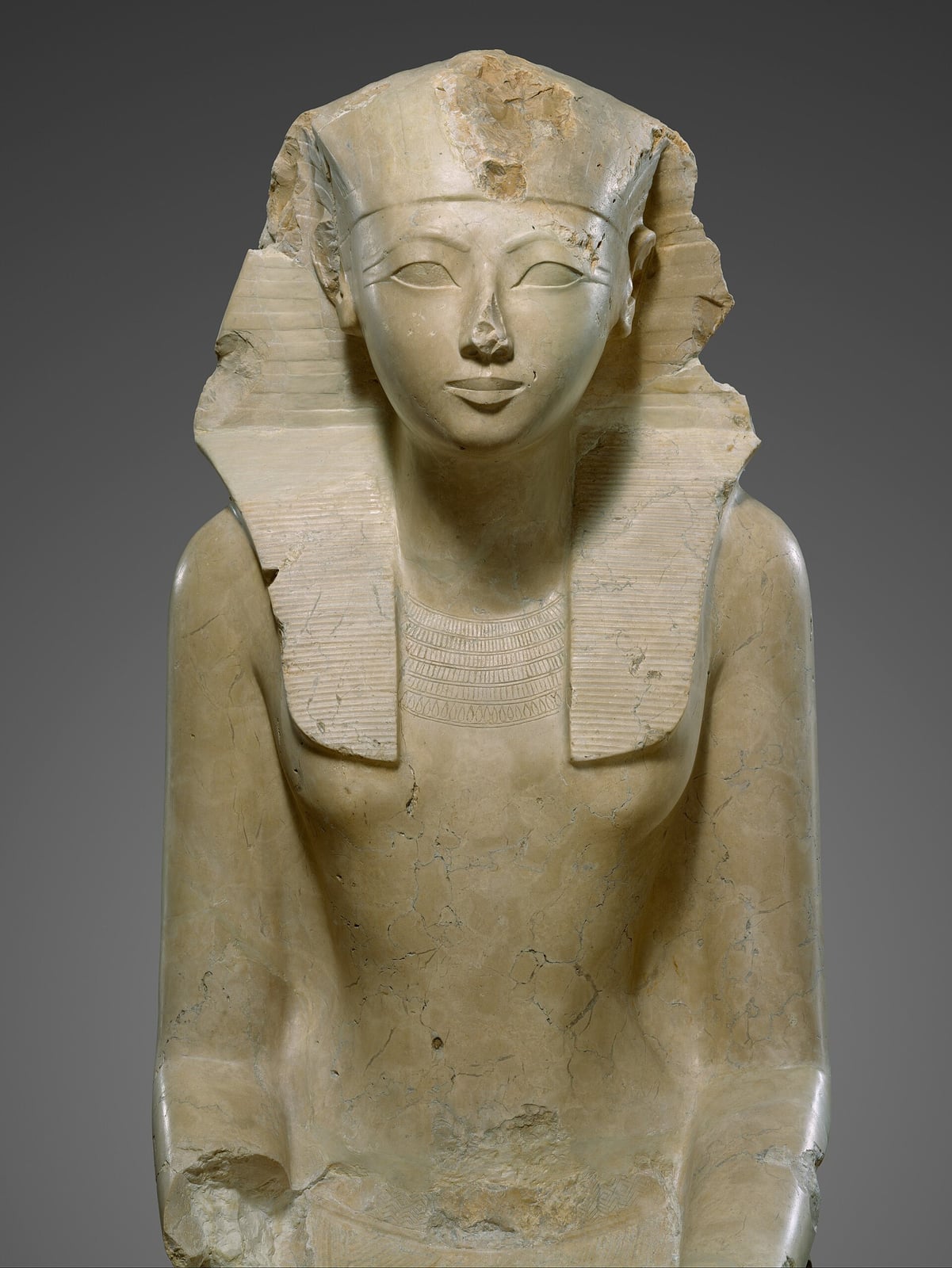
Sobekneferu had ruled Egypt centuries earlier during the Twelfth Dynasty, but Hatshepsut was the first woman to claim the pharaonic title during an era of sustained wealth and stability. To anchor her authority within an ancient patriarchal system, she systematically utilized the standard iconography of kingship. Official monuments and statuary portrayed her wearing the traditional shendyt kilt, the false beard, and royal headwear such as the khat cloth topped with the uraeus. While early portrayals depicted her with feminine characteristics, later state imagery increasingly showed her with masculine physical traits, presenting a symbolic visual language of kingship rather than literal physical description.

Keep reading in Yester
Coming soon to the App Store