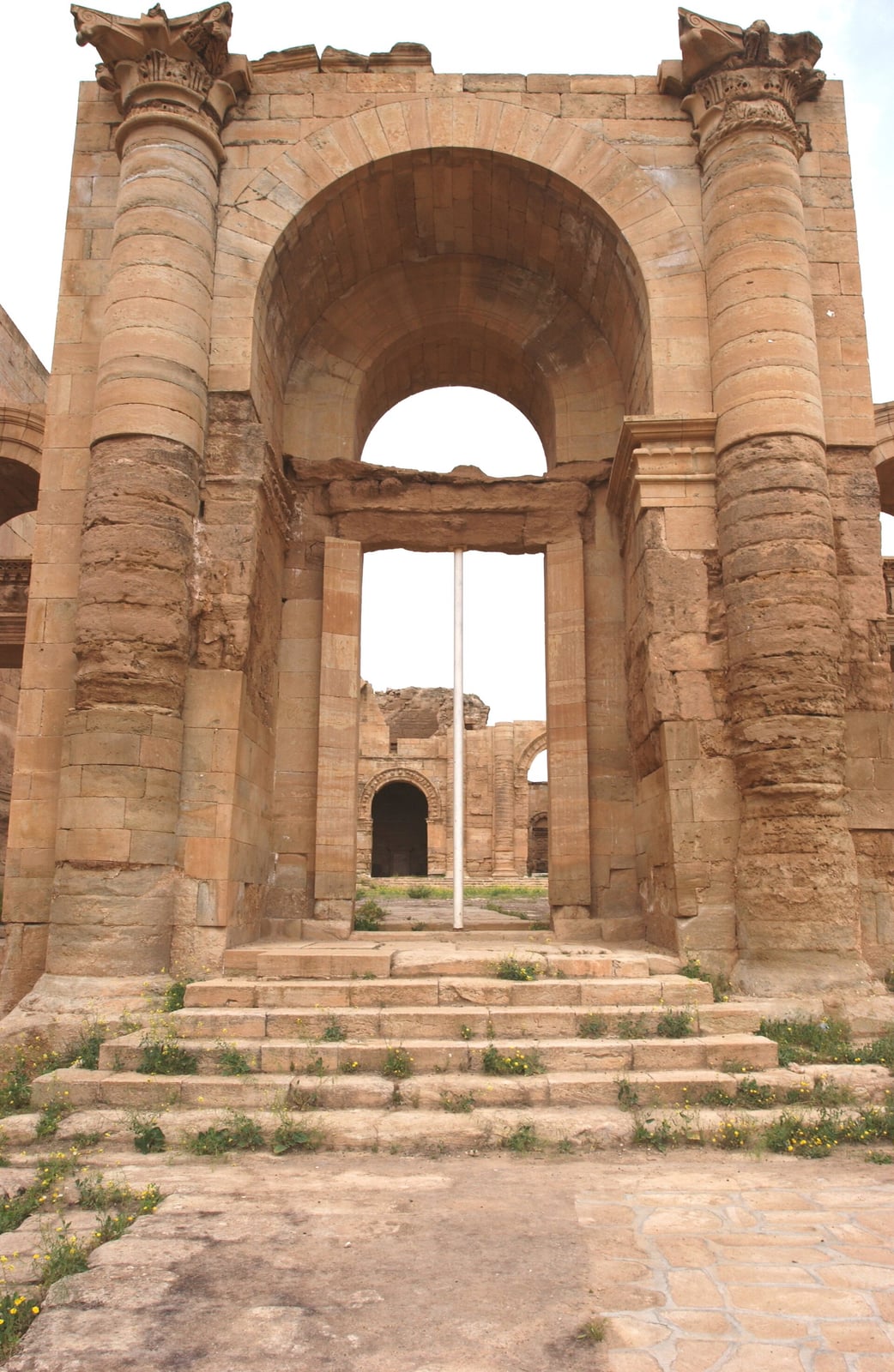
Hatra Holds Off the Emperor Trajan
The walled desert city repelled a Roman siege, then did so twice more against Septimius Severus.
In the winter between 116 and 117 AD, the Roman emperor Trajan led his legions across Upper Mesopotamia during his broad campaign against the Parthian Empire. Having pushed deep into the region and captured imperial capitals down the Tigris, Trajan turned his attention to a fortified desert outpost located in modern northern Iraq. Known locally in Aramaic as Hatra, or the enclosure, the circular stronghold barred his path across the steppe. Instead of submitting to the victorious Roman legions, Hatra shut its gates and defied imperial authority, forcing Trajan to mount a formal siege against its formidable ramparts.
Hatra occupied a delicate geopolitical position on the western fringes of the Parthian realm. Operating as a semi-autonomous buffer state under the control of Arabian princes, the settlement had grown into a flourishing caravan center. It formed the northeastern anchor of a network of influential trade cities that extended southwest toward Petra and Palmyra. Protected by local topography and harsh climatic conditions, the kings of Hatra balanced relations between regional superpowers while amassing wealth from passing merchants and pilgrims. Their fortified oasis offered security in a landscape contested by expanding empires.

Keep reading in Yester
Coming soon to the App Store
Keep following the story
Sources
Image: 138th Public Affairs Detachment