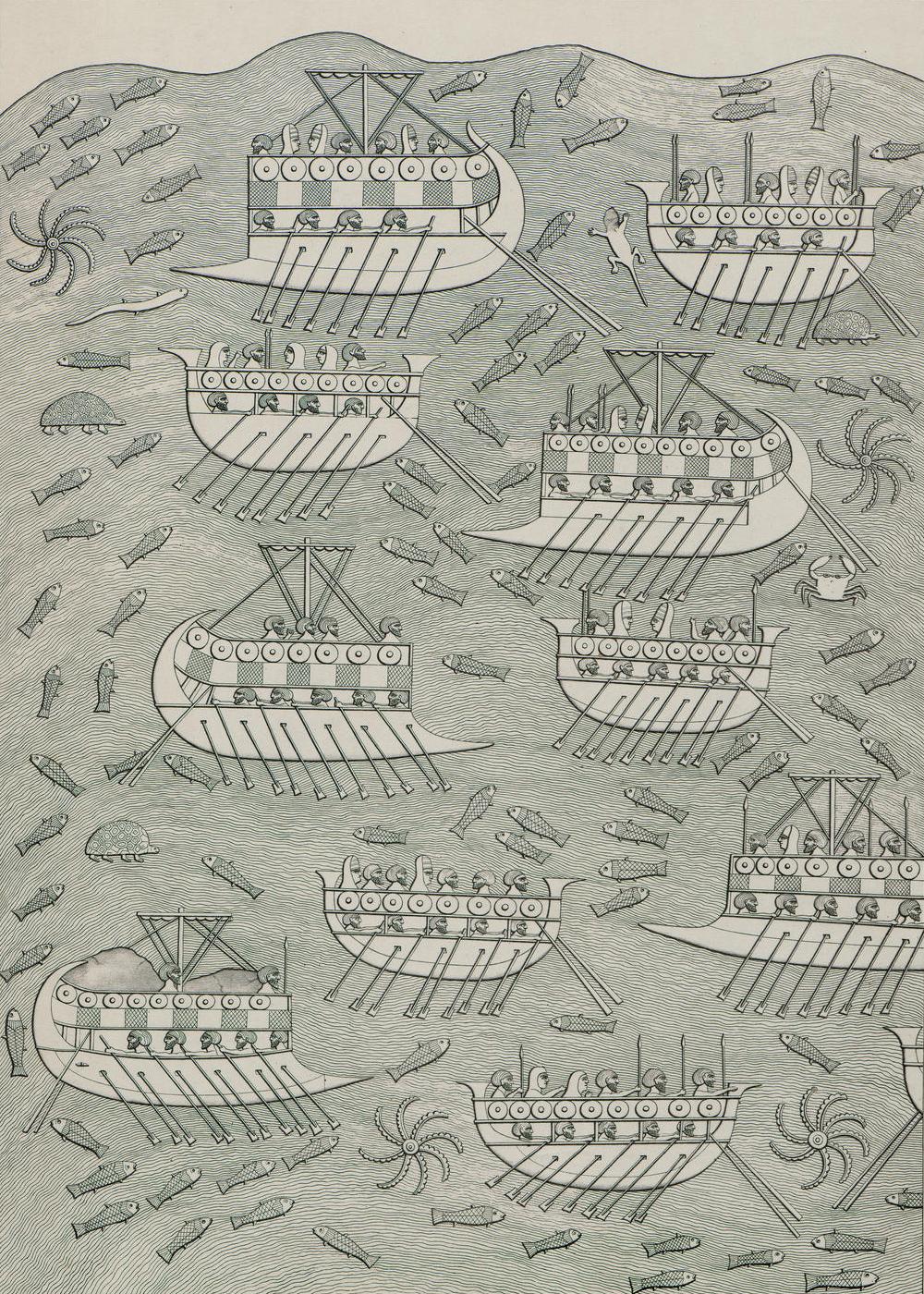
Hanno of Carthage Sails Down the West African Coast
A Greek account of his voyage gave the world the word “gorilla.”
Sometime around the sixth or fifth century BC, the maritime power of Carthage directed an ambitious naval expedition westward past the Pillars of Hercules and south along the Atlantic coastline of northwest Africa. Led by an aristocratic commander named Hanno, whom scholars generally link to the prominent Magonid lineage, the expedition was tasked with establishing or repopulating trade settlements. Ancient Greek translations of his official report refer to him as a basileus, a high administrative title, while Roman commentators later styled him a general or commander. Modern historians suggest that Carthage mounted the mission in part to protect and secure lucrative Atlantic routes linked to the West African gold trade.
The primary record of this voyage survives as a brief Greek text known as the Periplus, preserved in later Byzantine copies. According to this narrative, Hanno departed from Carthage with an armada of sixty ships. The document claims the fleet carried thirty thousand men and women, though modern historians dispute this figure as an exaggeration, with some proposing five thousand participants as a more plausible estimate. After clearing the Strait of Gibraltar, the fleet established a succession of settlements along the Atlantic coast of present-day Morocco, and planted a colony on the island of Kerne, whose location is still debated, while encountering local populations such as the nomadic Lixitae.

Keep reading in Yester
Coming soon to the App Store
Keep following the story
Sources
Image: Austen Henry Layard