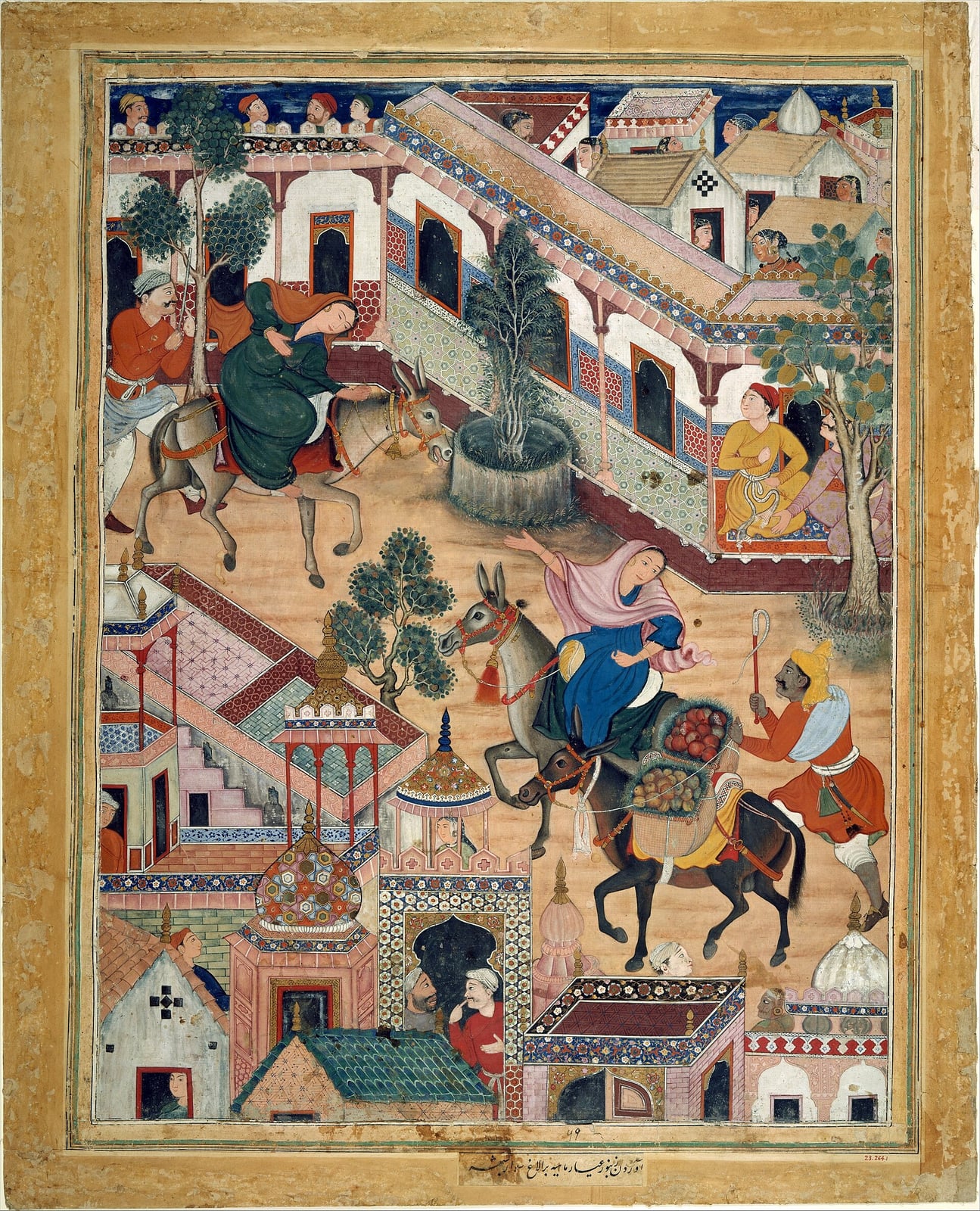
Akbar’s Painters Begin the Giant Hamzanama
About 1,400 large paintings illustrated a hero’s adventures for the young emperor.
Around 1562, artists in the royal workshops of the Mughal Empire began creating a colossal illustrated manuscript that would stand as one of the defining achievements of imperial court art. The young ruler Akbar commissioned this ambitious project, known as the Akbar Hamzanama, to give visual form to an expansive cycle of heroic adventures. The completed cycle was bound in as many as fourteen volumes, with about fourteen hundred illustrations produced by skilled painters. The sheer physical scale and narrative ambition of the undertaking marked an extraordinary departure in courtly book production.
The central subject of this grand undertaking was the Hamzanama, an epic romance recounting the legendary deeds of Hamza ibn Abdul-Muttalib, an uncle of the Prophet Muhammad. Rather than strictly following historical records, the stories drew on an ancient storytelling tradition that had developed over many centuries across the Persianate world. These popular romances, categorized as dastans, blended chivalric warfare and courtly intrigue with imaginative elements, pitting the central hero and his allies against monstrous adversaries, rival rulers, cunning tricksters, and powerful sorcerers.

Keep reading in Yester
Coming soon to the App Store
Keep following the story
Sources
Image: Kesu Das