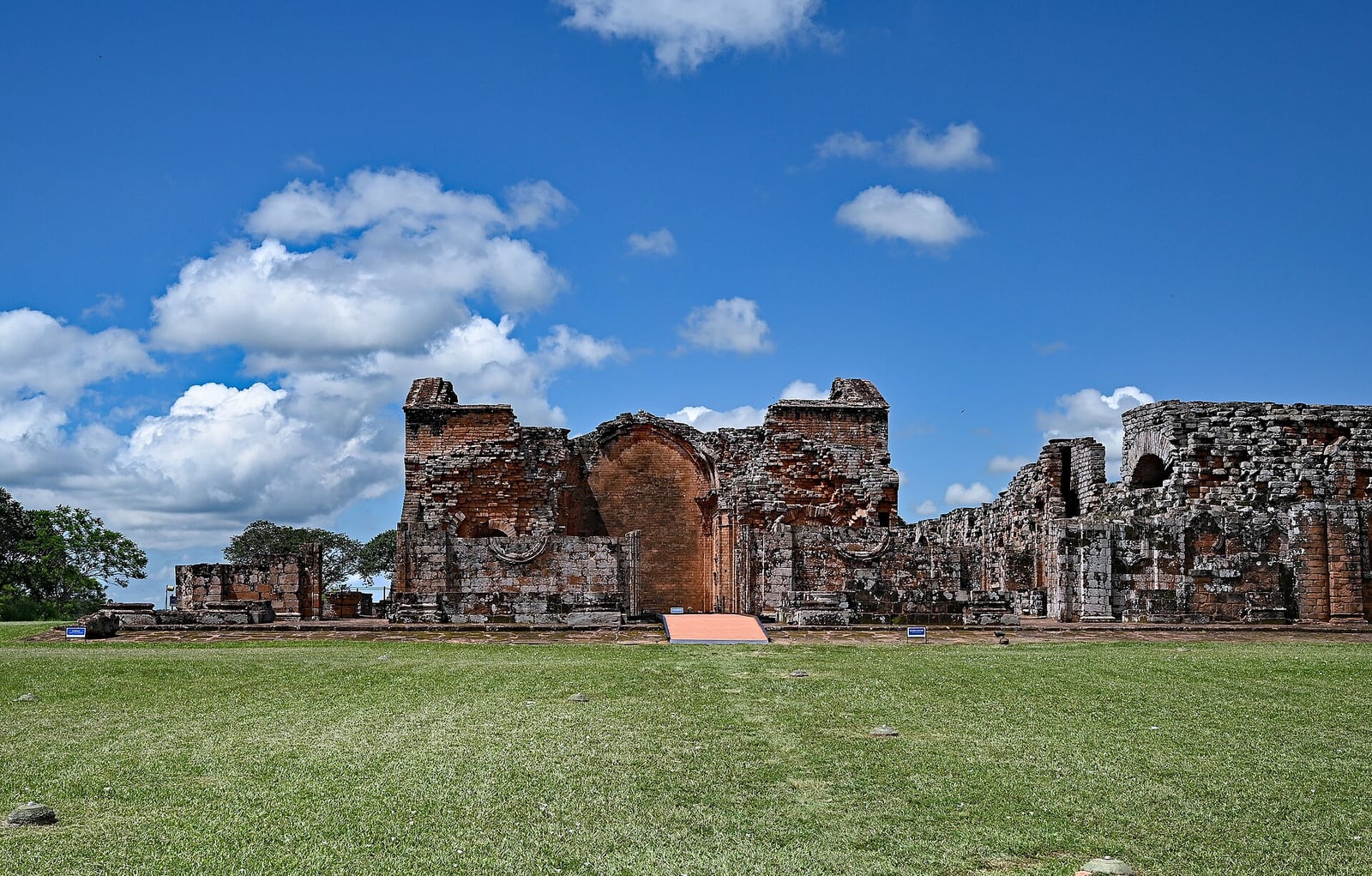
Jesuit Missions Among the Guaraní Begin in Paraguay
Mission towns organized Guaraní communities for a century and a half.
In 1609, under instructions from Philip III of Spain, the governor of Asuncion reached an agreement with the provincial leadership of the Society of Jesus. Catholic religious orders had long participated in colonial efforts to convert and administer indigenous populations, but the Jesuits were relatively late arrivals in the Americas. To establish their own sphere of activity, they turned toward colonial border regions along the Parana River. In exchange for founding segregated native settlements at strategic frontier points, the order secured extended tax exemptions and authority to organize the local Guaraní into communities known as reductions.
The initial missionary drive began that same year at San Ignacio Guazu and quickly expanded across the province of Guayra, covering territory in modern Brazil, Paraguay, and Argentina. This early phase encountered immediate hazards. Guaraní shamans actively contested the imposition of Catholic rites, leading to violent clashes in which several missionaries died. At the same time, gathering dispersed groups into crowded settlements contributed to the spread of European diseases and severe epidemics. Although tens of thousands of people gathered in these early reductions, many more Guaraní chose to remain beyond their borders.

Keep reading in Yester
Coming soon to the App Store
Keep following the story
Sources
- Las misiones jesuitas de Paraguay, Moxos, Chiquitos y Maynas (Memoria Chilena, Biblioteca Nacional de Chile)
- Paraguay: The Sword of the Word (U.S. Library of Congress Country Studies)
- Jesuit Missions of the Guaranis (UNESCO World Heritage Centre)
- Sepé Tiaraju commemoration, Guerra Guaranítica (Instituto Humanitas Unisinos)
- Numeracy levels in the Guarani Jesuit missions (Economic History Society)
- Jesuit missions among the Guaraní
Image: P. Hughes