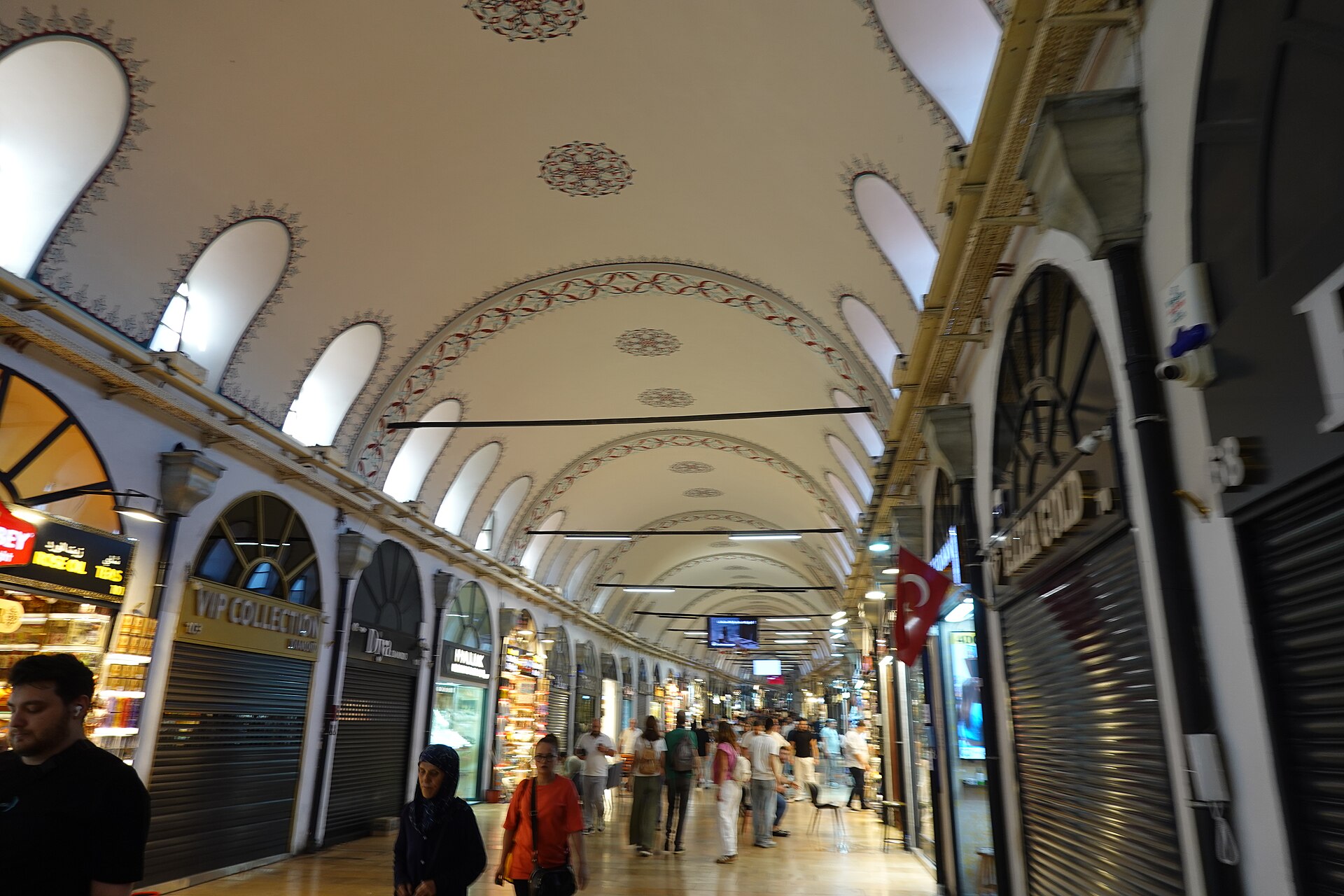
Mehmed II Builds the Core of Istanbul’s Grand Bazaar
A domed hall for valuable goods grew into a covered market of thousands of shops.
In the years after 1453, Sultan Mehmed II ordered the construction of a dedicated masonry hall for luxury trade in Istanbul, shortly after the Ottoman conquest of Constantinople. Designed to invigorate the city's commercial life, the solid structure was in place by the early 1460s and endowed to support the Hagia Sophia Mosque. Known as the Cevahir Bedesten or Inner Bedesten, this rectangular building featured brick domes supported by stone piers, thick walls embedded with vaulted secure storage cellars, and heavy iron gates. Although a reused Byzantine eagle relief over one of its gates later led some writers to claim older origins, historians regard the hall as a building of Mehmed II's reign.
A second major domed trading hall, the Sandal Bedesten, arose to the north either later in Mehmed II's reign or during the sixteenth century under Suleiman I. While the newer hall took over the textile commerce, the original bedesten remained reserved for gems, armor, and fine luxury wares. Over the following decades, merchants erected open stalls and wooden shops across the open terrain dividing the two complexes. The growing maze of streets linked the halls with neighboring markets, such as the ancient Long Market stretching toward the Golden Horn, gradually coalescing into a single integrated retail district.

Keep reading in Yester
Coming soon to the App Store
Keep following the story
Sources
Image: Joseolgon